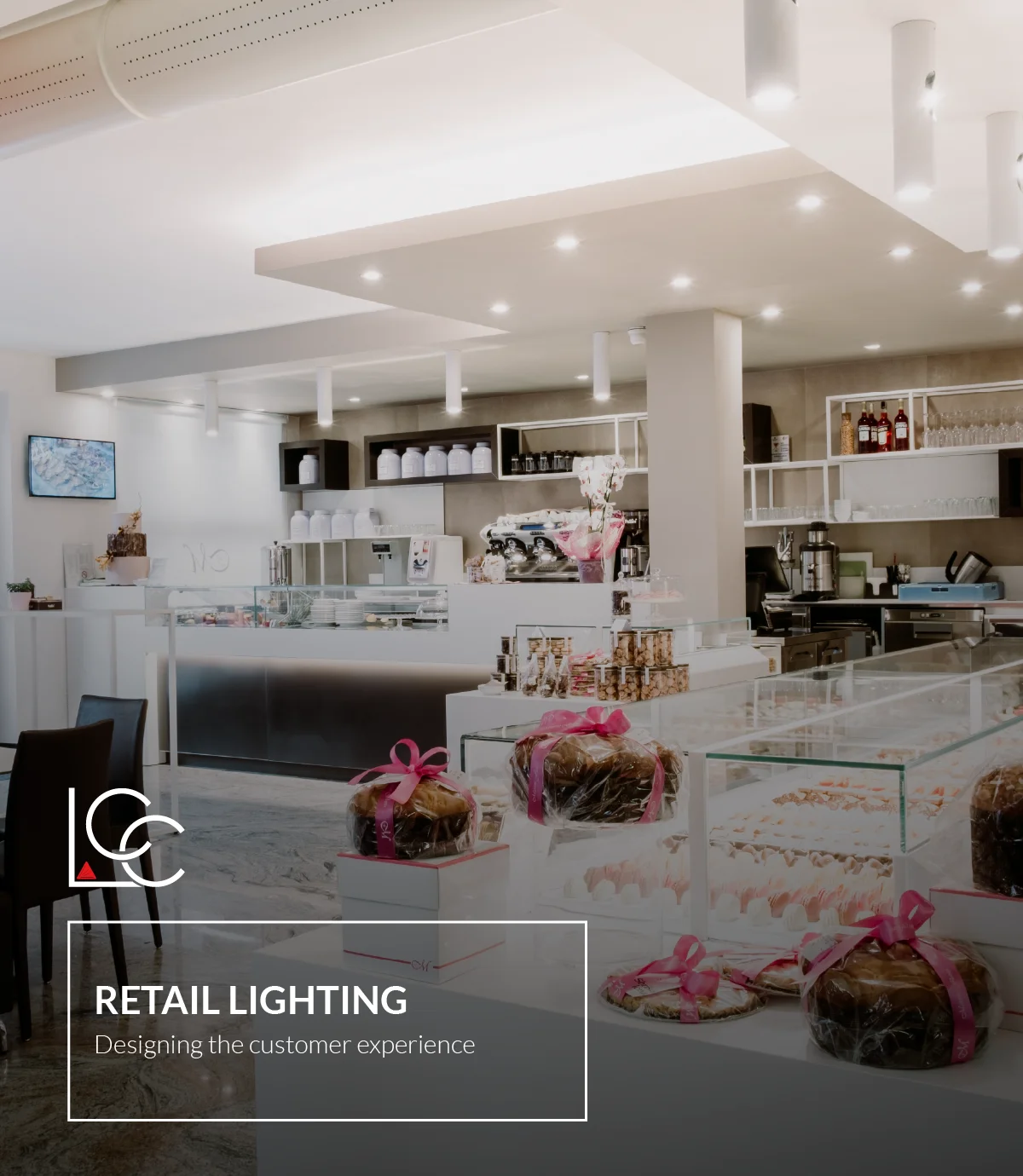
The strategic role of retail lighting
In retail, lighting is a commercial tool before it is a technical one. It can improve spatial readability, highlight strategic areas, and make the customer journey more intuitive. But it can also do the opposite.
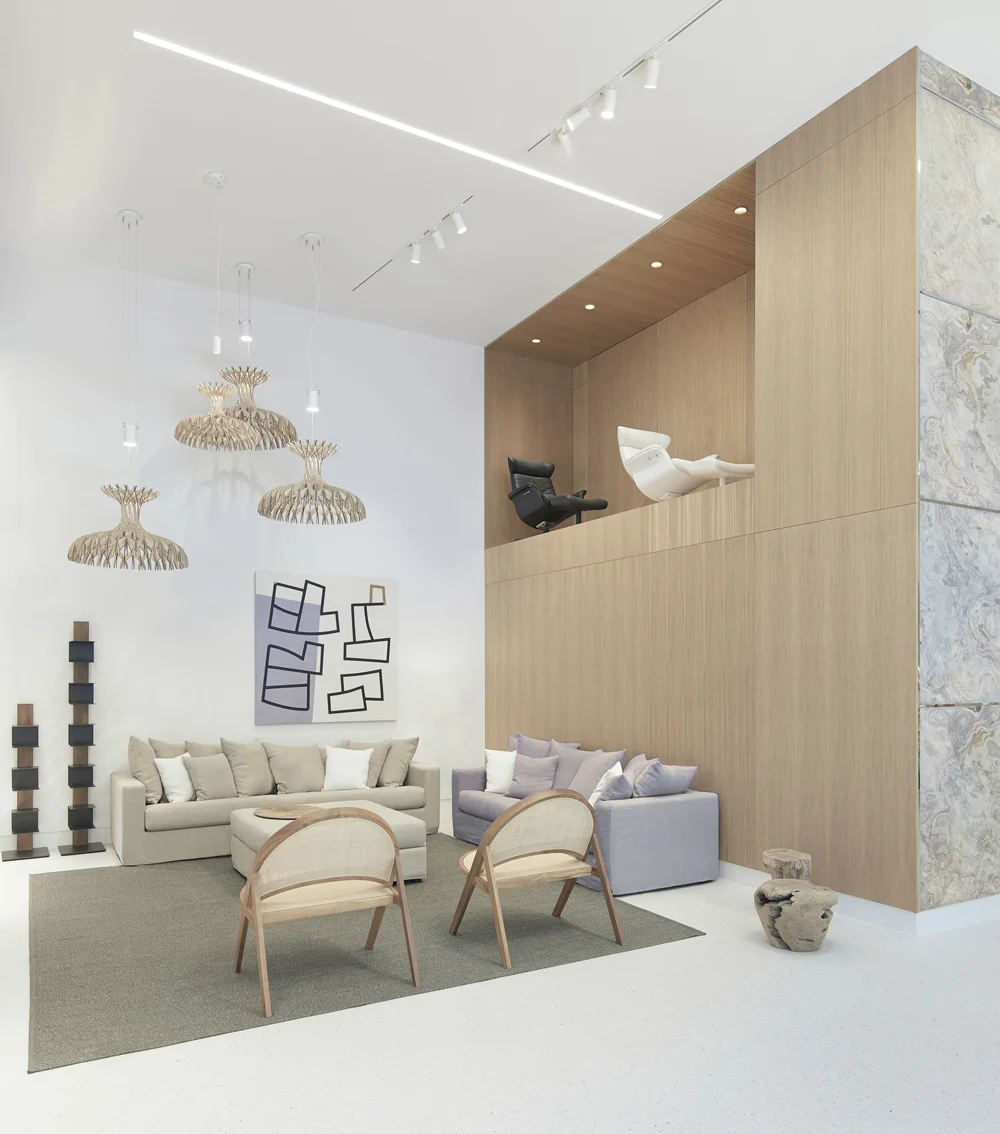
Flat lighting tends to eliminate differences between products. Overly aggressive lighting creates visual fatigue. Lighting that is inconsistent with the interior design generates perceptual disorder, even when the architectural concept is strong.
Lighting quality influences three main levels:
- Product perception
- Store atmosphere
- Customer experience
These three levels are distinct yet deeply interconnected.
The most common mistake in lighting design is assuming that more light equals greater effectiveness. On the contrary, uniform and diffused lighting often removes visual hierarchy, making spaces monotonous and lacking focal points.
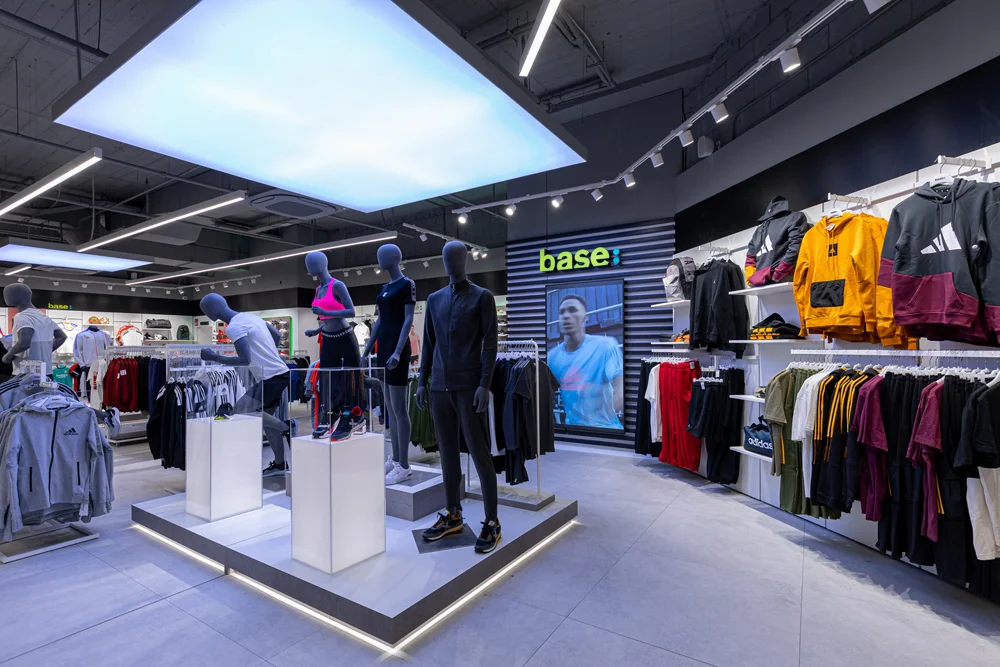
The Evolution of contemporary retail
In recent years, the language of retail lighting has changed significantly.
Where stores once relied on highly technical and uniform illumination, today many commercial spaces seek softer, more material-driven, and immersive atmospheres, increasingly inspired by hospitality and residential design.
Light is no longer used solely to make products visible; it helps shape perception.
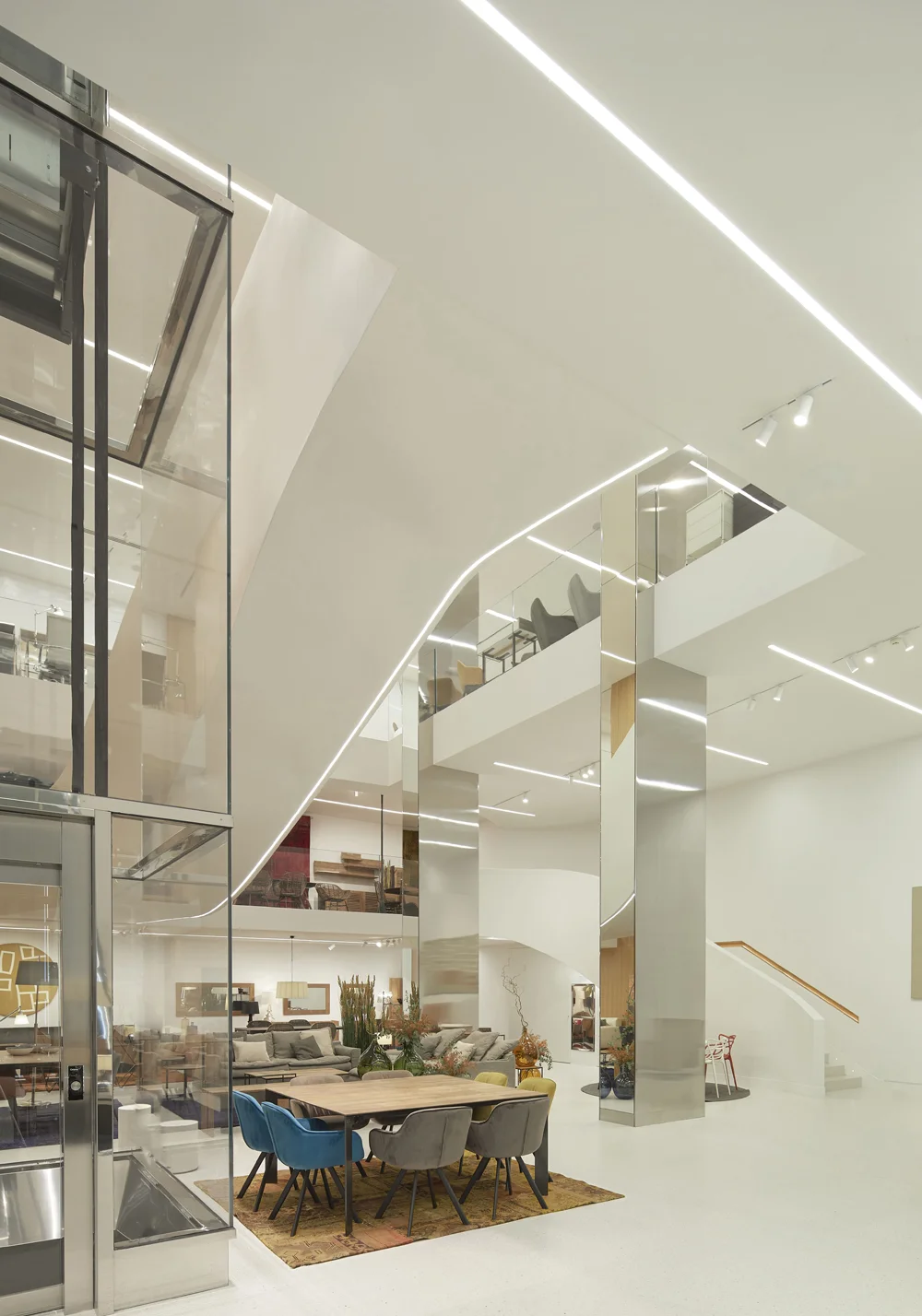
Contemporary projects increasingly minimize the visual presence of lighting fixtures by integrating light directly into architecture through recessed profiles, hidden systems, and linear lighting solutions.
The goal is no longer to showcase technology, but to let the space emerge.
This approach creates more elegant, relaxed environments aligned with brand identity, avoiding the “over-lit store” effect that often feels impersonal and visually exhausting.
In contemporary retail, experience is increasingly defined not by the quantity of light, but by how it interacts with materials, volumes, and circulation paths.
Retail lighting: first impressions and customer reception
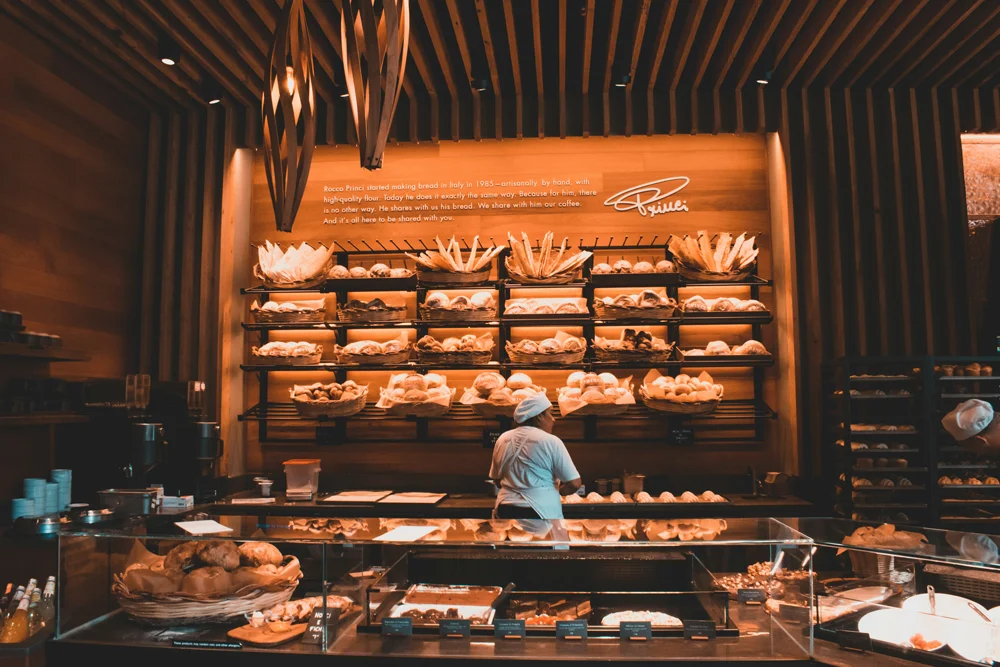
The storefront represents the psychological threshold of a retail space. Here, LED lighting must work through contrast with external daylight or shopping mall corridors.
Window lighting should not create glare but instead build a visual scene that invites customers inside. Well-calibrated accent lighting helps products stand out, creating a magnetic focal point.
Retail lighting: guiding movement through space
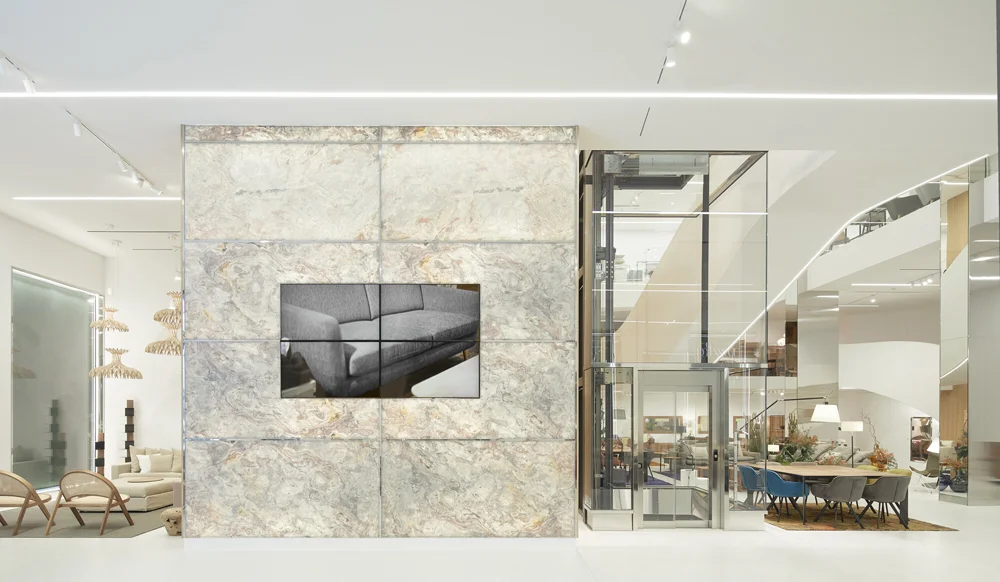
Once inside, lighting acts as intuitive signage. Customer movement can be guided through the strategic use of varying light intensities.
Transition areas require soft, reassuring illumination, while display zones benefit from stronger chromatic vibrancy. Light guides movement because the human eye instinctively seeks brighter focal points.
The technical foundations of retail lighting design
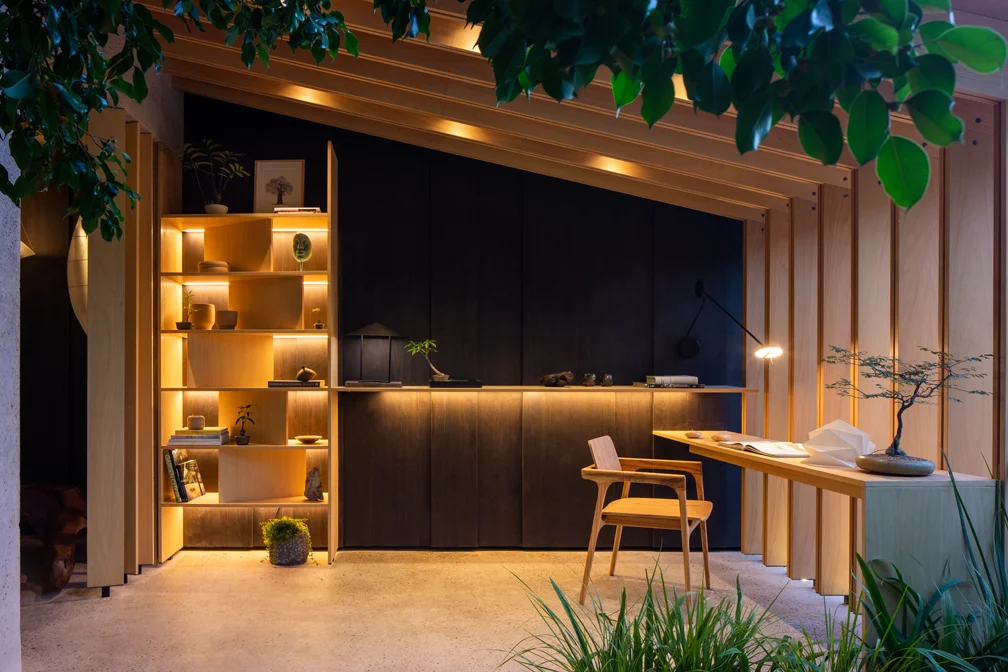
Achieving professional results requires balancing three essential dimensions: color rendering, color temperature and glare control.
Retail lighting: Color Rendering Index (CRI)
The Color Rendering Index (CRI) is critical across all sectors, from fashion to food retail. Products illuminated with ahigh CRI (typically above 90 or 95) display colors more faithfully.
A midnight blue should not appear black; fabric freshness should emerge naturally. Color accuracy is ultimately a form of honesty toward customers.
Retail lighting: color temperature
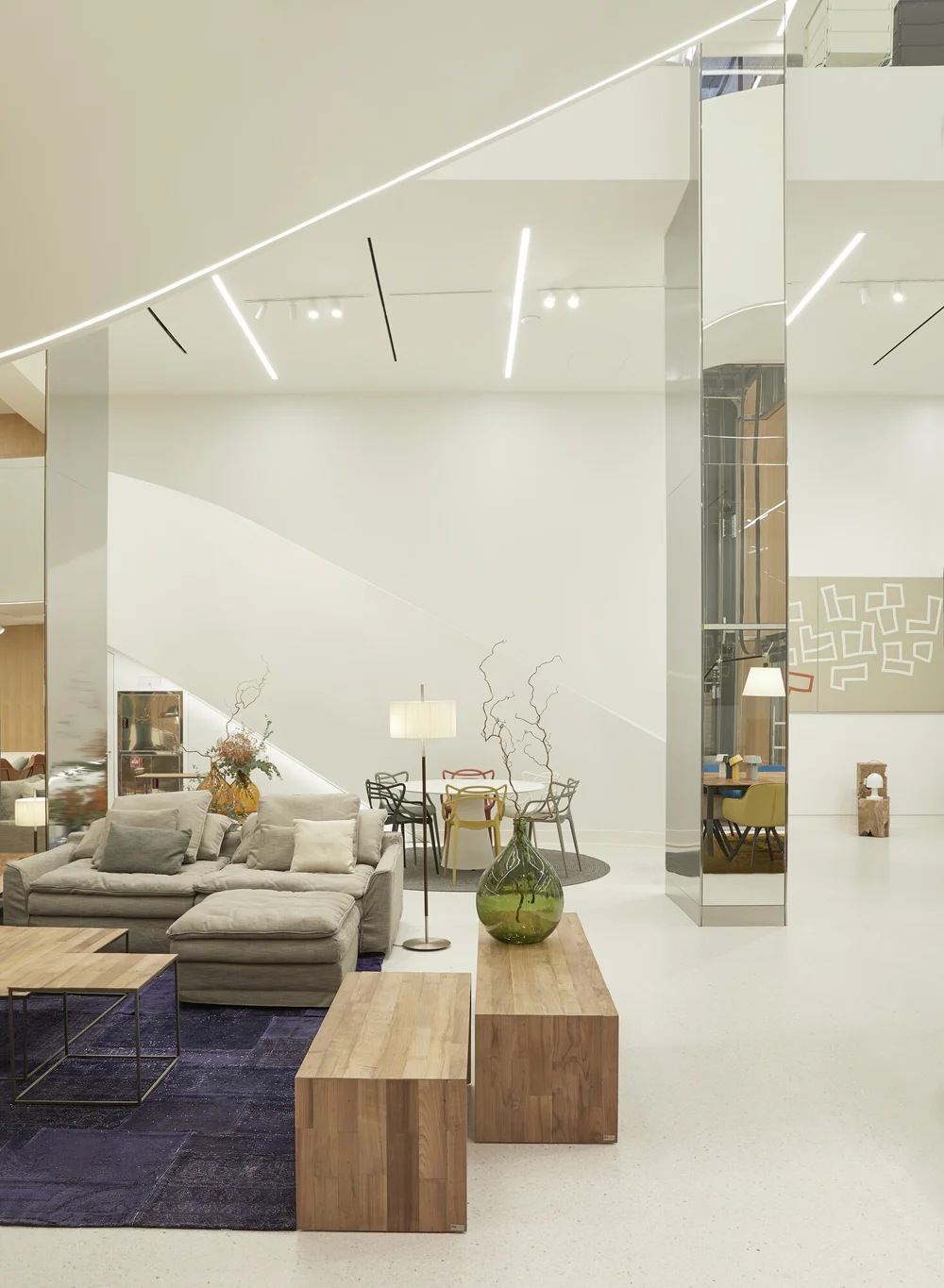
Choosing between warm light (2700K-3000K) and cool light (4000K and above) is not a matter of taste, but brand identity.
- Warm tones: ideal for luxury boutiques, interior design stores, and spaces focused on comfort and intimacy.
- Neutral/cool tones: suitable for electronics, technology, and sports retail where clarity and precision are priorities.
Color temperature defines the emotional temperature of purchasing.
Retail lighting: shadow management and visual comfort
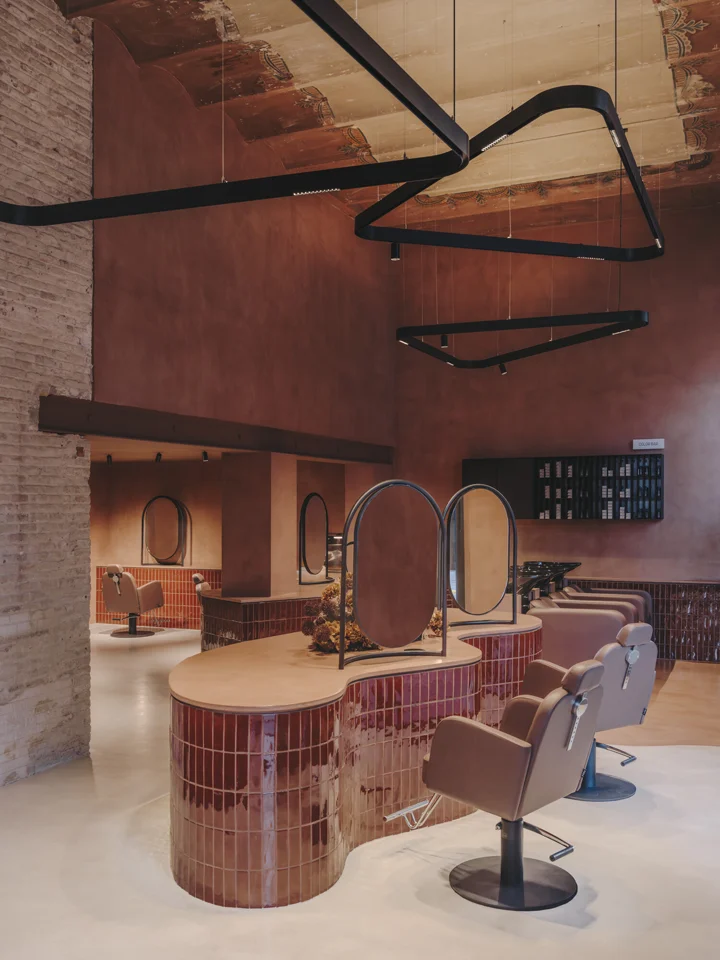
Shadows are not enemies of lighting design. Without shadows, objects lose their three-dimensionality. IThe key lies in controlling shadow softness while eliminating direct glare.
Recessed optics and anti-glare systems allow efficient illumination without making light sources uncomfortable to the eye.
Types of lighting fixtures and their applications in retail
Each area of a store requires specific lighting tools. Modern lighting systems succeed through combining different fixture types.
Track lighting and spotlights
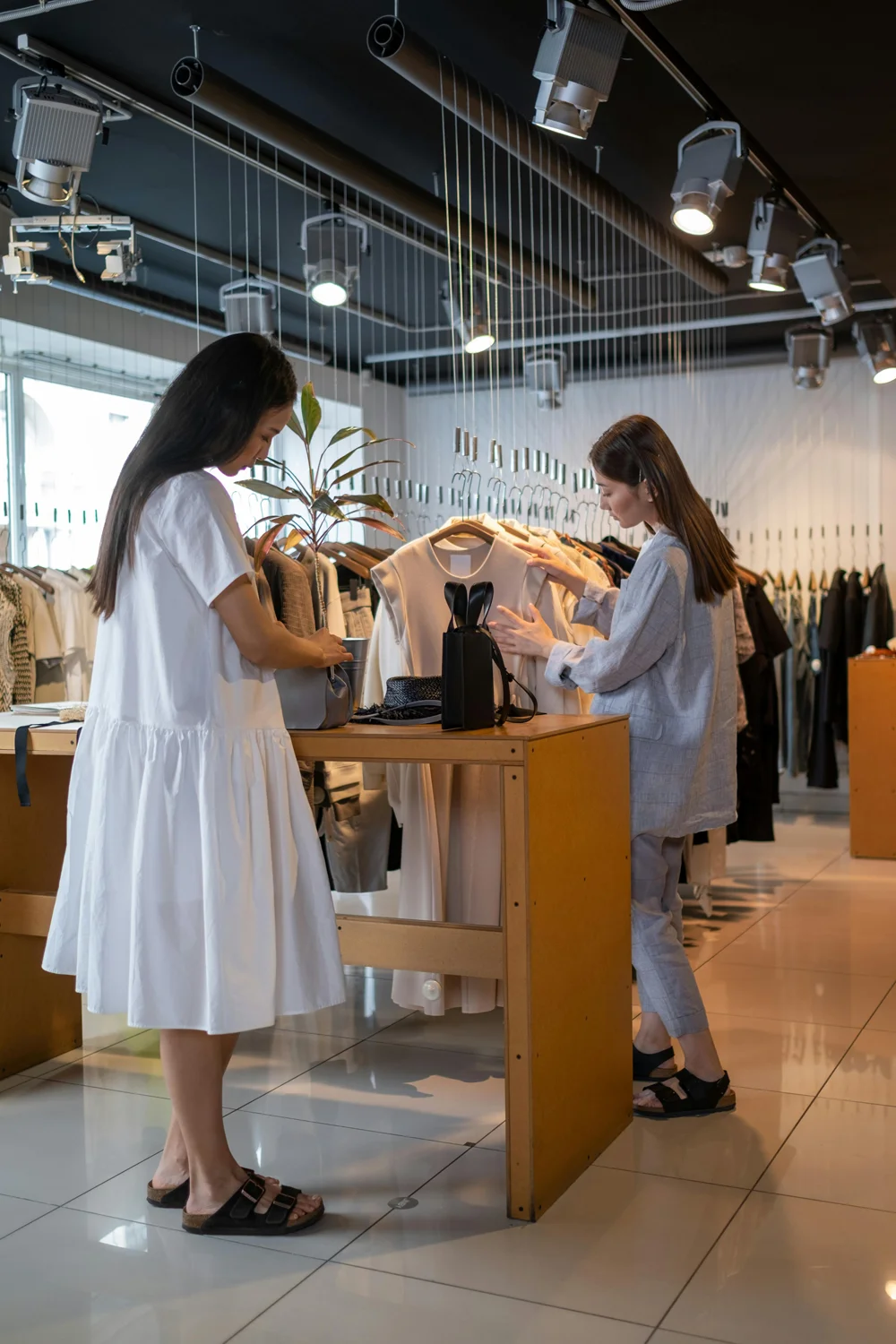
Electrified track systems are among the most flexible retail solutions. They allow lighting points to be repositioned as seasonal displays change, without altering electrical infrastructure.
Adjustable spotlights can shift from narrow beams for highlighting details to wider flood beams for broader displays.
Recessed fixtures and minimalist downlights
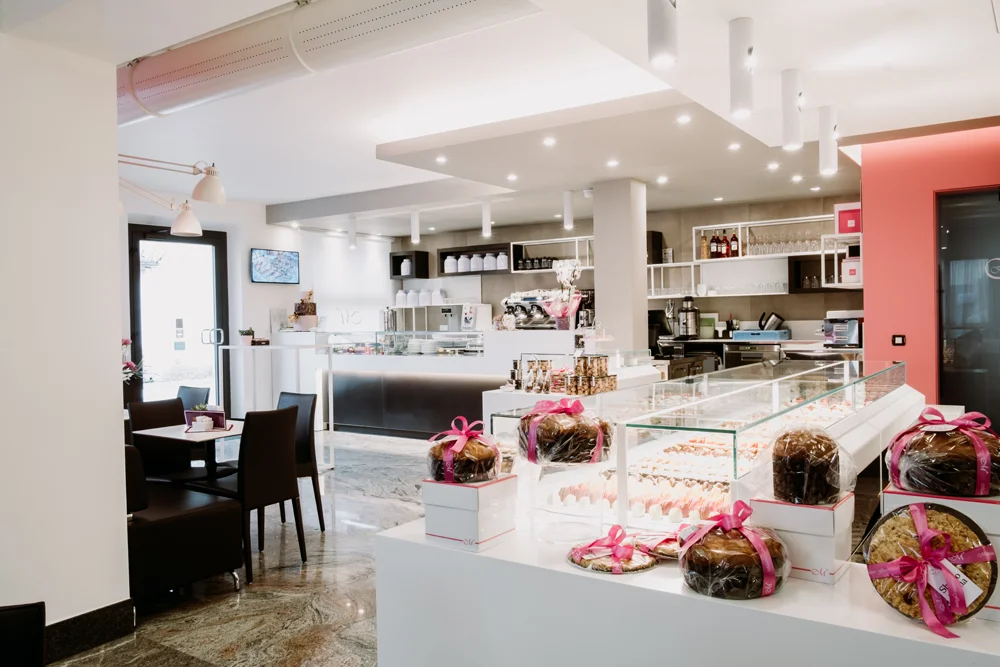
For projects seeking complete visual cleanliness, recessed ceiling fixtures offer ideal integration. By disappearing into architecture, light becomes the true protagonist, leaving ceilings visually uncluttered.
This solution is particularly suitable for stores with low ceilings or spaces featuring a minimalist design.
LED Profiles and linear lighting
Integrated LED profiles embedded in shelving or ceilings transform furniture into light sources.
Linear lighting is particularly effective for emphasizing architectural lines or creating backlighting that separates products from walls, adding lightness and elegance.
When light becomes part of architecture
In advanced retail projects, lighting is no longer considered a finishing element but an integral part of architectural composition.
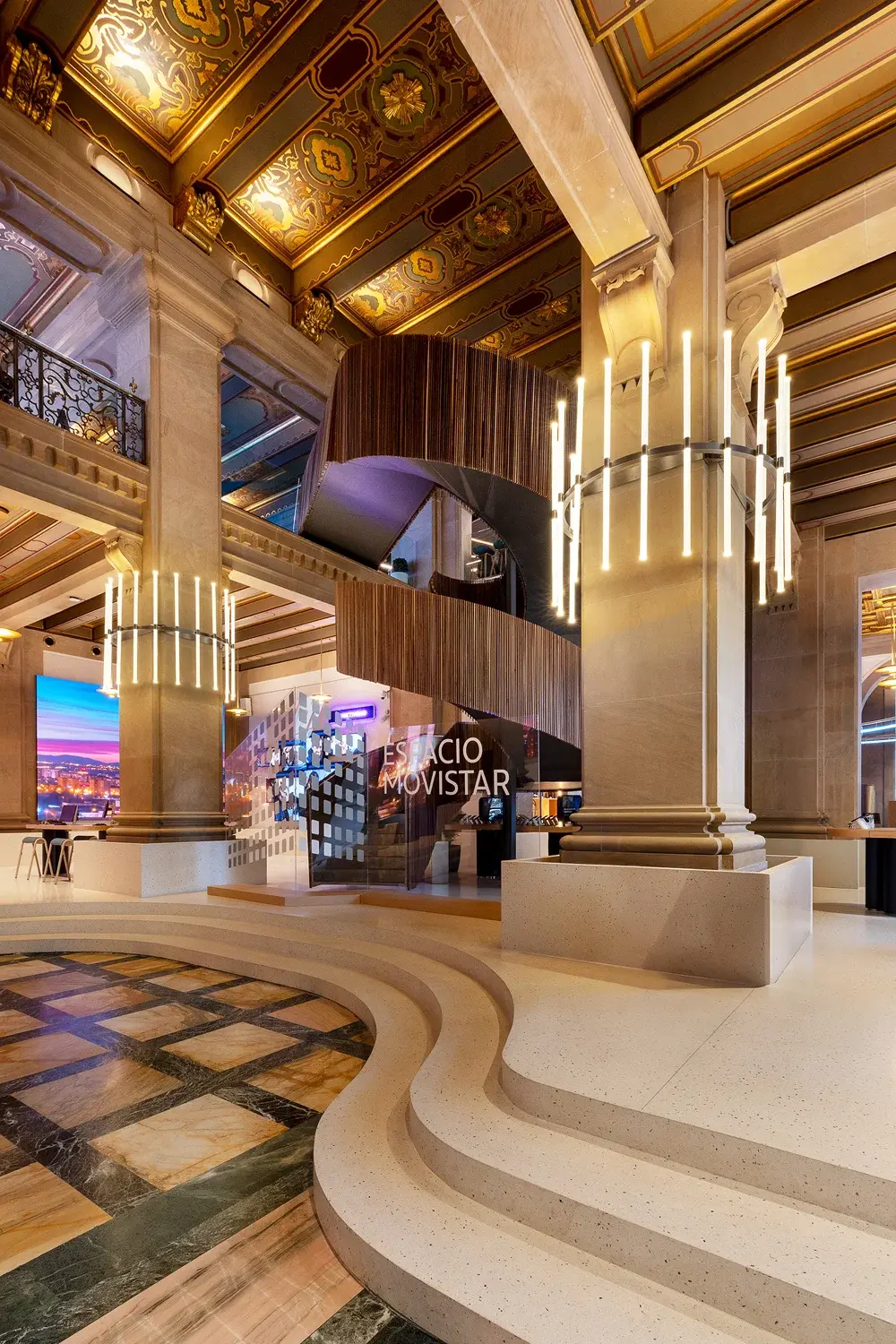
Integrated profiles, grazing light, illuminated cuts and backlighting define depth, hierarchy, and spatial perception before furnishings are even introduced.
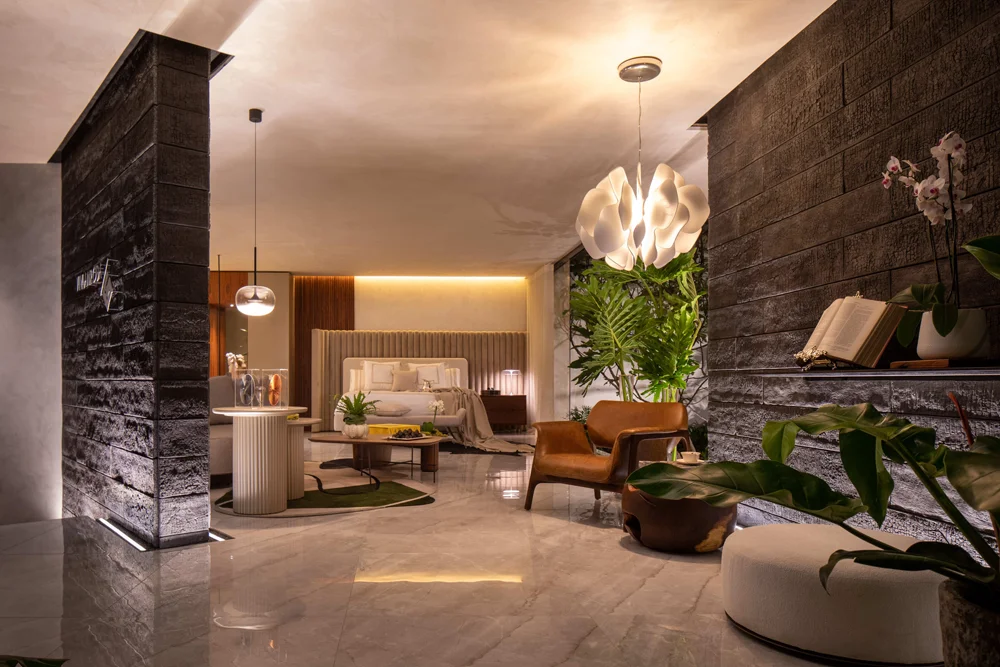
A textured wall illuminated correctly can become a scenographic feature.
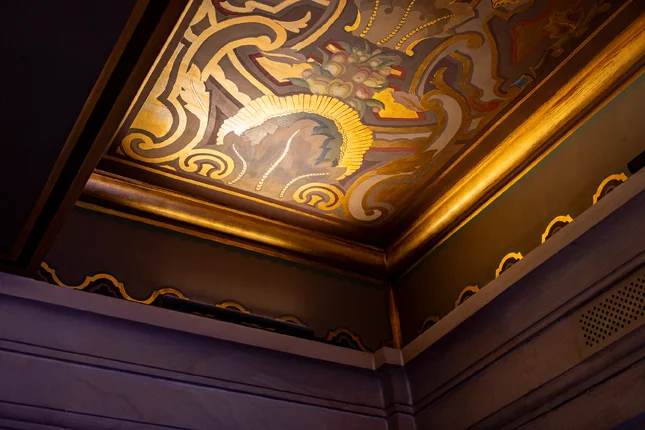
Lighting shapes perception: it can compress, expand, soften, or emphasize commercial spaces.
An effective lighting project does not simply select high-performing fixtures: it creates balance between architecture, materiality, and atmosphere.
When light is properly integrated, customers perceive the space as more welcoming, coherent, and pleasant, enhancing their in-store experience.
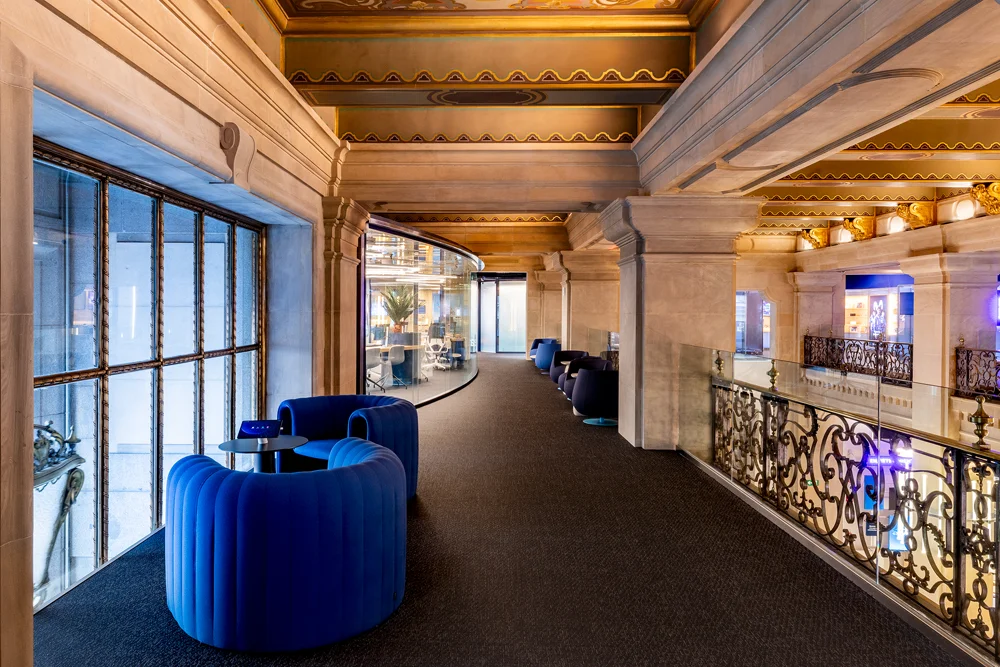
Suspended Cable Systems: visual lightness in contemporary retail
Suspended cable lighting systems are increasingly popular in contemporary retail design due to their visual lightness and architectural integration.
Unlike traditional, more invasive systems, suspended solutionsintroduce essential linear lighting capable of illuminating spaces without overwhelming them.
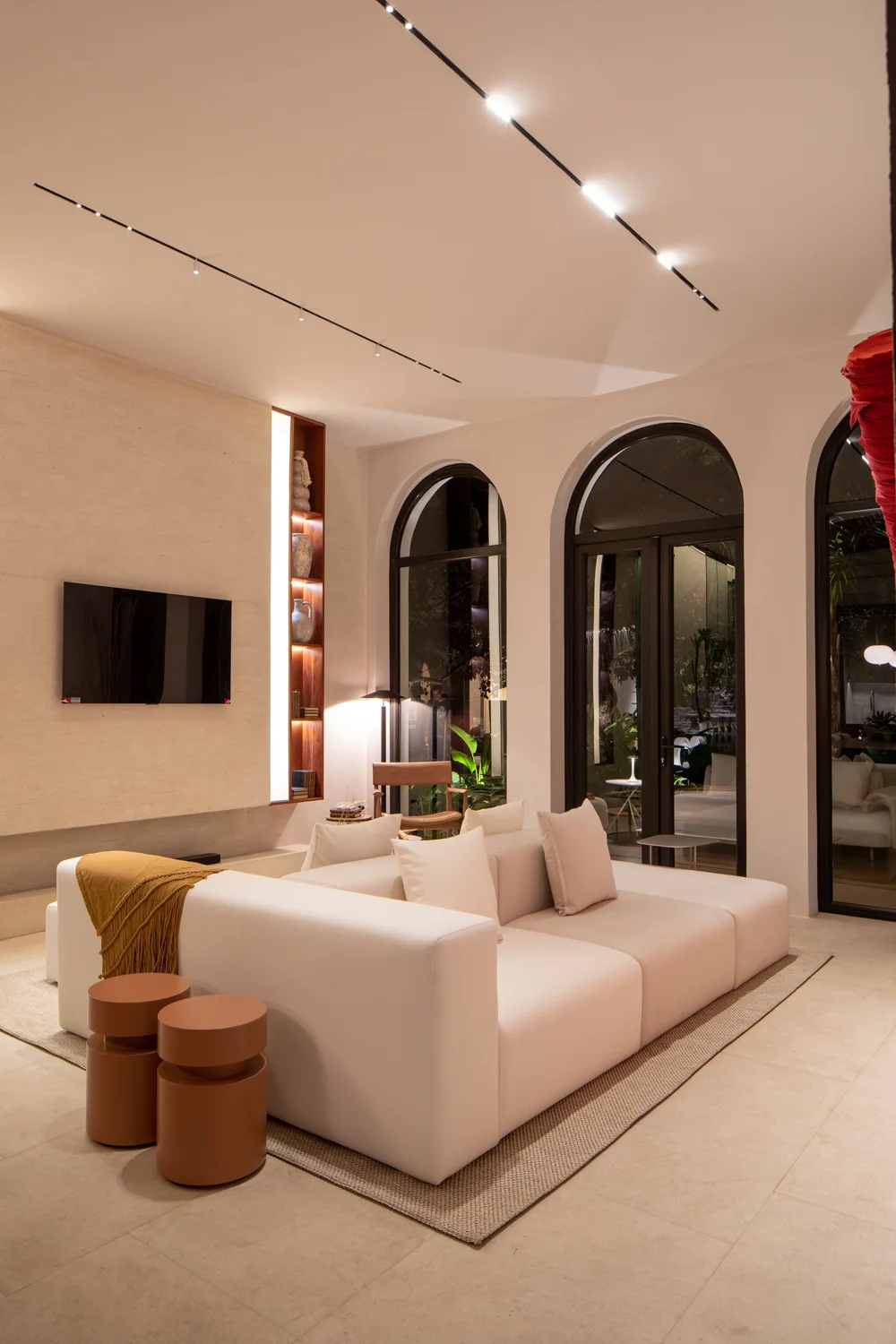
These systems are particularly effective in fashion stores, showrooms, and design-focused spaces where visual continuity is crucial.
The ability to combine direct and indirect lighting while maintaining structural minimalism allows designers to influence both product perception and overall atmosphere simultaneously.
In this context, suspended cable systems such as Sottosopra, Tagliatella, and other linear suspended solutions make it possible to create a more architectural and less intrusive lighting approach compared to traditional systems.
The ability to combine direct and indirect lighting, together with the structural lightness of the system, allows designers to work simultaneously on both product perception and the overall atmosphere of the space.
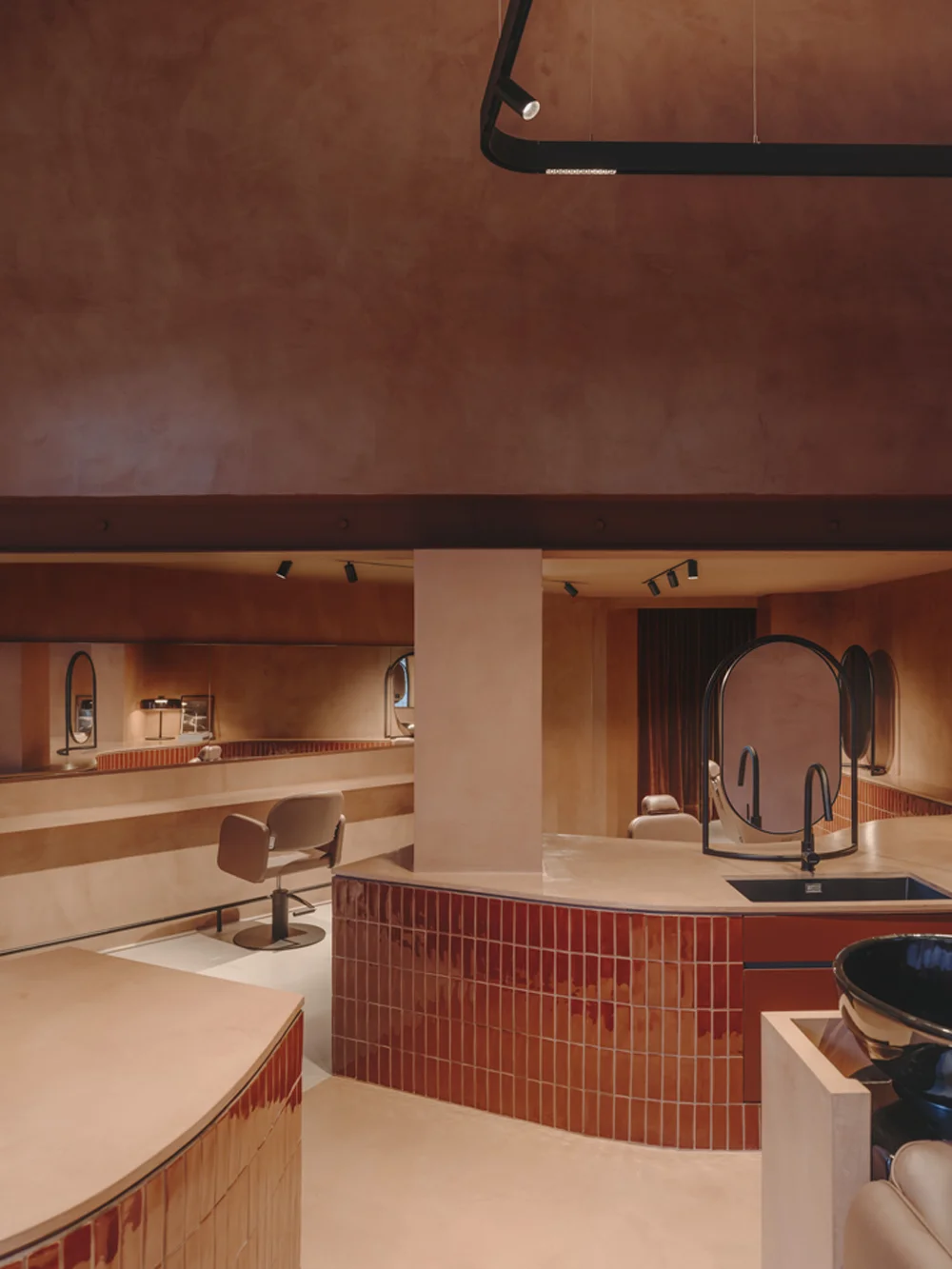
In contemporary retail environments, where clean ceilings, textured materials, and visual integration are becoming increasingly important, suspended cable systems introduce light without interrupting the architectural continuity of the space.
Another particularly interesting aspect is their compositional flexibility.
The possibility of adapting lengths, light direction, and lighting configurations makes it possible to achieve extremely clean solutions, even in complex retail environments or spaces subject to frequent layout changes.
General lighting, accent lighting, and decorative lighting
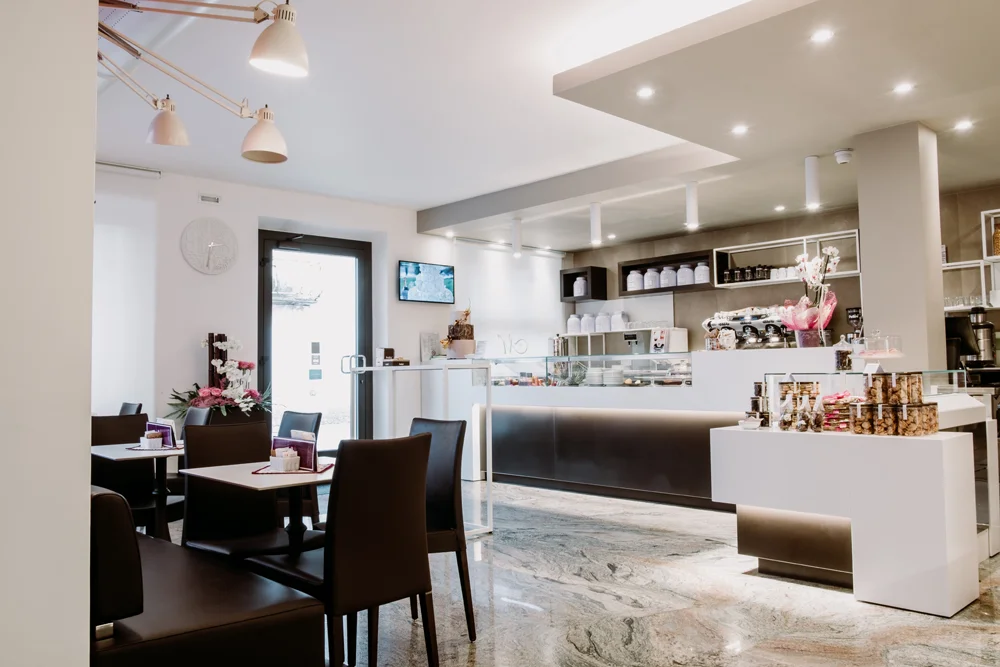
Professional retail lighting projects typically combine multiple lighting layers.
General lighting
This forms the luminous foundation of a space, ensuring comfort, orientation, and uniformity. Examples include:
- Linear ceiling fixtures
- Integrated LED profiles
- Track systems
- Recessed panels
- Suspended lighting systems
The most common mistake is making general lighting overly uniform. Lighting should support the environment, not dominate it.
Accent lighting
This is the strategic component of retail lighting. Adjustable spotlights and controlled optics direct attention toward products, displays, or key areas, creating hierarchy—and hierarchy guides behavior.
Accent lighting is particularly important in fashion retail, jewelry stores, and premium showrooms.
Decorative lighting
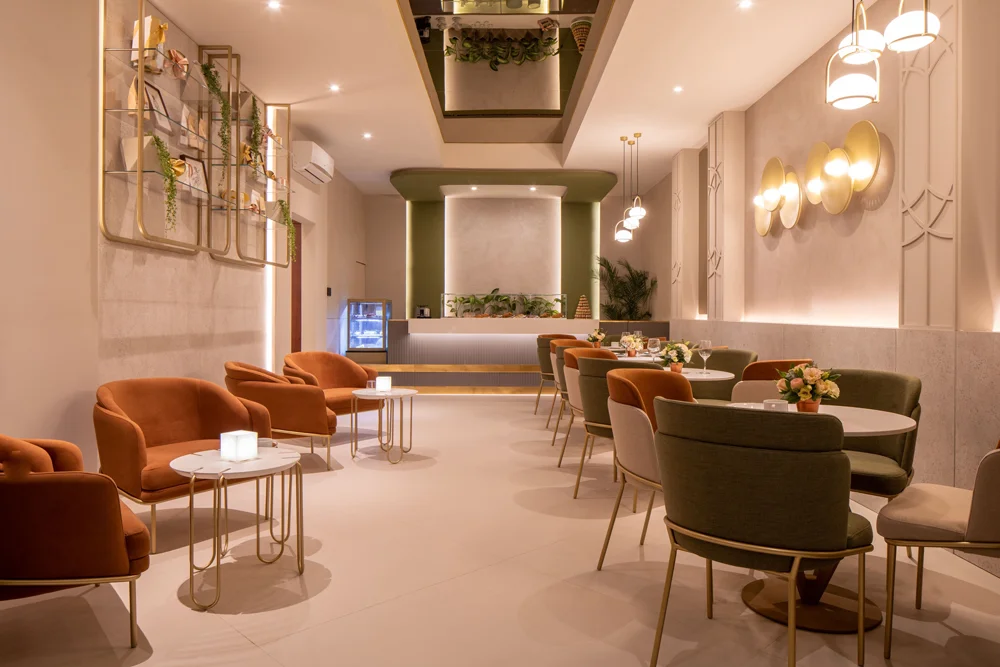
Pendant lamps, wall lights, scenographic fixtures, and custom lighting elements contribute to building the store’s visual identity.
In some projects decorative lighting is secondary; in others, it becomes an essential branding element.
Contemporary design approaches
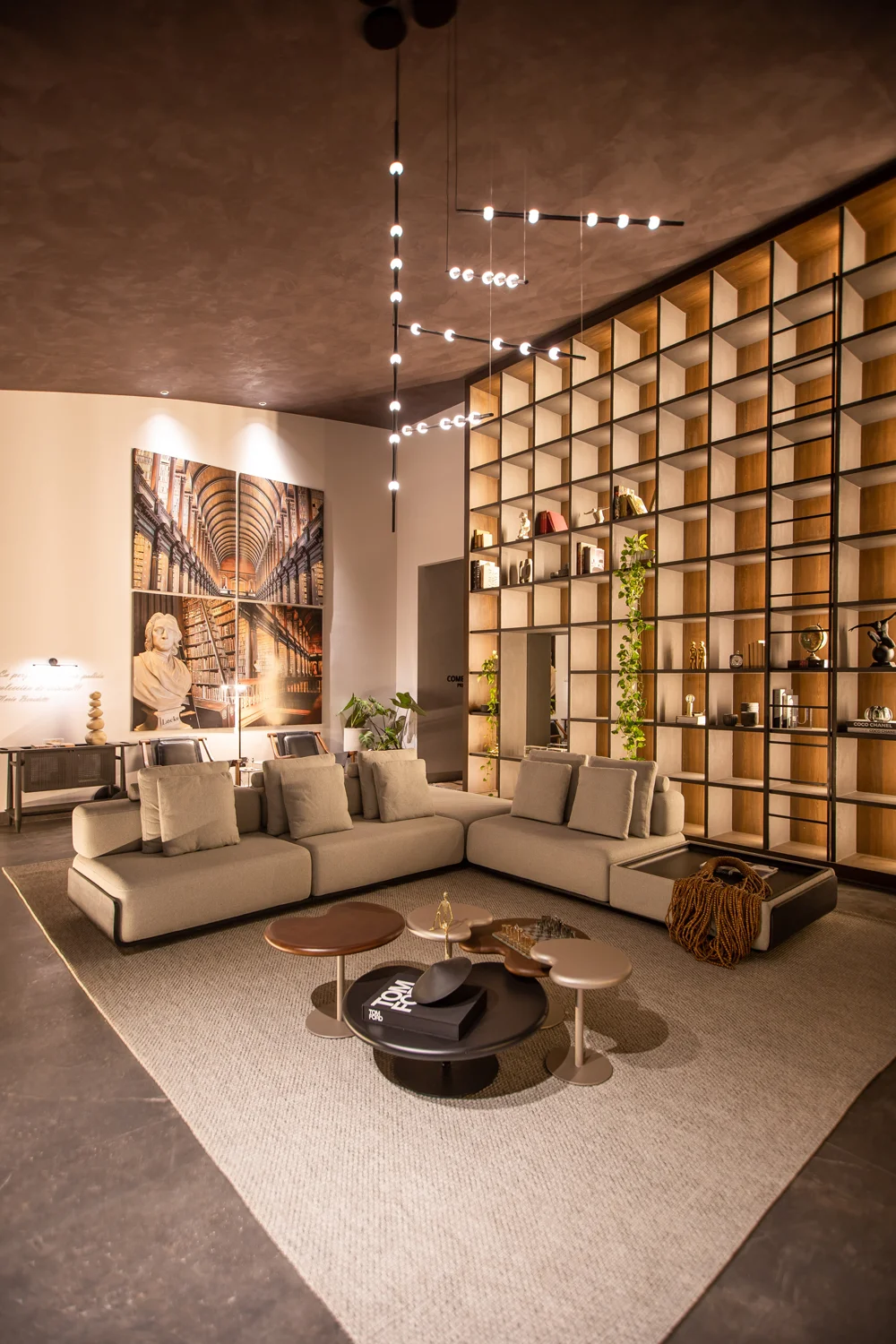
Every commercial space requires a different lighting response, yet certain strategies are becoming increasingly central in contemporary retail projects.
In fashion boutiques, for example, there is a growing tendency to avoid overly uniform lighting, favoring instead a combination of soft ambient illumination and carefully calibrated accents on key products. This approach creates greater depth and enhances the perception of a more premium environment.
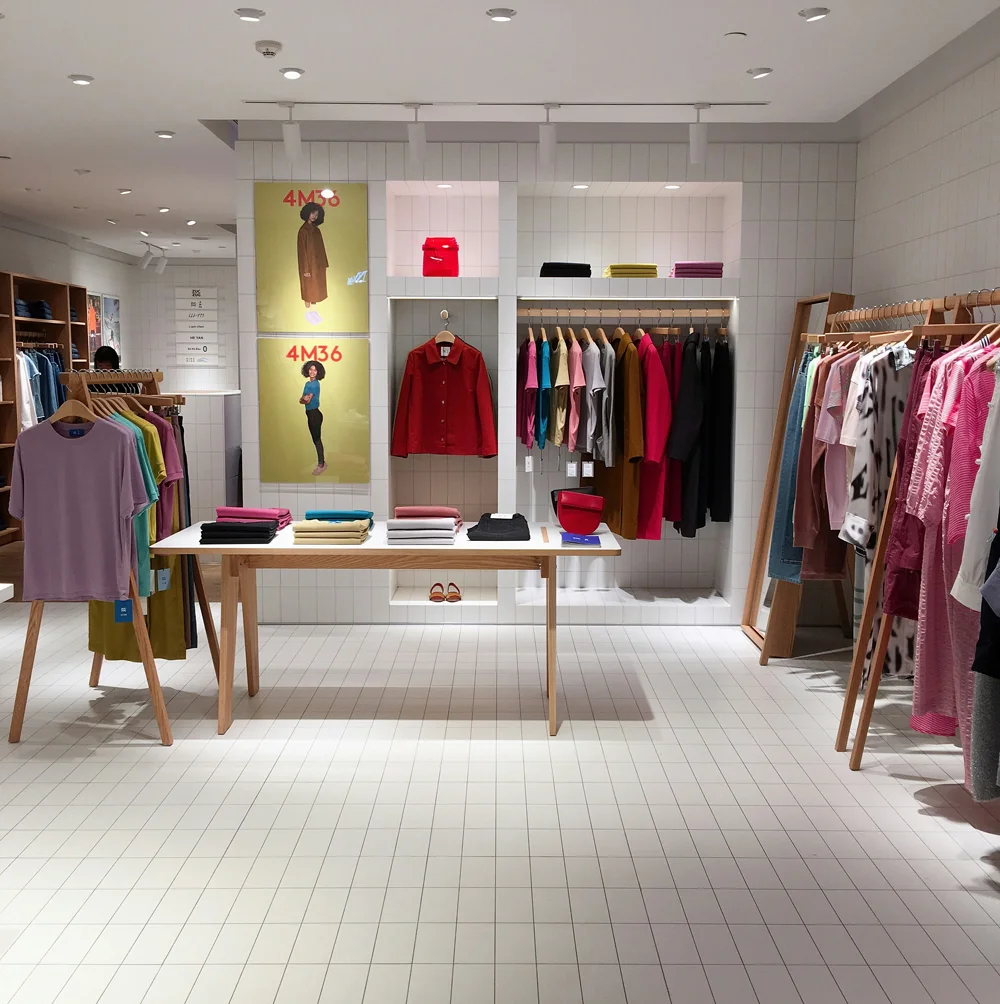
In spaces characterized by textured materials, such as natural stone, wood, or three-dimensional surfaces, grazing light is used to emphasize textures, shadows, and depth, transforming surfaces into active perceptual elements.
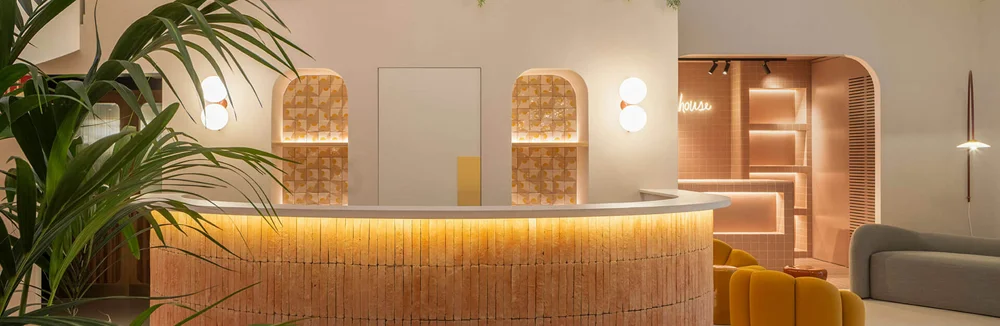
In minimalist showrooms, on the other hand, the trend is to minimize the visual presence of technology: recessed fixtures, concealed lighting channels and integrated profiles allow light to become almost invisible, leaving architecture and products as the true focal points.
Ceilings are also taking on an increasingly important role. Freeing them from intrusive technical elements helps create environments that feel cleaner, more contemporary, and architecturally coherent.
In contemporary retail, light does not simply define what customers see. It defines how a space is perceived and remembered.
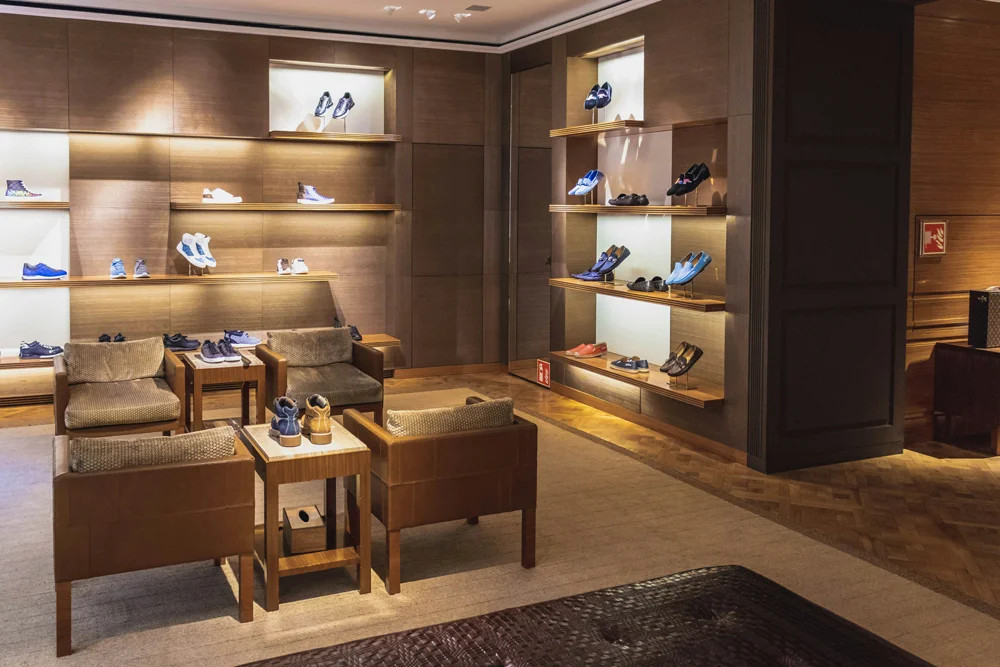
Sector-Specific retail lighting approaches
There is no universal formula for retail lighting: each product category requires its own visual language. Below are some examples of sector-specific retail lighting approaches.
The same design principles that guide lighting choices in retail can also be applied - while accounting for contextual differences - to other environments, from office lighting, where visual comfort and productivity are priorities, to residential spaces, where light shapes atmosphere and well-being.
Fashion Retail
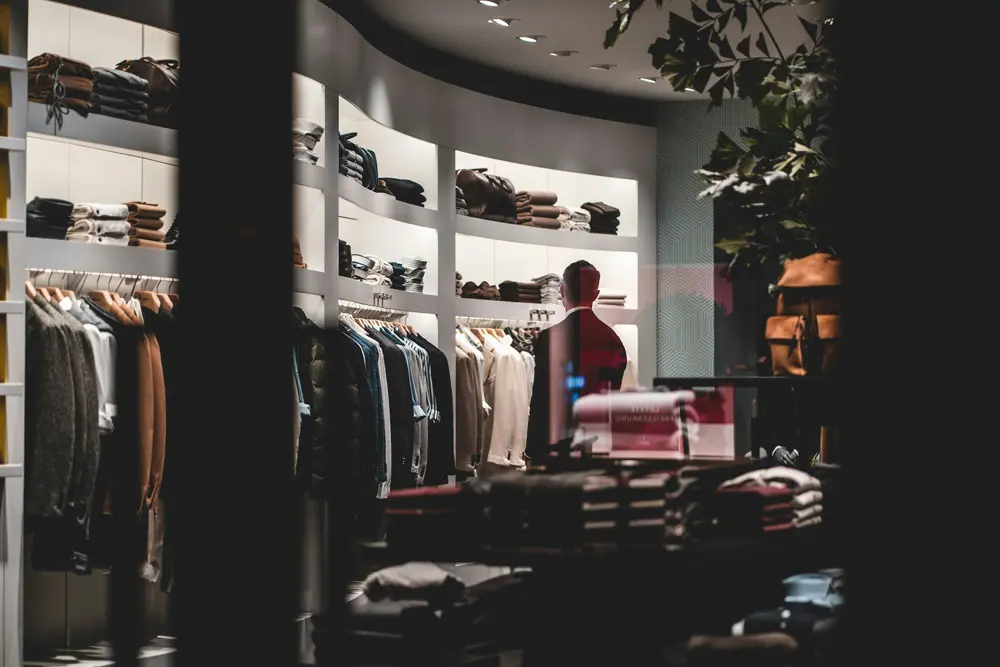
In the fashion sector, lighting must enhance fabrics and textures. Paying close attention to fitting room lighting is essential.
Often overlooked, fitting rooms are where purchasing decisions are finalized. Harsh overhead lighting can create unflattering shadows on the face and body, discouraging customers. A combination of soft frontal lighting and warm ambient illumination is key to creating a positive experience.
The same design principles applied to fitting rooms—where warm light enhances skin tones and textiles—can also be found in many residential settings, from the selection of modern bedroom lighting solutions to living room, designs, where light defines comfort and the identity of the space.
Food Retail
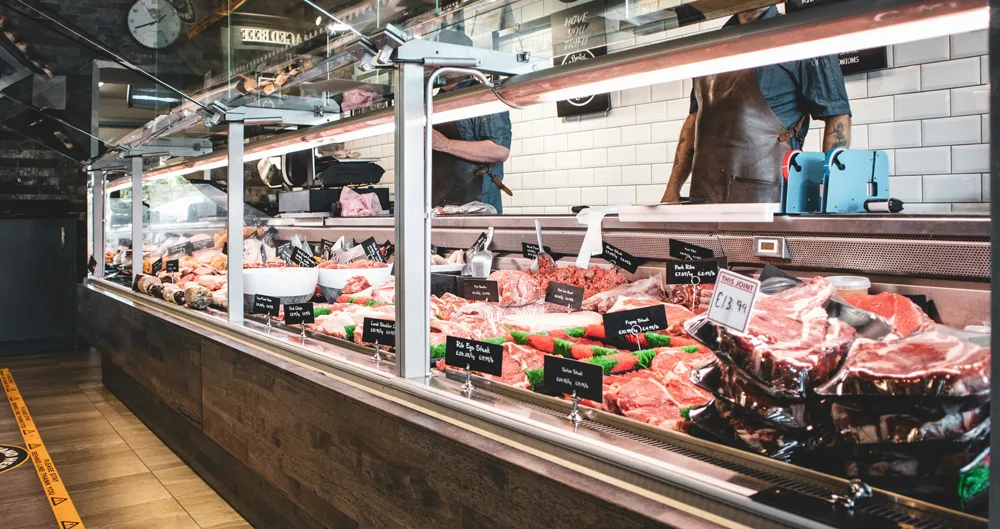
Here, lighting must enhance the perception of freshness. For meat displays, specific light spectra are used to emphasize red tones, while bakery sections benefit from warmer hues that evoke the golden appearance of oven-baked products.
The spectrometric precision of modern LEDs also helps preserve the organoleptic qualities of products by reducing UV emissions and heat generation.
Jewelry and Luxury Retail
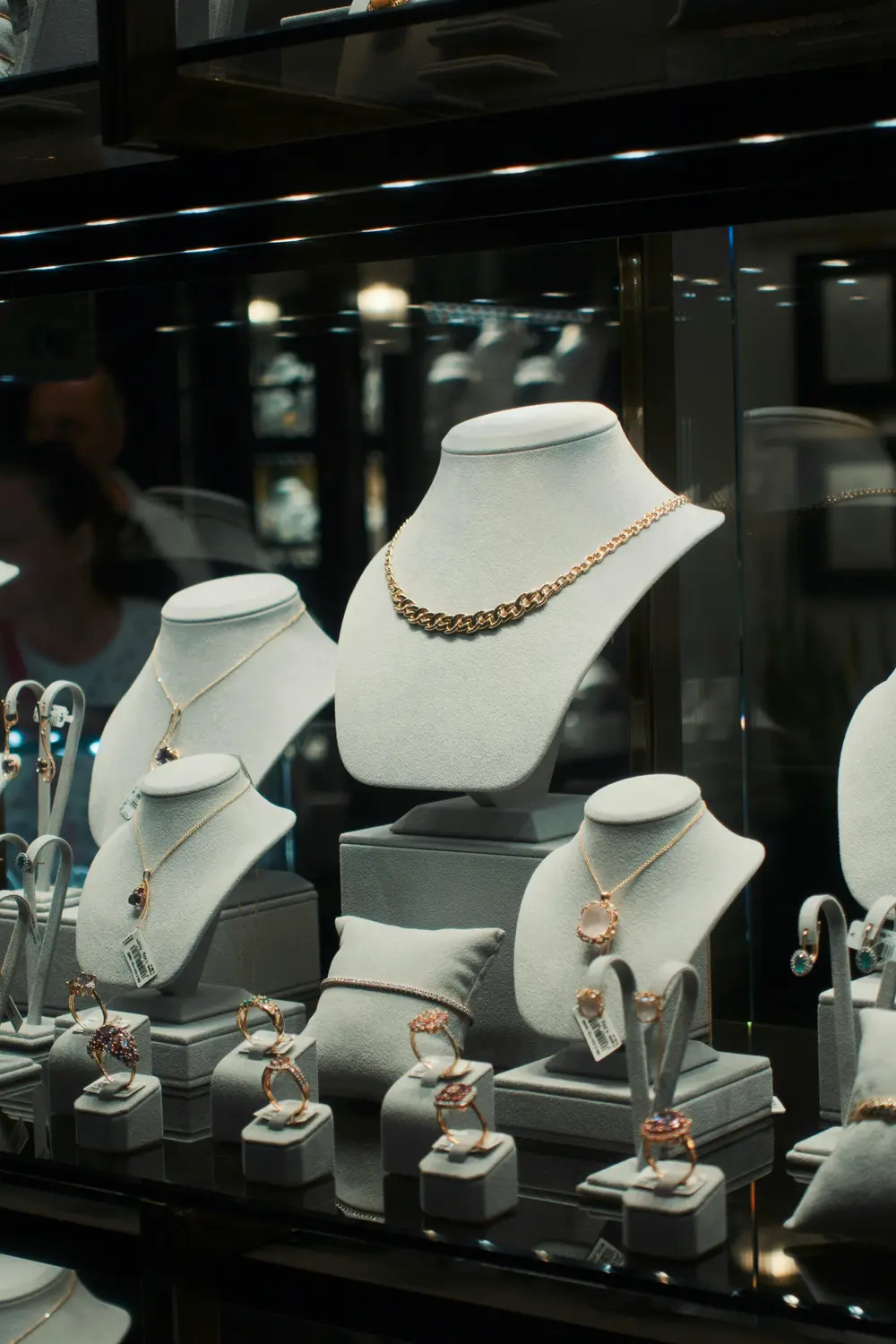
Luxury is defined by reflections and brilliance. Jewelry lighting requires highly intense point light sources to create the sparkle of precious stones.
In this context, control of light direction is extremely precise: every reflection must be carefully designed not to cause glare, but to seduce.
Sustainability and smart lighting management
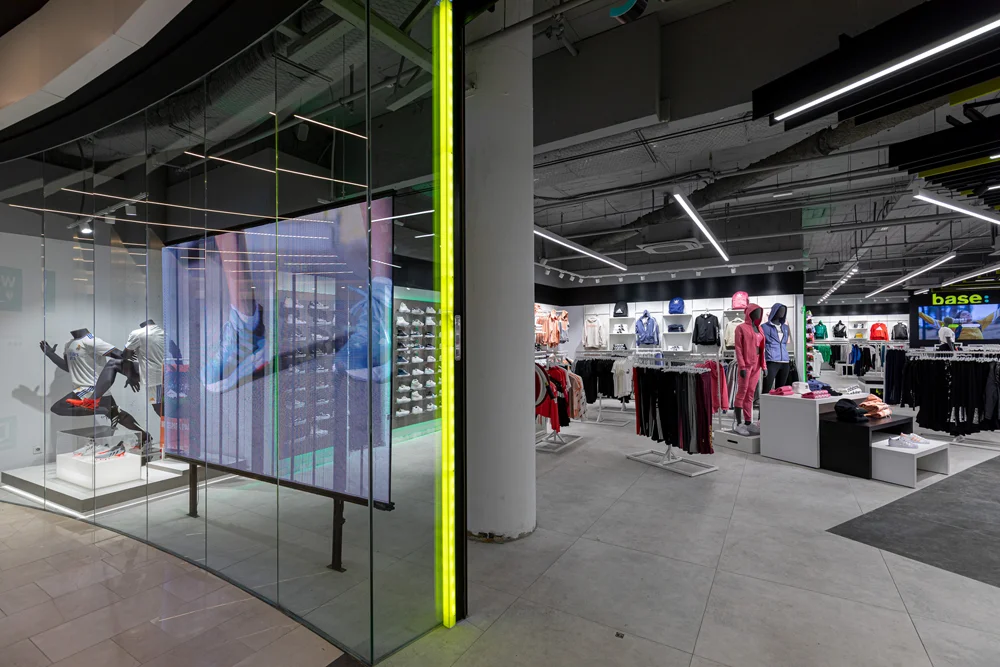
Energy efficiency is no longer an option but an economic and ethical necessity. The shift to LED technology has significantly reduced energy consumption, while smart management systems can further deliver substantial savings on energy costs.
Dimming systems and sensors
LED technology has significantly reduced energy consumption, while smart systems provide additional savings. Protocols such as DALI or wireless systems allow lighting intensity adjustments according to daylight availability or store opening hours.
Reducing brightness during quieter periods saves energy while also creating more relaxed atmospheres.
Long-Term performance
Investing in high-quality lighting fixtures ensures consistent performance over time.
Lower-quality LEDs may experience lumen depreciation or color shifts after only a few months, affecting store aesthetics and customer perception.
FAQ: retail lighting
The approach to lighting often raises questions that move between aesthetics and practical considerations. Below are answers to the most common issues that emerge during the analysis and design phase.
Is track lighting or recessed lighting better for a new retail store?
The choice is not based on an absolute aesthetic standard, but on the flexibility required by the business model. Electrified track lighting is the preferred solution for stores that frequently update their layouts, as it allows light beams to be repositioned without structural interventions.
Recessed lighting, on the other hand, is ideal for those seeking full architectural integration, offering a "clean" ceiling where the light source disappears, leaving only the lighting effect visible. Often, the best solution lies in a balance between the two systems.
What is the real difference between a standard LED and a high CRI LED?
Color is a perception mediated by light. A standard LED with a CRI of 80 tends to flatten tonal variations, making reds less vibrant and skin tones less natural.
In retail environments, using light sources with a CRI above 90 or 95 is a commercial necessity: it reduces product returns (because in-store colors match real colors more closely) and enhances perceived product quality. High color rendering lighting is the most honest way to present merchandise.
How much light is needed per square meter?
Light quantity, measured in lux, varies significantly depending on product type and brand positioning. A common mistake is over-illumination: an excessively bright environment can feel sterile and lacking in hierarchy.
Rather than focusing on total light levels, contrast ratios are what truly matter. Typically, designers aim for a subtle ambient base lighting layered with stronger accents (up to 3-5 times higher) on key products. Light should be dosed, not poured.
How can heat from lighting in shop windows be reduced?
Although LED technology is far more efficient and generates significantly less heat than traditional halogen lamps, thermal management remains essential-especially in enclosed displays or with heat-sensitive products such as cosmetics or food.
The solution lies in selecting fixtures with high-quality passive heat sinks and efficient drivers. Proper design prevents product overheating and reduces the load on air-conditioning systems, improving overall sustainability.
Can lighting really influence customer dwell time?
Yes. Light affects the circadian system and emotional state. Warm tones with soft distribution encourage relaxation and longer dwell time, typical of luxury or furniture retail. Cooler, more uniform lighting stimulates attention and a faster purchasing rhythm, as seen in supermarkets and fast fashion environments.
Designing lighting ultimately means defining the “heartbeat” of the customer experience.
Our Approach: design and supply
In our vision, lighting products are only one part of the solution. As specialists in lighting design and fixture supply, we believe every space deserves a tailored analysis.
We do not simply provide spotlights, tracks, orLED profiles we provide the tools to transform commercial spaces into living environments.
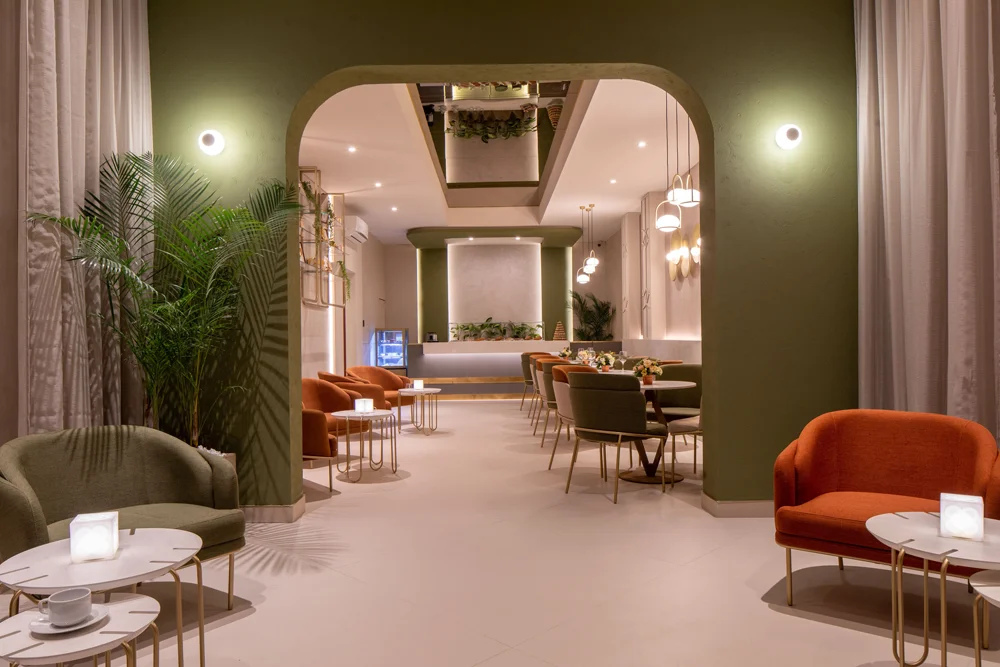
We collaborate with architects and designers to turn design concepts into technical reality, balancing budget constraints with scenographic ambitions.
Our process begins with consultancy and lighting calculations, continuing through supply and installation of advanced systems designed to perform over time.
Conclusion
Lighting a store means creating an atmosphere and defining a visual identity. Light is the intermediary between entering the store and making a purchase.
When a project is executed with mastery, technology disappears, leaving room for emotion and enhancing the shopping experience for everyone who enters your store.
The same design care we dedicate to commercial spaces is applied to every context: whether it is illuminating gardens and outdoor areas, enhancing a terrace or finding the right solution for exposed beam ceilings, the approach is always the same—analysis of the space, selection of the right tools, and a balance between function and emotion.
Light is not a running cost, but an investment that transforms space into experience.