The challenges of outdoor lighting: why outside is different
Lighting a terrace requires a different approach compared to lighting interiors. In a room, walls and ceilings help diffuse and soften the light.
Outdoors, however, there is nothing to “bounce back” brightness: light tends to disperse, and the risk is the classic floodlight effect, with blown-out areas and deep shadows that make the space uncomfortable.
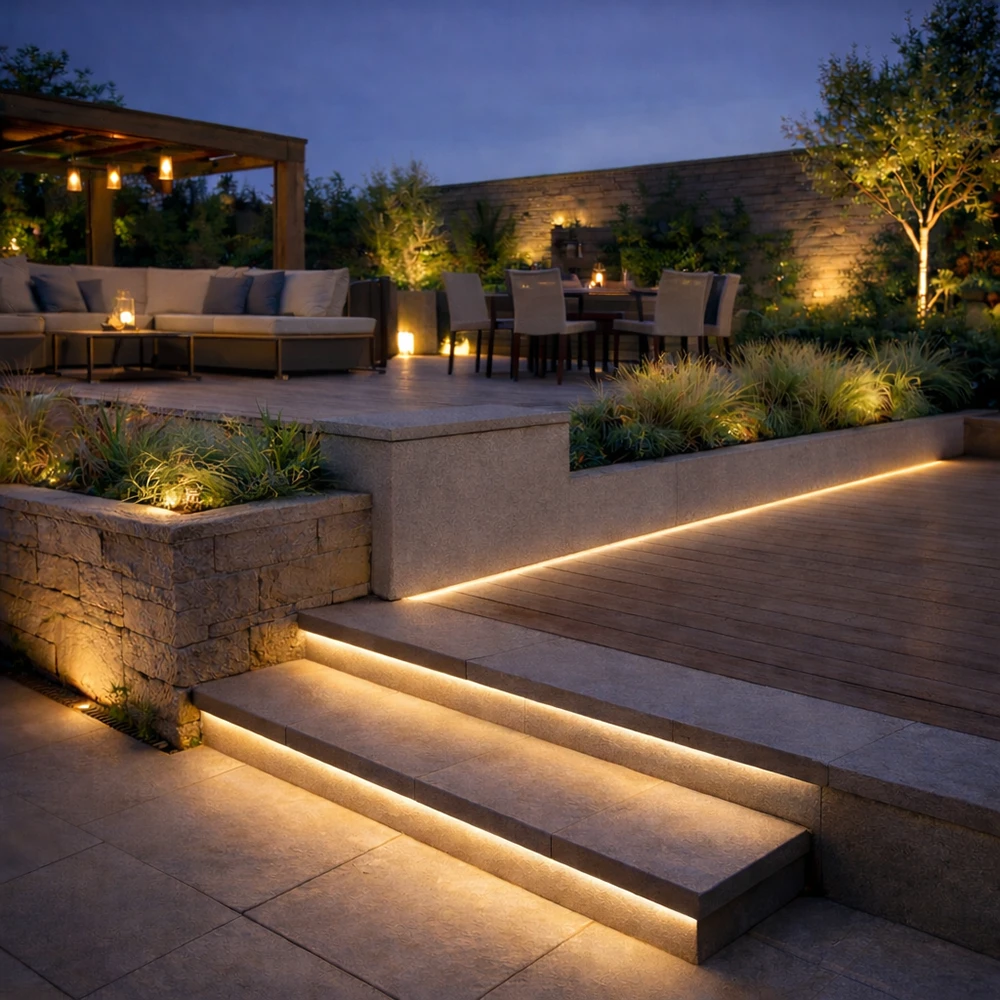
Added to this is the reaction of materials. Wood, stone, porcelain stoneware, metal, and glossy surfaces all respond differently to light - they can be enhanced or completely compromised. Dark flooring, for example, absorbs a great deal of light and tends to swallow details; very light or reflective surfaces, on the other hand, can create uncontrolled glare.
Then there are practical aspects that cannot be overlooked: the exposure of wall-mounted fixtures and lamp posts to rain and humidity, temperature fluctuations, and wind requires the selection of fittings and solutions truly designed to last. Finally, there is a frequently ignored but crucial issue: light pollution. A well-designed terrace does not illuminate everything — it illuminates what is necessary, protecting the beauty of the night sky.
The LuceControCorrente philosophy: designing with light (and with shadows)
In outdoor lighting, we never aim for luminous saturation. The goal is not to fill a space with light, but to build a scene. Shadows are not a flaw — they are part of the design.
The difference between a terrace that feels technical and one that feels like a place of wellbeing often lies precisely here: in how light is distributed and controlled.
LuceControCorrente develops garden and outdoor lighting projects with a clear objective: to avoid visible light sources. Outdoors, in a dark setting, the eye is extremely sensitive, and even a relatively small light point can become disturbing. For this reason, light should be perceived through materials, accents, and depth - not through glaring fixtures.
Lighting the terrace: solutions that truly create atmosphere
When we design a terrace, we almost always work with multiple layers and types of light emission, discreetly integrated.
Linear and grazing lighting
LED profiles positioned along an edge, at the base of a low wall, or at a strategic point along the perimeter help define the space and guide movement, creating an elegant and continuous luminous carpet.
One very important detail: the profile must be shielded or recessed. If the source remains visible, the effect becomes aggressive and often turns into a useless glaring line. When the light is hidden and works across surfaces, the result is soft and believable.
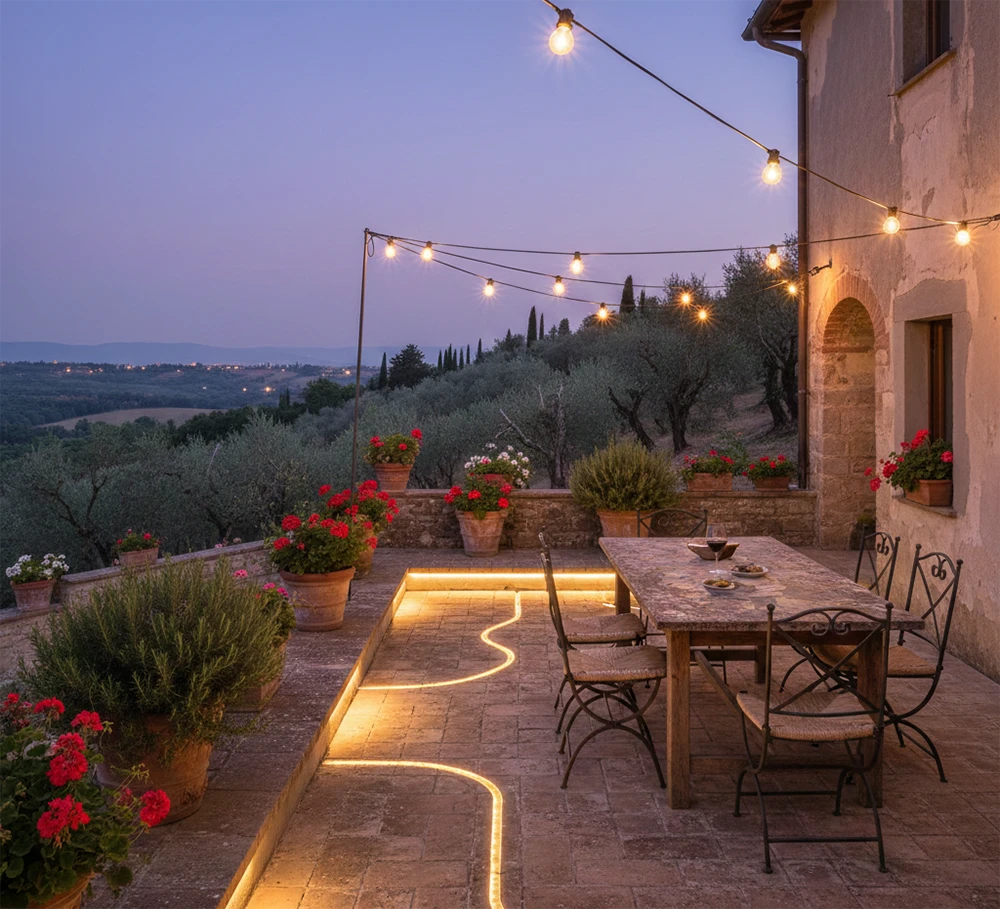
In this photograph, we can see the Led Flessibile Binario Nano a LuceControCorrente product installed on the floor of a terrace to create soft, guiding illumination.
Vertical light
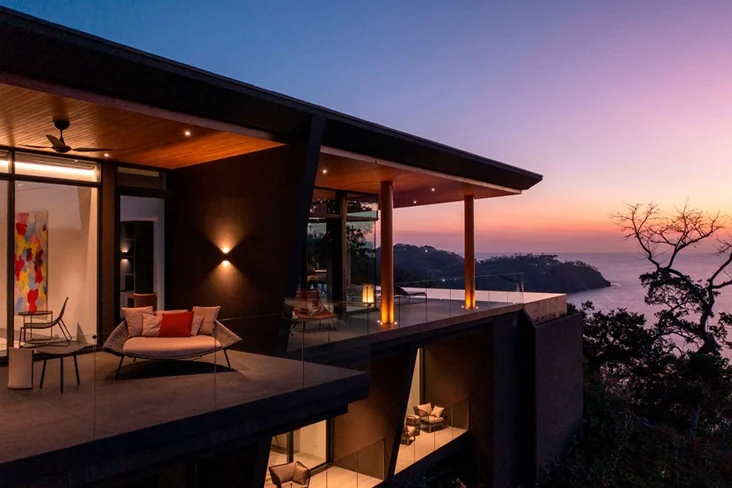
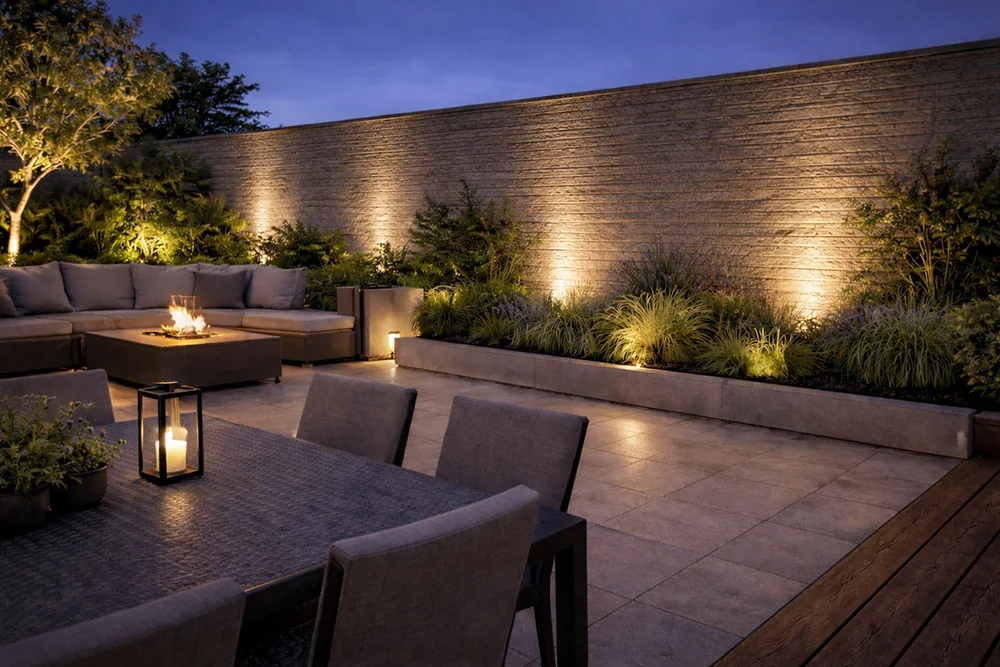
Illuminating walls, columns, or architectural surfaces is one of the most effective ways to make a terrace feel larger. The wall stops being a dark backdrop and becomes a surface that breathes.
This type of light must be extremely controlled: the goal is not an aggressive theatrical effect, but precise, uniform, and pleasant illumination capable of enhancing materials.
Suspended systems and cable lighting
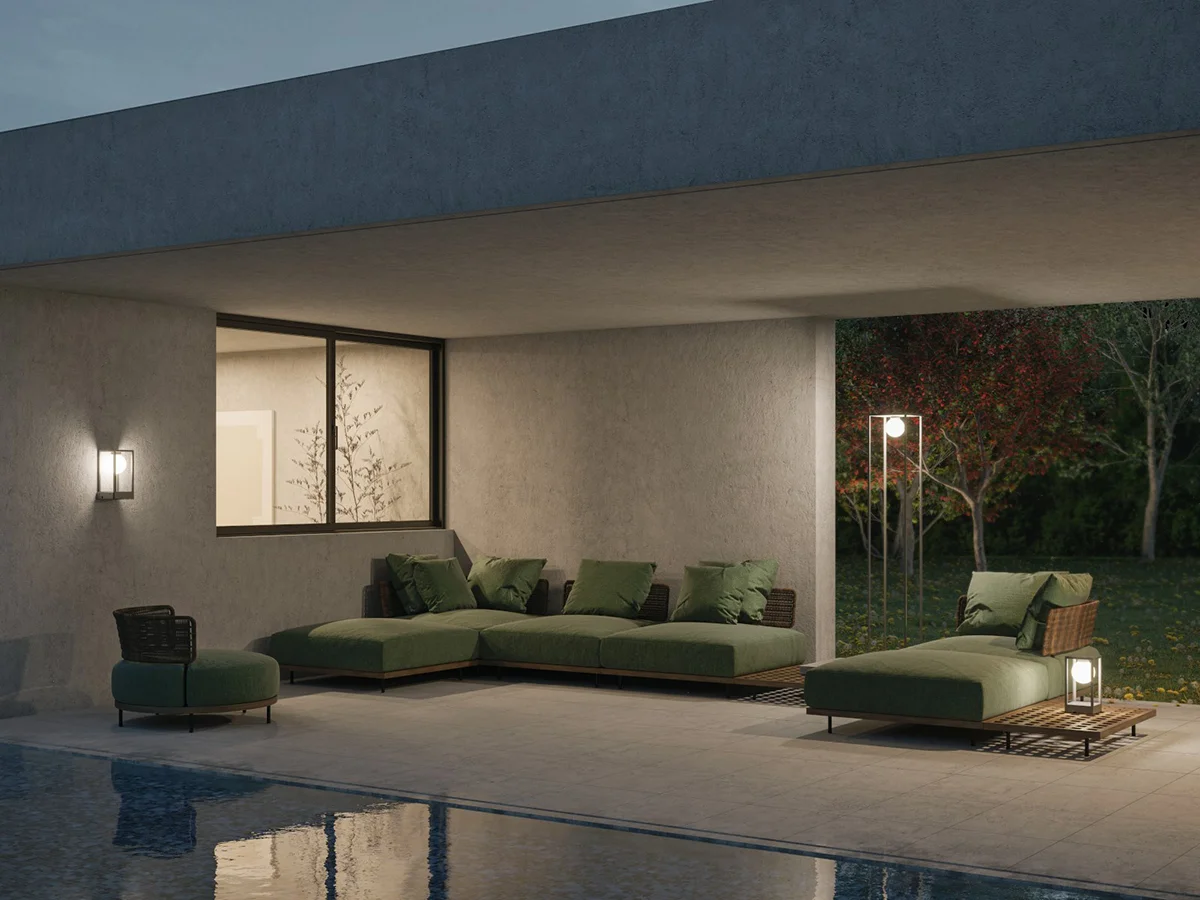
When there is a pergola or a covering structure, suspended or cable systems come into play, particularly suitable above a dining table or lounge area. In this case, the light must never be invasive: the source should be selected and positioned according to actual use - especially when seated and looking straight ahead.
In outdoor settings, visual comfort is as important as aesthetics, because a single poorly positioned light point can make the space feel “unlivable.”
Integration with greenery
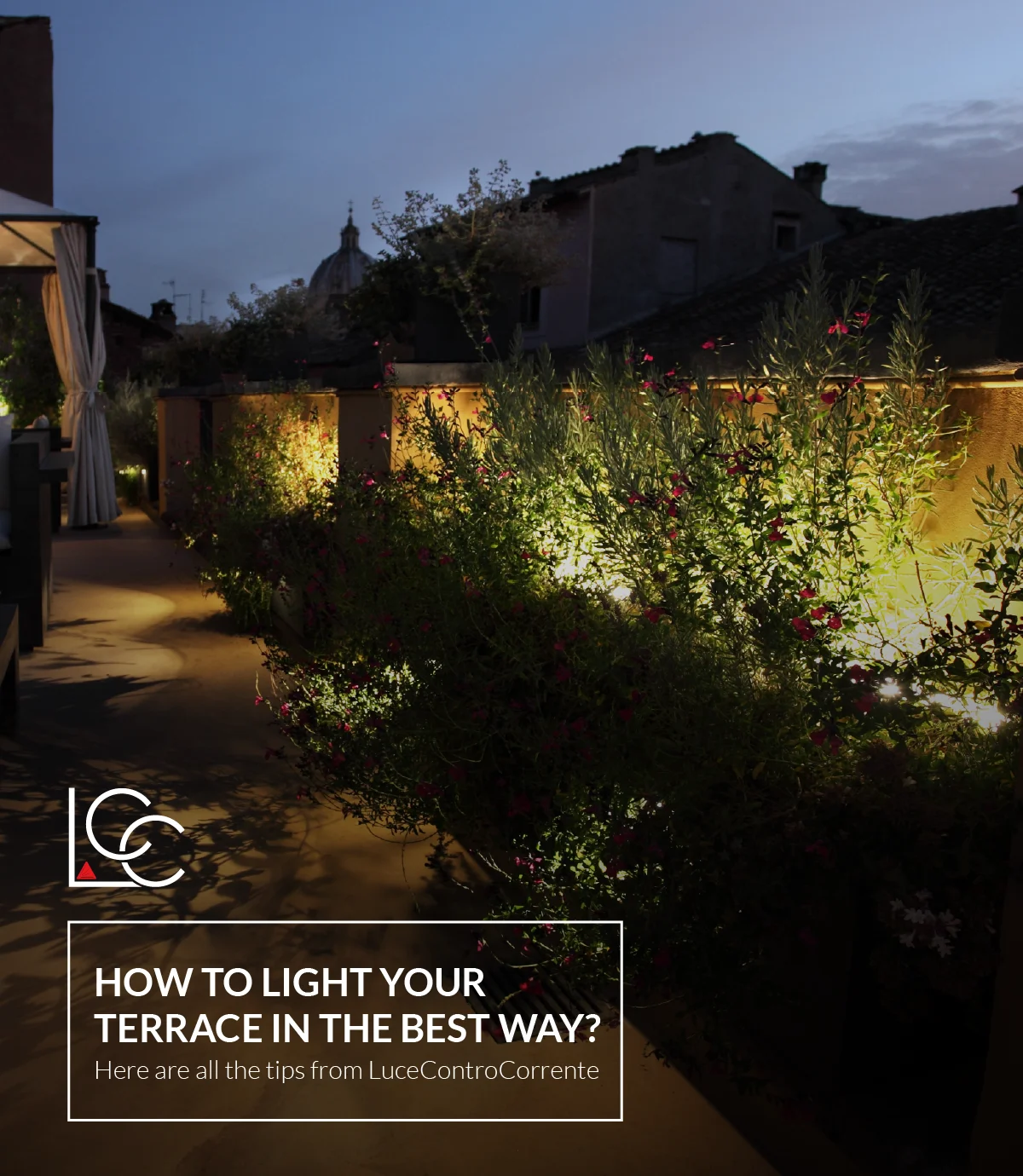
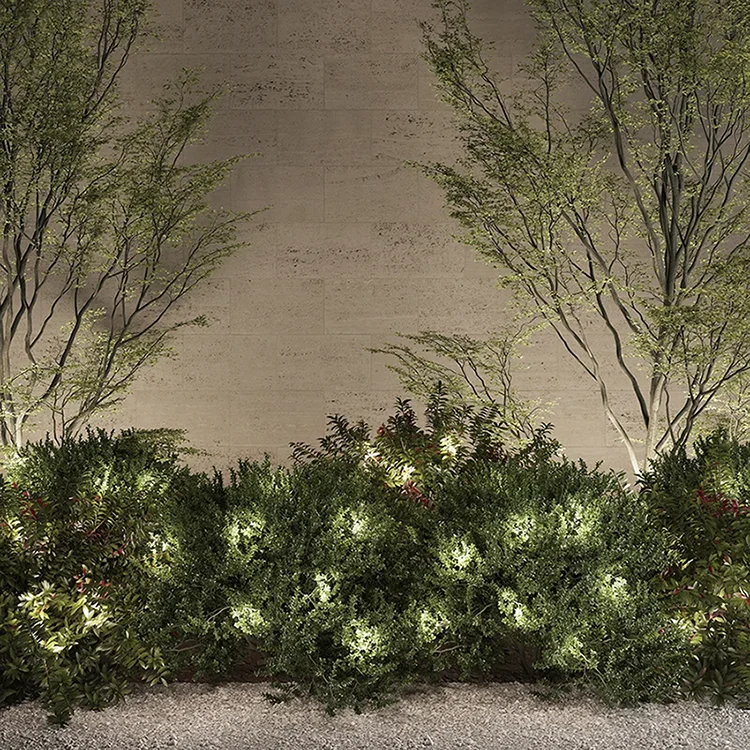
If the terrace includes significant vegetation, the project can truly make a leap in quality. Light within greenery creates depth, volume, and that sense of inhabited space often missing from more minimal terraces.
A small adjustable spotlight hidden among leaves or at the base of foliage can transform a plant into a scenic feature, projecting soft, dynamic shadows.
But there are even more interesting solutions that are often underestimated: decorative lighting integrated into vegetation.
Decorative lighting in greenery: stakes and micro-lanterns among shrubs
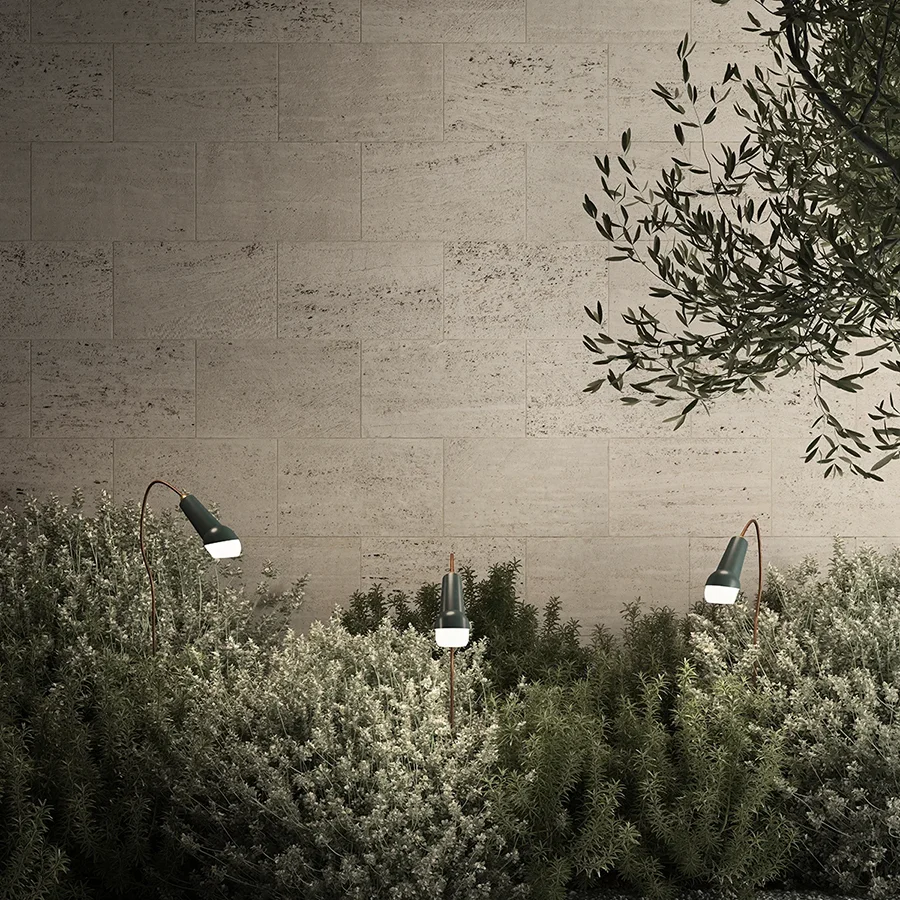
Beyond technical light points (accents and spotlights), contemporary terraces increasingly adopt a more refined approach: inserting decorative luminous elements directly into greenery as part of the scenography.
Decorative stakes emerging from shrubs, discreet glowing stems among ornamental grasses and flowers, micro-lanterns integrated into planters - all create an incredibly elegant effect. They establish rhythm; their light does not invade but adds atmosphere without turning the greenery into a showcase.
For decorative lighting as well, LuceControCorrente follows a precise principle: better many small, well-distributed, low-intensity light points than a few powerful sources.
This is how the effect becomes natural and refined. From a technical perspective, these solutions must be conceived as true outdoor systems: appropriate materials, adequate protection, and above all, simple long-term maintenance. Outdoor lighting must be beautiful today - and remain beautiful after seasons of rain and humidity.
How to develop a terrace lighting project
Given the complexity of outdoor spaces, here are some fundamental starting points for a successful project:
- Layered lighting: a well-lit terrace does not depend on the number of fixtures, but on the layering of light. Comfort comes from the combination of levels: a soft base layer, functional light where truly needed (dining table, outdoor kitchen, operational areas), and a series of accents that build depth across walls, architecture, and vegetation.
- Attention to glare: a central issue. The most common mistake is choosing fixtures with exposed, often very powerful light sources. Outdoors, this type of light immediately feels harsh and uncomfortable. A simple guiding principle: the source should not be visible from the main positions of use, especially when seated.
- Color temperature: a choice that completely changes perception. For most residential terraces, we recommend warm tones between 2700K and 3000K, as they harmonize best with natural materials, wood, and greenery, conveying relaxation. Light that is too cool tends to make the space feel rigid and unwelcoming.
- Dimmability and dynamic control: a terrace is not used in the same way at all times - a dinner, a relaxed evening, a party, or a late-night return home each require different levels. Dimming and lighting scenes are therefore key elements, and well-designed home automation integration is not a luxury, but a practical tool to make the space truly versatile and consistently harmonious.
Lighting terraces: an integrated vision between light and nature
For LuceControCorrente, designing terrace lighting means respecting darkness while enhancing space. Every project begins with a simple but fundamental analysis: understanding pathways, stopping points, sightlines, and which elements deserve to be highlighted.
Only through this sensitivity is it possible to transform a simple outdoor area into a place of the soul, capable of offering wellbeing and beauty. Light is not an accessory, but the invisible material that defines the architecture of outdoor living.
We believe in lighting that does more than illuminate - it helps create the perfect atmosphere for your most beautiful memories. When carefully calibrated, light can transform an ordinary evening into an unforgettable sensory experience.