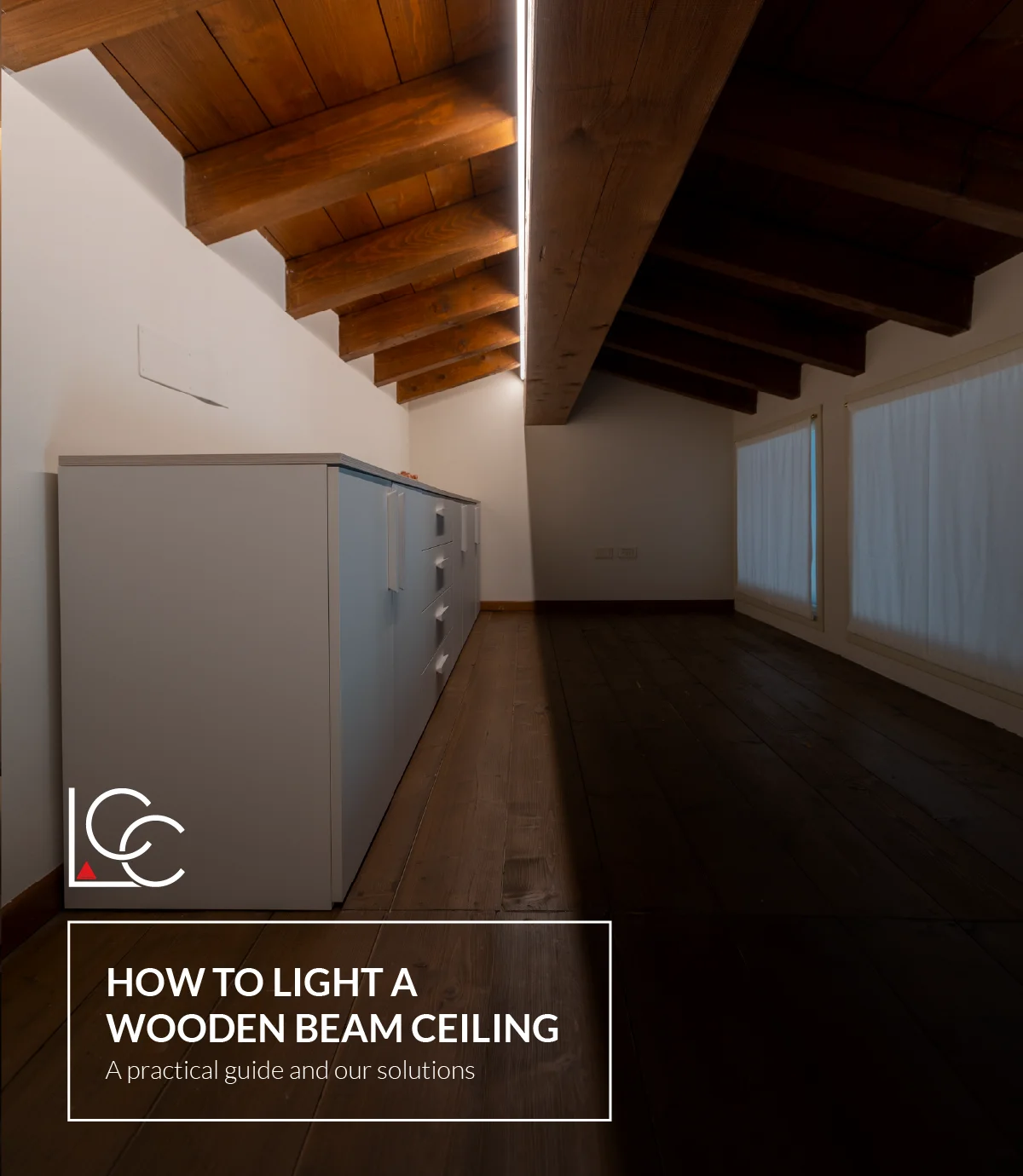
The Challenges of Lighting Wooden Beams
Lighting a ceiling with exposed beams is a fascinating challenge, one that combines technical precision with aesthetic sensitivity.
However, the very nature of wood presents significant obstacles. As a textured and often dark material, it tends to absorb light rather than reflect it, making a space feel dim. Unlike a white surface, which acts as a natural reflector, beams “consume” brightness, creating the dreaded cave effect. If lighting is focused only on the floor, the ceiling remains in shadow, visually lowering the entire room.
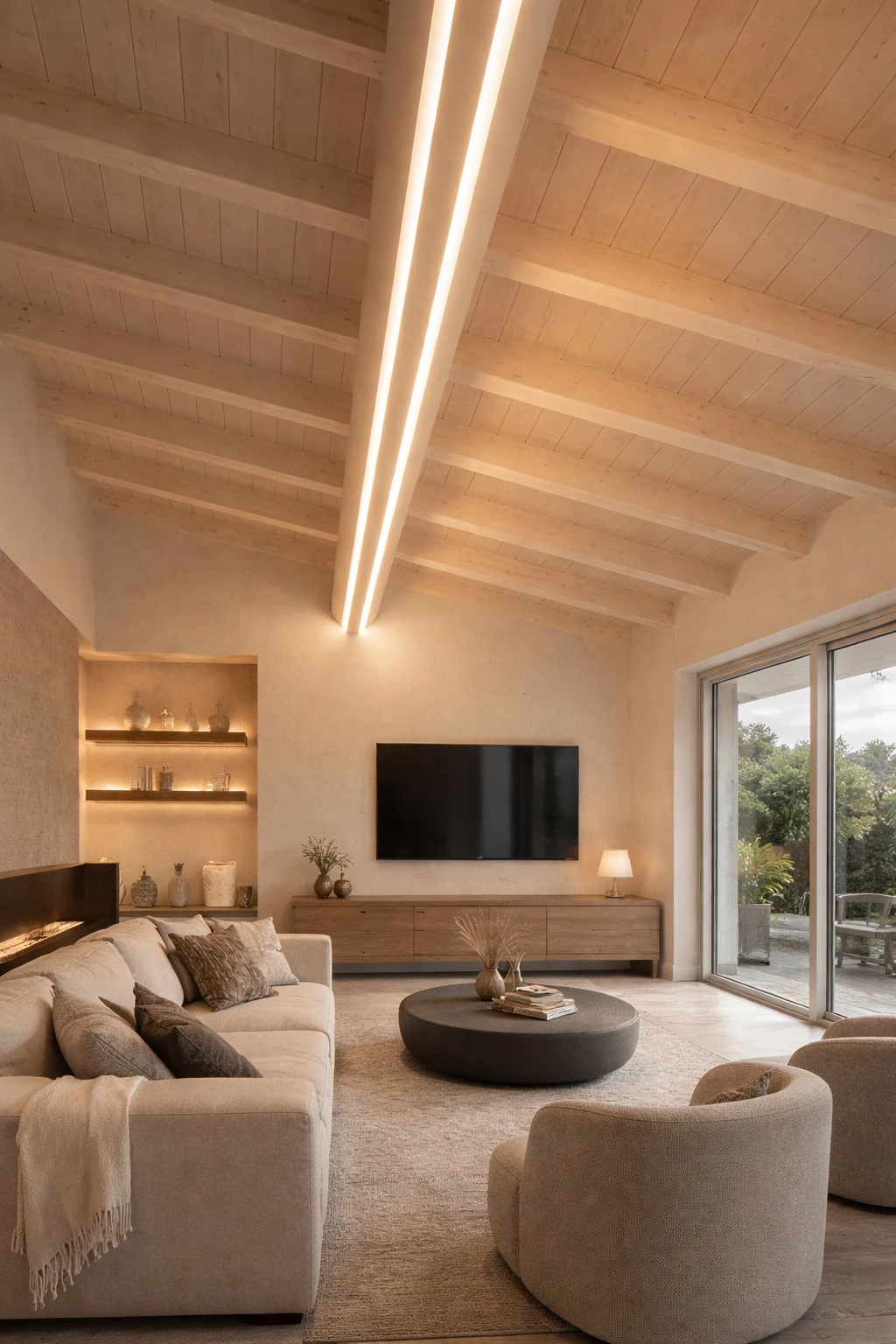
Beyond light output and color rendering, structural complexities must also be considered. Unlike drywall or brick, wood does not allow for cable channels to be cut without compromising the beams' aesthetics or structural integrity.
Their protruding shape can also easily create cast shadows: a poorly positioned light source may project large shadowed areas, disrupting the ceiling's visual harmony.
Finally, safety must not be overlooked. As a living and flammable material, wood requires careful consideration—fixtures that produce excessive heat should be avoided. Cool technologies such as LED lighting are essential to protect the fibers and reduce fire risks.
Some Wooden Beam Lighting Ideas by LuceControCorrente
Lighting a ceiling with exposed beams requires careful observation and deep architectural sensitivity. It's not enough to simply position a light source, you must engage in dialogue with the living material of wood, understand ceiling heights, and respect the original proportions of the space.
Aware of these complexities, LuceControCorrente designs dedicated lighting solutions specifically developed to address the unique challenges posed by wooden ceilings, whether historic or contemporary.
Thanks to our consolidated experience in the field, we have developed specific expertise in lighting spaces characterized by exposed structures.
We know that well-designed lighting can give new life to a load-bearing structure, enhancing volumes and dramatically improving spatial perception. Our philosophy goes beyond supplying lighting fixtures - it becomes a true language, coherent with the architecture itself.
LuceControCorrente solutions are created to achieve a perfect balance between atmosphere and functionality: from managing cast shadows to enhancing the grain of the wood, every project aims to deliver visual comfort and aesthetic continuity.
Below are some of our ideas and technologies developed specifically to transform your ceiling into a scenographic element of light.
LED profile Emotion Biemissione
The LED profile Emotion Biemissione is a linear track lighting systemthat runs along the beams and, thanks to its finish coordinated with the wood, blends seamlessly into the structure.
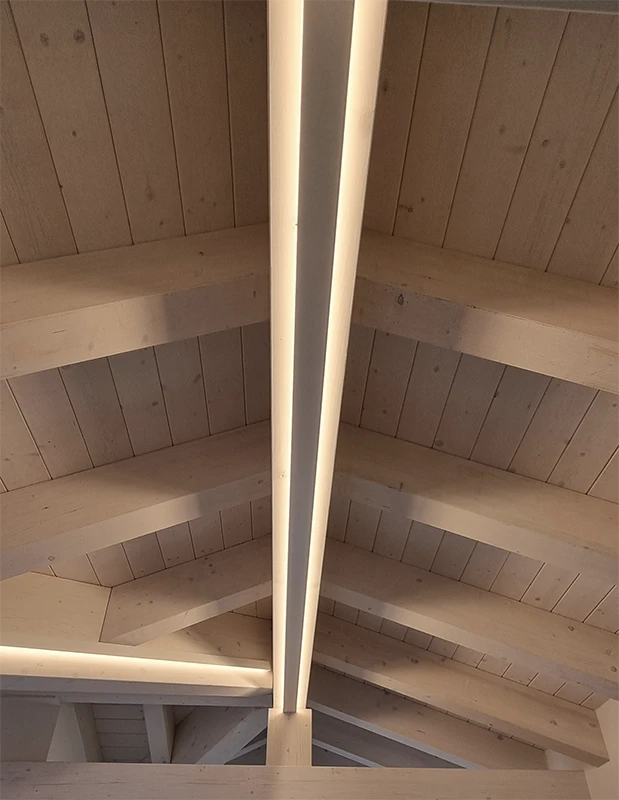
This LED profile emits indirect light, generating a soft luminous diffusion that envelops the space without ever disturbing the eye.
Like all linear track lighting systems, it is a perfect solution for those seeking a warm, continuous effect with a clean and elegant design.
Linear Profiles with Integrated LED Spotlights
Integrating LED spotlights into linear profiles is ideal when you want to add depth or highlight specific objects.
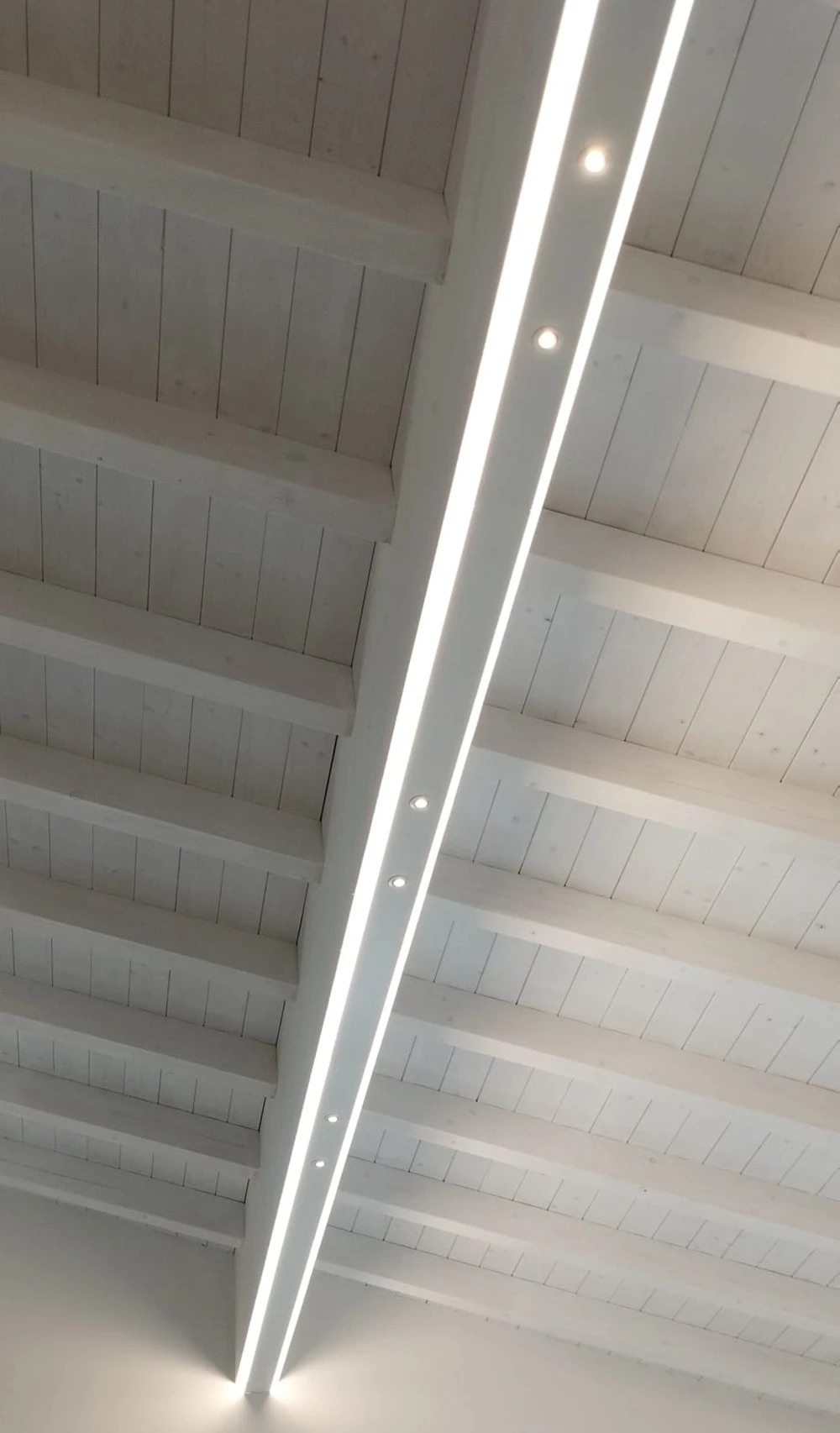
LED spotlights provide accent lighting that can be precisely directed. This combination of diffuse and focused light creates a dynamic lighting composition, giving rhythm to the space while adding both technical precision and emotional impact.
Corner LED Profiles
For those seeking a more enveloping effect without seeing the light source, corner LED profiles,offer a perfect solution. Installed along the edge of the beams where they meet the ceiling, they project light upward. The ceiling then reflects it, generating a delicate and continuous wall-washing effect.
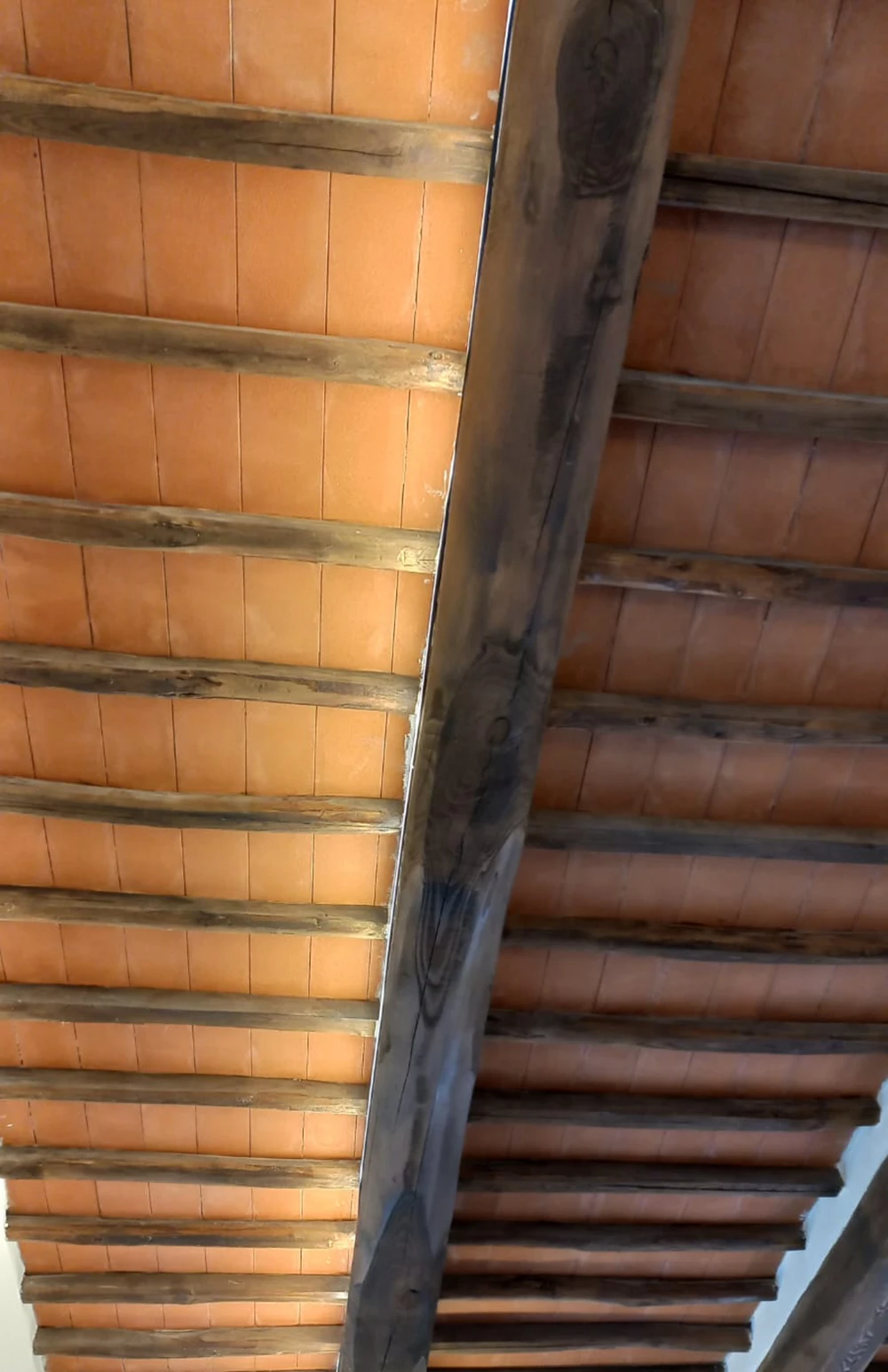
The result is light that is present but never direct - legantly accompanying the space and contributing to an overall sense of well-being.
LED Tension Wire Lighting System
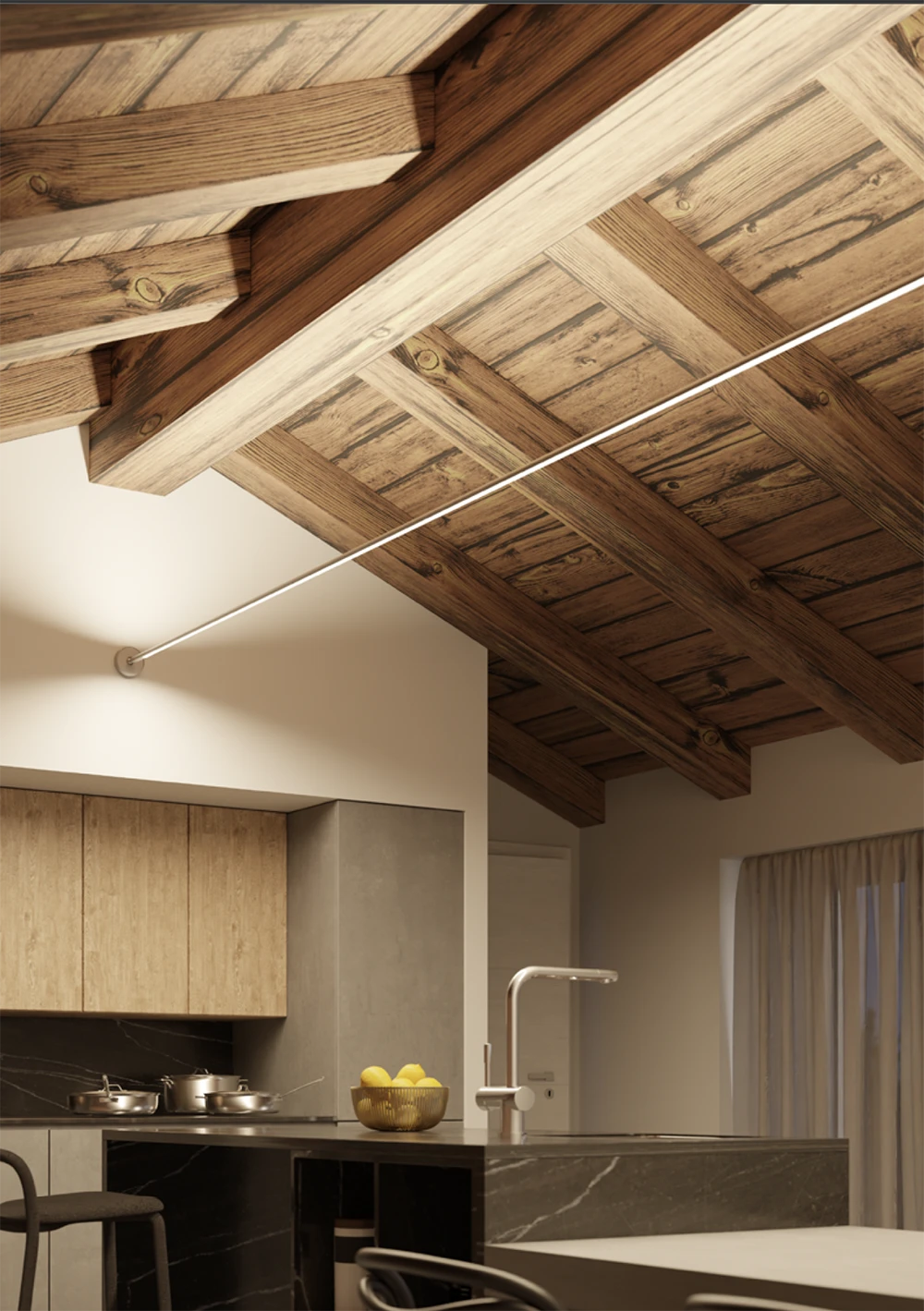
Finally, there is Tagliatella, our LED Tension Wire Lighting System. Designed for those who want light to accompany the space without invading it, this LED Tension Wire Lighting System stands out for its thin and continuous profile. It is an ideal solution for environments where rhythm and direction are needed, with maximum visual lightness.
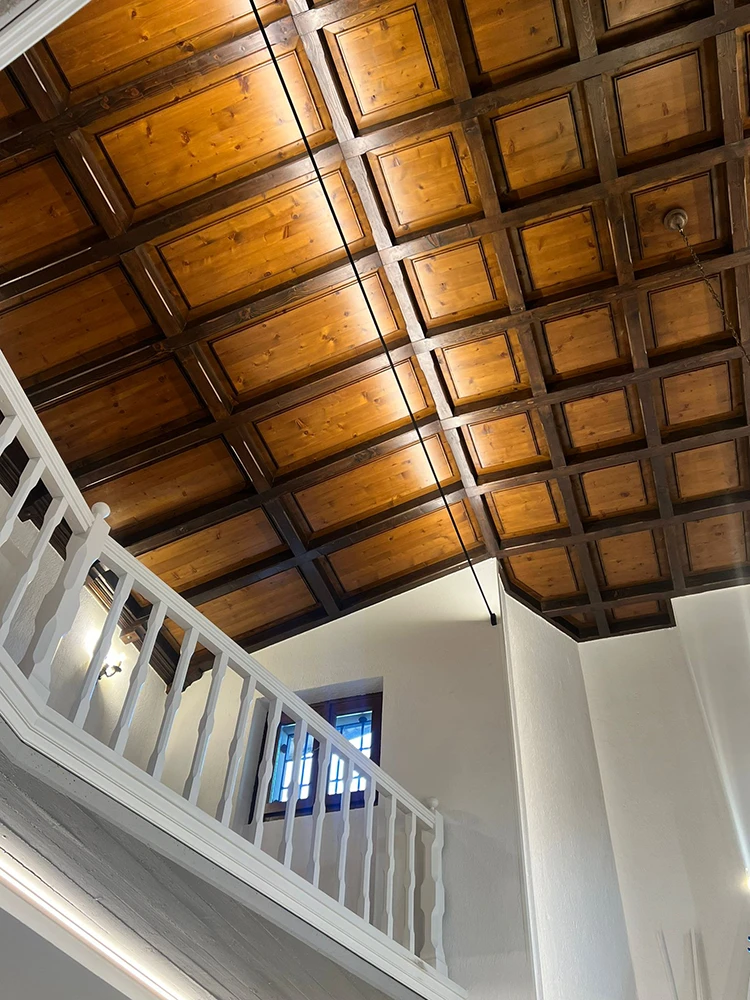
It is available in two versions:Tagliatella Classic LED Tension System, slightly more defined and scenographic, and Tagliatella Slim LED Tension System, almost invisible to the eye
Both adapt naturally to any ceiling and project. In either case, light shapes the space without overpowering it—defining volumes and creating atmosphere.
How to Develop a Lighting Project for a Wooden Beam Ceiling
Given the complexity of lighting wooden ceilings or exposed wooden beams, here are some key considerations when starting a project:
1. Coherence Between Material and Light
Lighting must harmonize with the material of the beams, as their finish directly influences the perception of volumes and colors throughout the space.

With antique, dark beams, light should not simply illuminate — it must strategically separate furnishings from walls, creating depth and preventing an overly oppressive final effect.
If the beams have a more modern rustic style, warm lighting becomes the winning choice, blending everything together and creating a welcoming, cohesive atmosphere.
2. Mistakes to Avoid
A frequent design mistake is relying excessively on direct downward lighting—such as using only a chandelier, a ceiling fixture or a pendant light.
If lighting focuses solely on the floor or work surfaces, you risk creating the so-called “cave effect,” where the ceiling remains completely dark and the room appears visually lower and gloomier than it actually is.
To avoid this, part of the light should always be directed upward — for example, using tension wire lighting systems to give breathing space to the structure and highlight the room's true height.
Another common mistake concerns the size of lighting fixtures. Oversized wall lights or chandelierscan paradoxically hide the very element you aim to enhance—the texture of the beams.
3. Wall Colors and Light Reflection
Designing a space with exposed beams inevitably involves the color of vertical surfaces, which act as a bridge between floor and ceiling.
Neutral and warm tones such as greige or taupe work better than pure white, as they naturally accommodate the shadows cast by the wood.
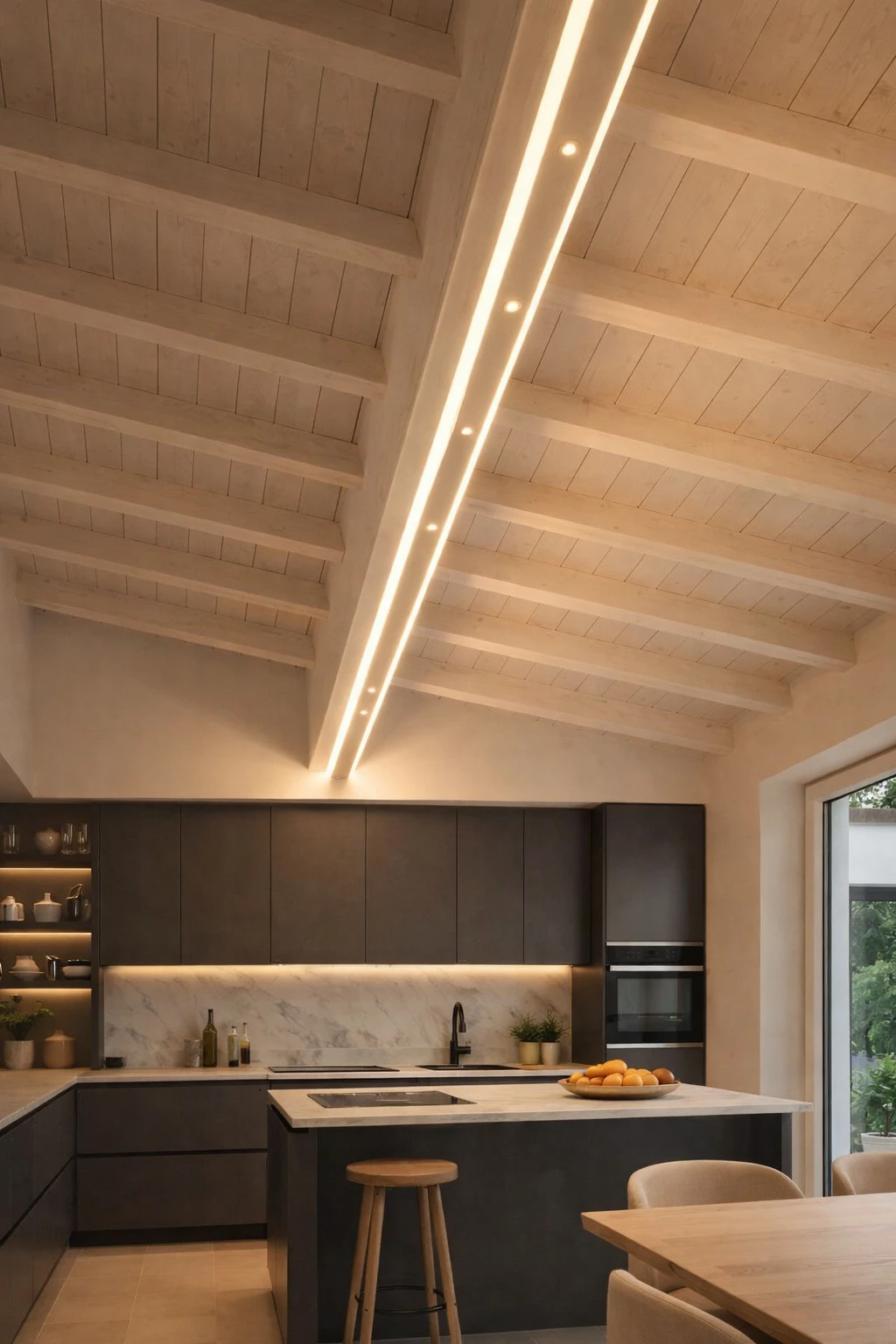
If you choose to enhance a wall with a darker or trend-driven color—such as deep blue or forest green—dedicated beam lighting (for example, a ceiling tension system), combined with wall or floor lamps illuminating the darker surface, becomes essential to prevent the space from feeling closed in.
In these cases, grazing light can enhance the texture of special paints or wallpaper, creating a harmonious visual link between structural solidity and wall decoration.
4. Color Temperature: Light That Defines Atmosphere
Another fundamental aspect is color temperature, an essential parameter in defining the atmosphere of a space. This choice should be calibrated according to materials, intended use, and available natural light.
For wooden beams in warm environments, we recommend warm tones (2700K-3000K), which enhance natural textures and create visual comfort.
In more technical contexts, neutral light (4000K) may be preferred to maintain greater chromatic neutrality and precision. Specifically, ceiling lighting can be combined with targeted LED spotlights using different color temperatures to highlight various areas of the space.
5. Dimming: The Right Light at Every Moment
Another valuable solution is designing products to be dimmable, allowing you to adjust light intensity according to time of day, activity, or desired atmosphere.
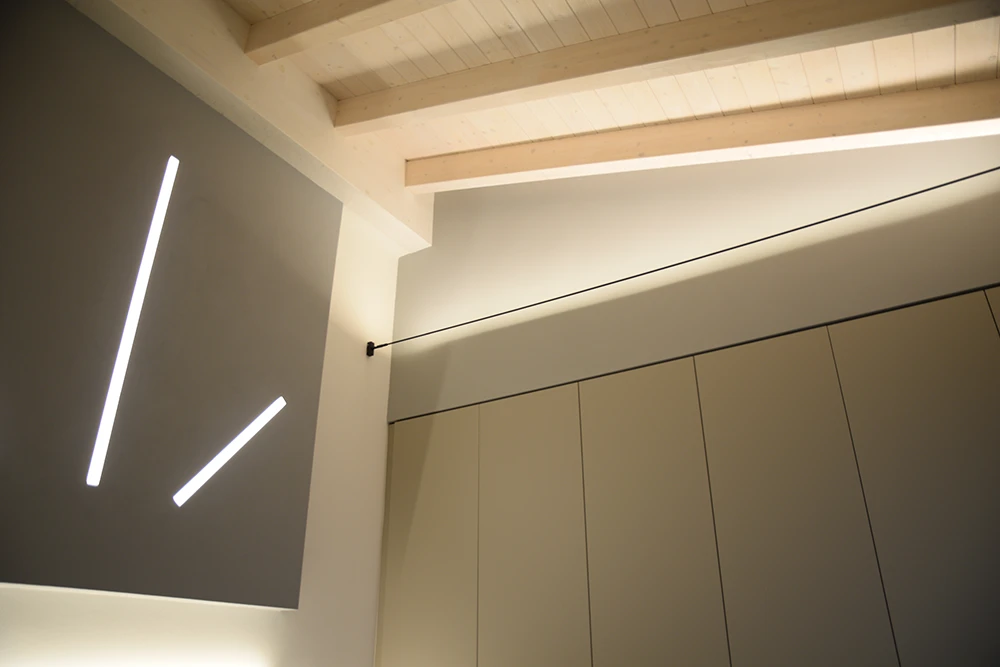
This is particularly useful in residential settings, restaurants, or multifunctional spaces where lighting accompanies different moments throughout the day.
All LuceControCorrente lighting solutions—including technical lighting, pendant lights, ceiling fixtures, tension systems, and wall lights—are dimmable.
6. Smart Control and Management
All these lighting solutions can be connected to home automation or wireless control systems, enabling management via smartphone, tablet, or voice assistants.
This approach ensures not only comfort but also energy efficiency and daily flexibility. We also develop dedicated lighting design projects with a focus on integrating smart management systems into spatial lighting.
Lighting Wooden Beams: An Integrated Vision of Light and Architecture
For LuceControCorrente, designing light means integrating it into the space—not simply adding it.
Every project begins with a careful lighting analysis of the context: we observe geometries, materials, and intended uses. Only in this way can we propose truly coherent solutions capable of enhancing existing beams while creating balance between form, function, and sensory experience. You'll find our lighting prjects nostri here
We believe in lighting that does more than solve a technical need—it helps define the identity of a space.
When carefully calibrated, light restores harmony, beauty, and depth - even when it comes from where you least expect it.
Discover how we can help you illuminate your space.