Table of contents
Why the bathroom needs a dedicated lighting project
Safety and protection ratings: what to consider
The mirror: the light you use every day without thinking about it
General lighting: uniform, not overpowering
The shower, when a dedicated light point is needed
RGBW light: colour as a lighting scene
Warm or cool? Colour temperature in the bathroom
Materials and light: how the perception of marble, mosaic and wood changes
The freestanding tub, when light becomes atmosphere
The LuceControCorrente configurator: your project in 72 hours
Frequently asked questions about bathroom lighting
A tailor-made bathroom lighting project
Why the bathroom needs a dedicated lighting project
No other room in the home combines water, mirrors and precise everyday gestures quite like the bathroom. A poorly lit shower remains uncomfortable even if elegant, a mirror with the wrong light makes any morning routine difficult, and a mistake in electrical safety in a humid environment is not a minor detail.
This is why a bathroom lighting project always starts from two questions at once: where can I install what, safely, and how do I want this space to make me feel, in the morning and in the evening.
Safety and protection ratings: what to consider
The CEI 64-8 Standard, Part 7, Section 701 identifies different safety zones in relation to the distance from the bathtub and shower. Each zone corresponds to different requirements for power supply, installation and protection from water.
- Zone 0: corresponds to the interior volume of the bathtub or shower tray and requires specifically suitable fixtures, powered according to the requirements set out by the standard and with protection adequate for immersion.
- Zone 1: includes the area immediately above and around the bathtub or shower, up to the height defined by the standard; fixtures must be suitable for exposure to water splashes.
- Zone 2: extends beyond zone 1 according to precise distances and also requires fixtures with an adequate protection rating.
- Outside the most exposed zones, the general requirements of the electrical system still apply, always assessing the actual conditions of the room.
The classification changes depending on the presence of a bathtub, shower tray, floor-level shower and fixed walls. The IP rating should therefore not be chosen generically "for the bathroom", but based on the actual position of the fixture. Final verification must be entrusted to a qualified designer or installer.
The mirror: the light you use every day without thinking about it
The mirror is the point where the quality of the lighting is put to the test every day. A source placed exclusively above the face can create shadows under the eyes, nose and chin, making makeup and shaving less comfortable.
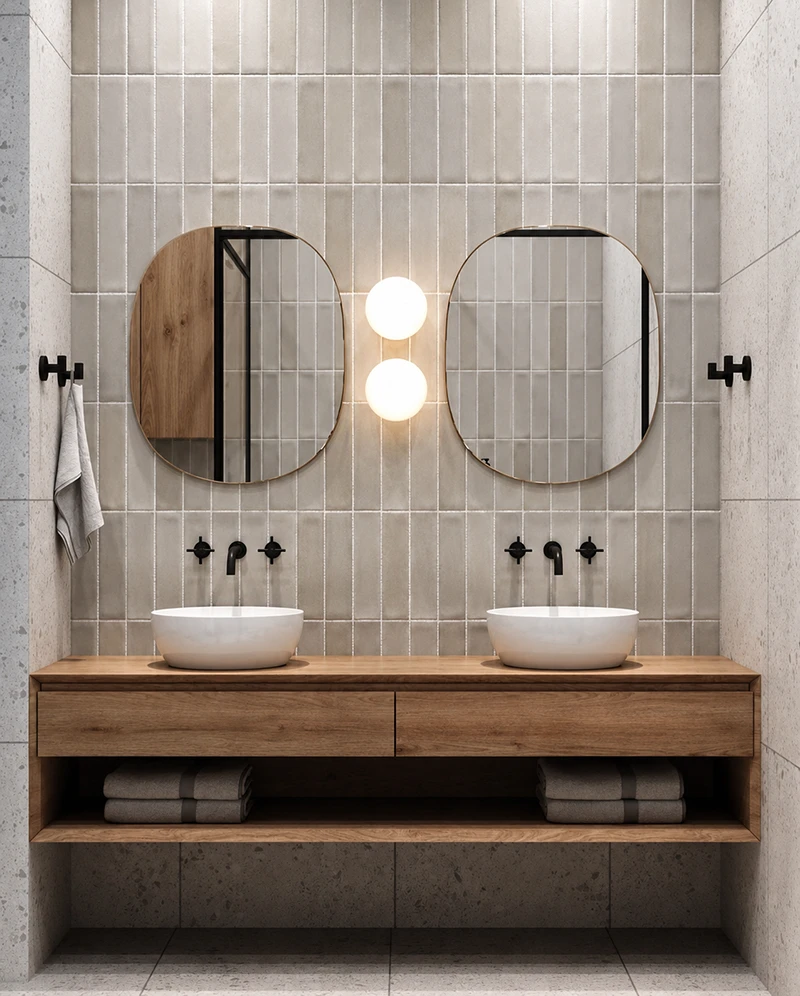
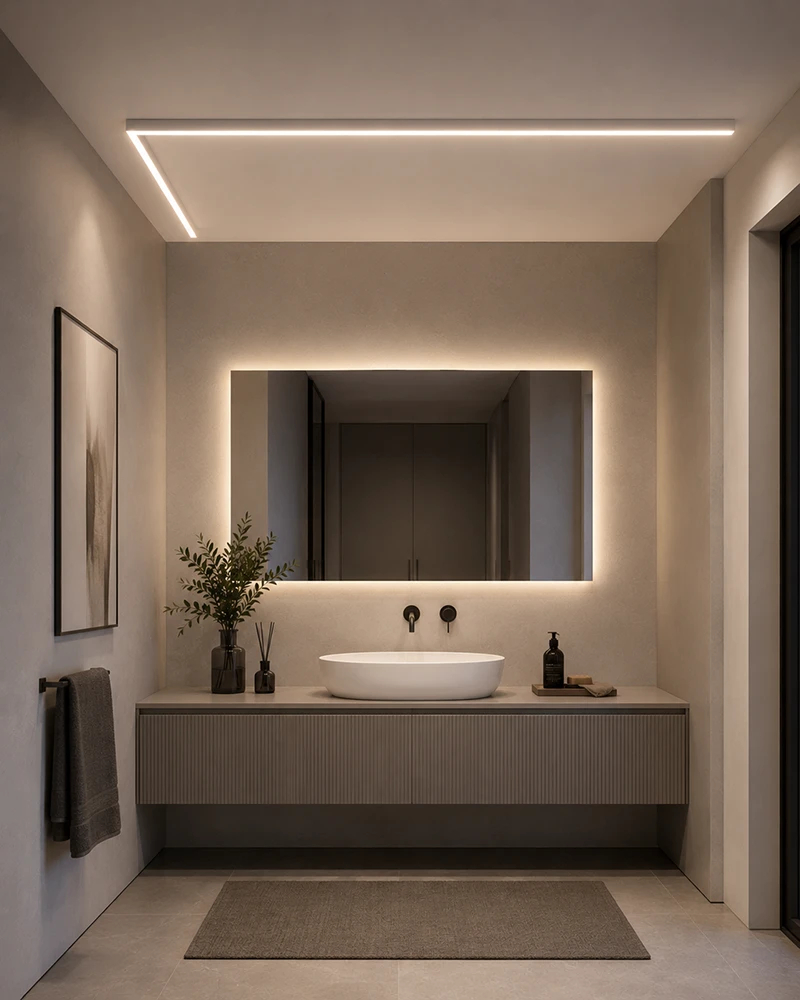
The most effective solution is to light the face frontally and evenly, for example with two vertical sources on either side of the mirror or with a light integrated on the front edge. A backlit mirror instead serves mainly an ambient and decorative function: it enhances the wall and softens the atmosphere, but is not always enough for precision activities. In more complete projects it is therefore paired with dedicated frontal lighting.
Light quality also matters: a colour rendering index (CRI) above 90 reproduces skin tone and colours more faithfully. A dimmable source also makes it possible to adjust intensity to different times of day.
General lighting: uniform, not overpowering
For general lighting, recessed spotlights are a widely used solution, but not the only one. The goal is to achieve uniform, comfortable light, avoiding dark areas, excessive contrast and glare. Several well-calibrated light points are often more effective than a few very intense fixtures.
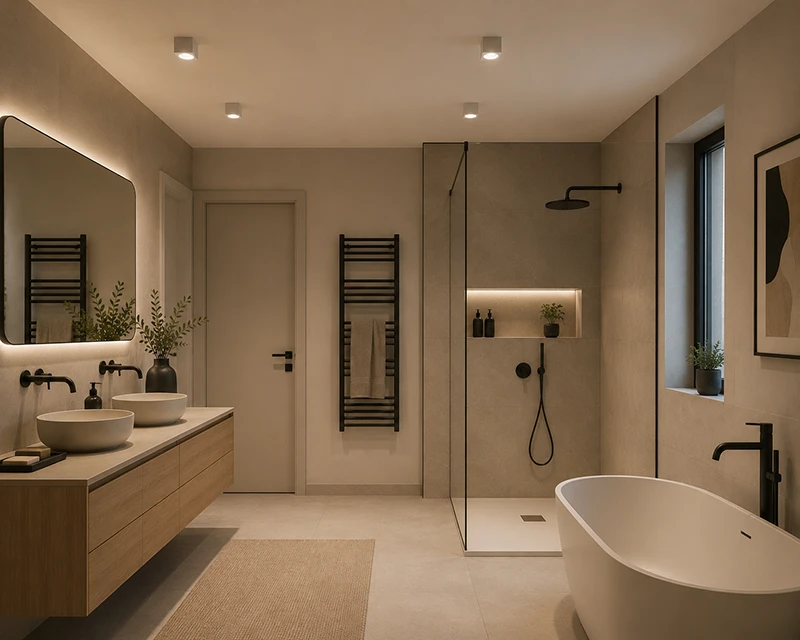
The number and spacing of spotlights cannot be defined by applying a standard rule. They depend on ceiling height, beam angle, luminous flux, furniture layout and the reflectivity of surfaces. An even distribution can be a starting point, but it must be adapted to the floor plan and verified through a lighting calculation.
The shower, when a dedicated light point is needed
Not all showers need their own lighting: often the room's general light is enough. But in large showers, or those less reached by natural light, a dedicated light point makes a difference, provided it respects the protection rating of the zone it is in. A recessed spotlight with an integrated protective glass remains the most common choice, because it combines safety and discretion, without interrupting the clean lines of a contemporary shower.
Not all showers require a dedicated light point: in some cases the general lighting is sufficient. In large, screened showers, or those less reached by natural light, a specific fixture nonetheless improves comfort and the perception of space. The choice must always respect the requirements of the installation zone.
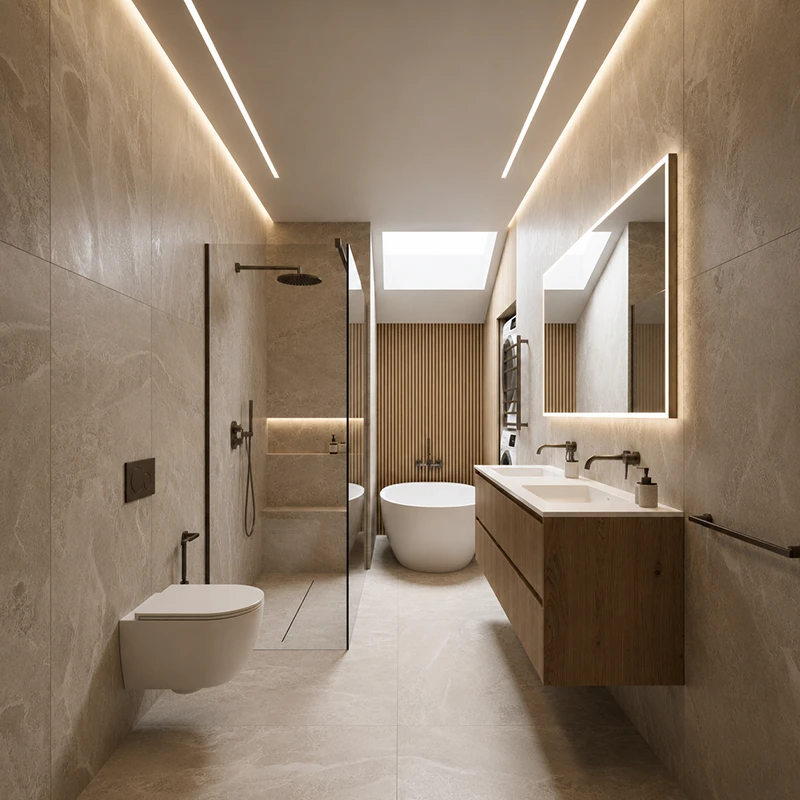
The recessed spotlight is not the only option. A fully recessed linear profile can create a wall-washing effect along the shower wall, letting light flow across the surface and highlighting its texture and grain. This is a particularly effective solution with stone, resin, marble and decorative surfaces.
Niches, too, can become luminous elements. Small directional spotlights create subtle accents, while a recessed LED profile produces a more uniform, discreet line of light. Both solutions must be planned from the outset, taking into account housing, power supply, heat dissipation, maintenance and the appropriate protection rating.
RGBW light: colour as a lighting scene
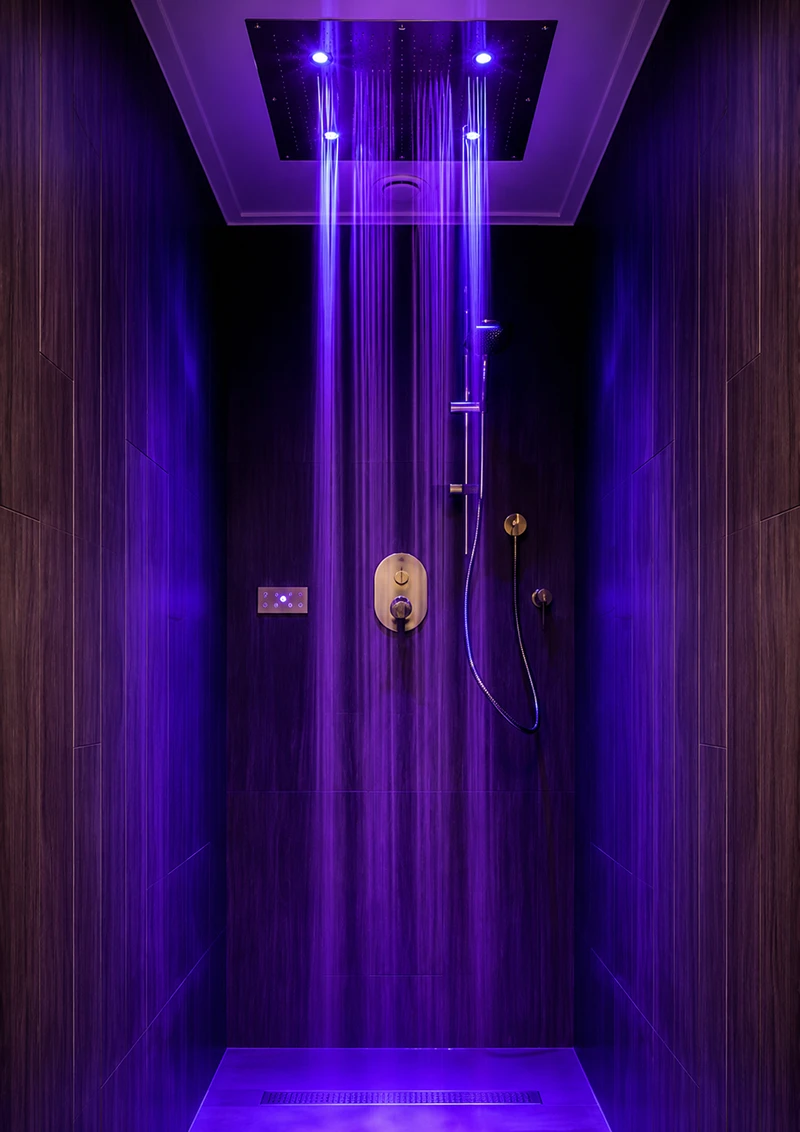
In bathrooms dedicated to wellness, especially where there are walk-in showers or freestanding tubs, RGBW lighting makes it possible to create different colour scenarios. The white component provides functional light for everyday use, while colours can accompany moments of relaxation and make the space more immersive.
Colour works best as an accent, integrated into niches, coves or linear profiles, rather than as the only lighting in the bathroom. It is best to plan simple scenes: white light for daily use, warm tones for the evening and colour for moments dedicated to wellness, without attributing therapeutic effects to the light.
Warm or cool? Colour temperature in the bathroom
For the mirror, a faithful, comfortable light is recommended, generally between 3000 and 4000 Kelvin and with a CRI above 90. The choice depends on the atmosphere of the room and the other light sources present: above all, it is important to avoid jarring colour differences between the mirror and the general lighting.
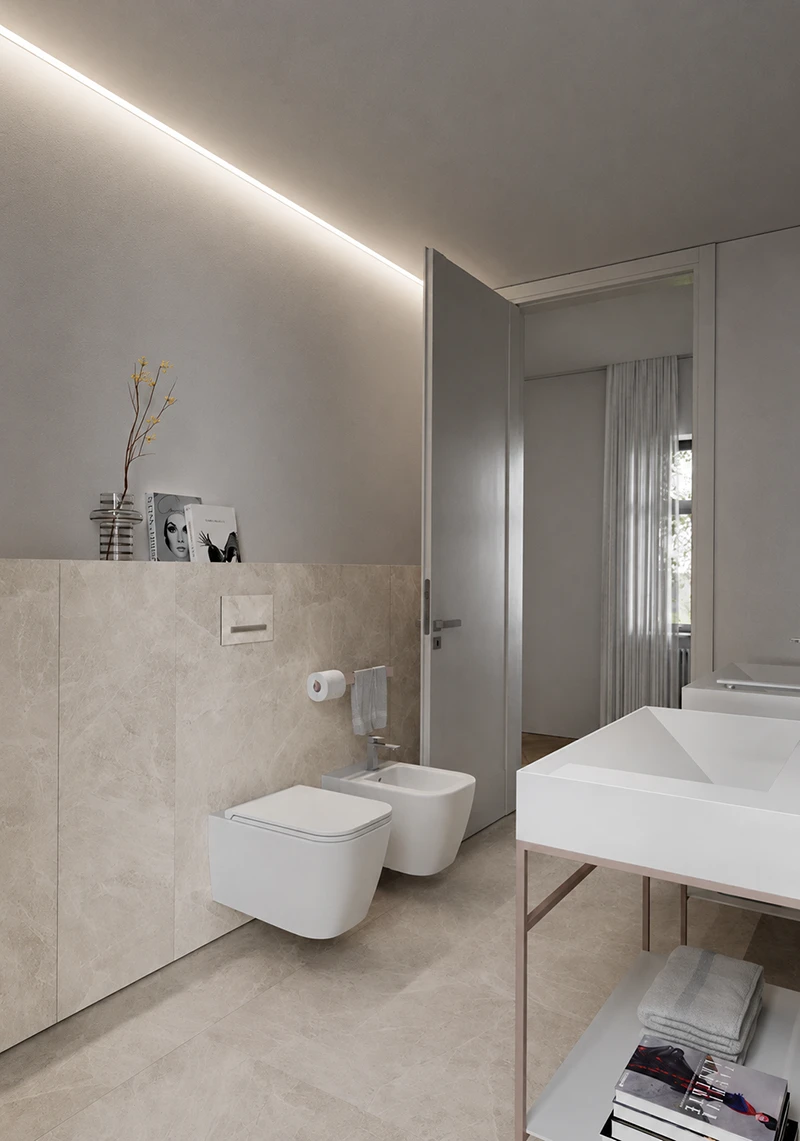
Tunable White systems make it possible to use a more neutral light in the morning and a warmer tone in the evening, adapting the same room to different functions. Intensity adjustment completes the project and makes it possible to build scenes dedicated to cleaning, everyday routine and relaxation.
Materials and light: how the perception of marble, mosaic and wood changes
Today's bathroom is furnished with the same care as a living room, and every material reacts to light differently. Grazing light can bring out the veining and relief of marble, while on very glossy surfaces an incorrect position can generate reflections and glare.
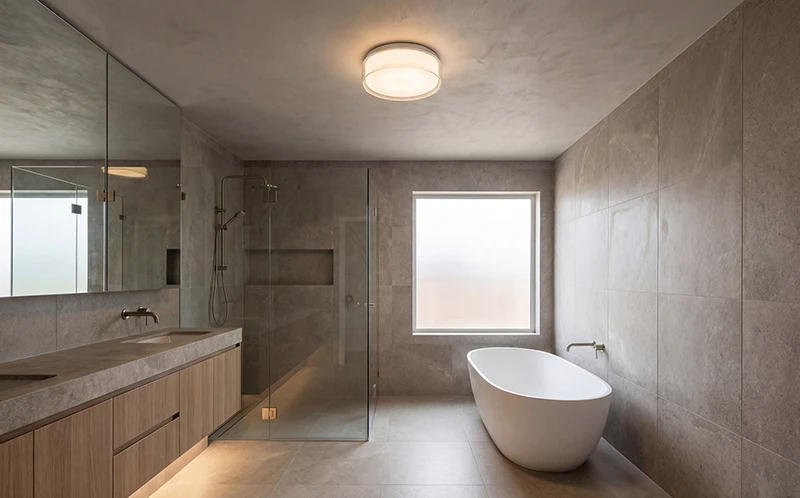
Mosaics, stones and three-dimensional wall coverings gain depth with well-controlled grazing light, also achieved through linear profiles. Wood is generally enhanced by warm tones and high colour rendering, but the colour temperature must be coordinated with the wood species, finish and other materials present.
Indirect light also plays a role in the perception of space: an LED strip hidden under the vanity unit visually lightens the volume of the cabinet and makes the room feel more spacious, a valuable trick in bathrooms with limited floor area.
The bathroom as a private spa
The contemporary bathroom is no longer designed solely as a utility room. Increasingly, it becomes a space dedicated to wellness, where materials, light and technology come together to create the atmosphere of a true private spa.
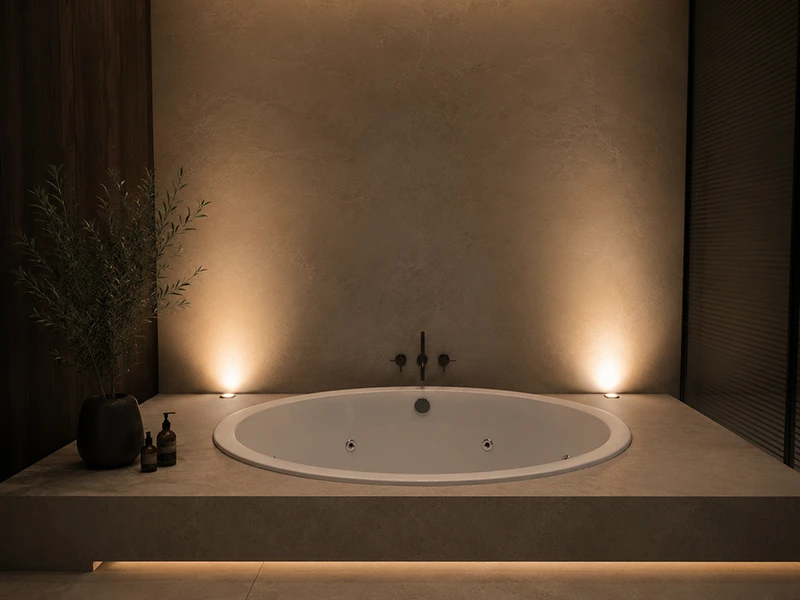
Lighting develops on several levels: comfortable general light, functional sources for the mirror, profiles integrated into the architecture and accents dedicated to the shower, tub, niches or material surfaces. Dimming and lighting scenes make it possible to move from full morning light to a softer setting for the evening.
In this context, decorative products also find their place, such as pendant lamps, wall lights and small light fixtures. Their role can be to create atmosphere and give the bathroom the same design character reserved for the living room or bedroom, always respecting safety zones.
The freestanding tub, when light becomes atmosphere
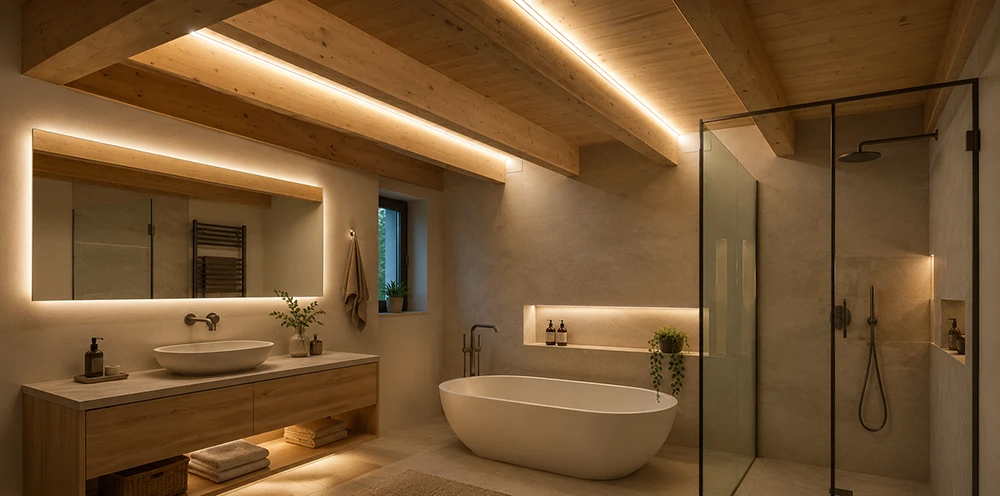
With a freestanding tub, the goal changes: no longer the precision of the mirror, but an atmosphere that encourages relaxation. Diffused, indirect light from above avoids the clinical effect of a spotlight aimed at the tub. Side light points, perhaps integrated into a niche or a wall shelf, instead create a warmer, more enveloping feel.
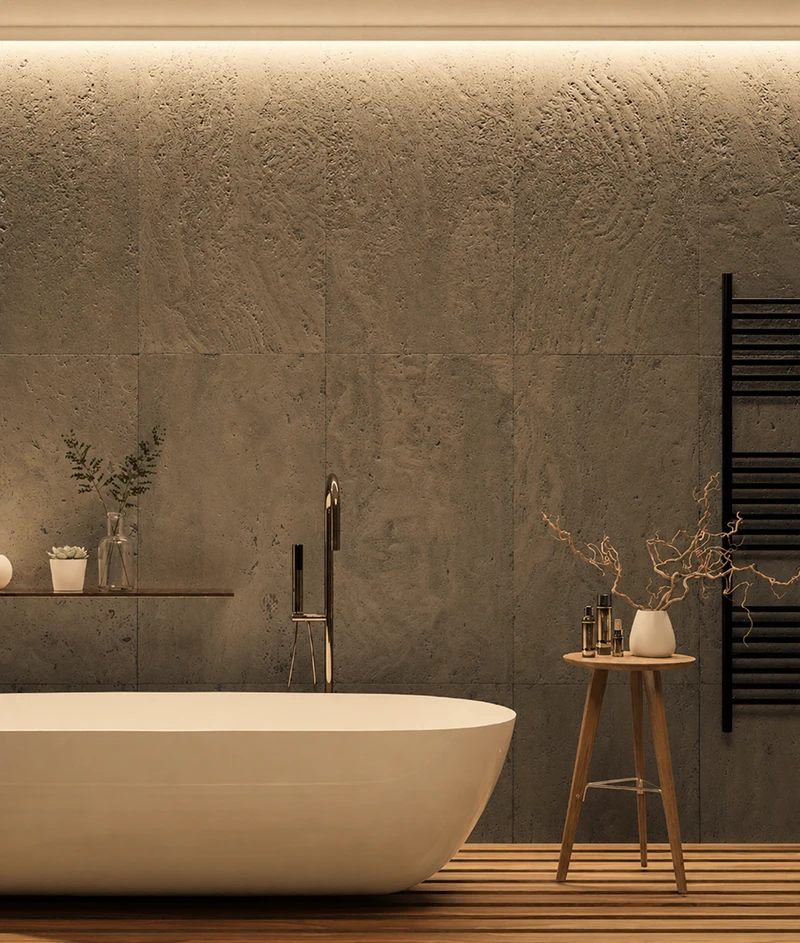
Many recent projects include predefined lighting scenes, able to switch with a single command from full light, useful for cleaning, to soft light designed for the evening. A solution that must, however, be planned from the very start of the project, not added afterwards.
The LuceControCorrente configurator: your project in 72 hours
Turning these principles into a real project means cross-referencing the bathroom's measurements, the position of the shower and tub, the finishes and daily habits. The LuceControCorrente configurator was created to shorten this process: starting from the space's data, it returns a tailor-made proposal with the position of the light points and the solutions best suited to the project's style.
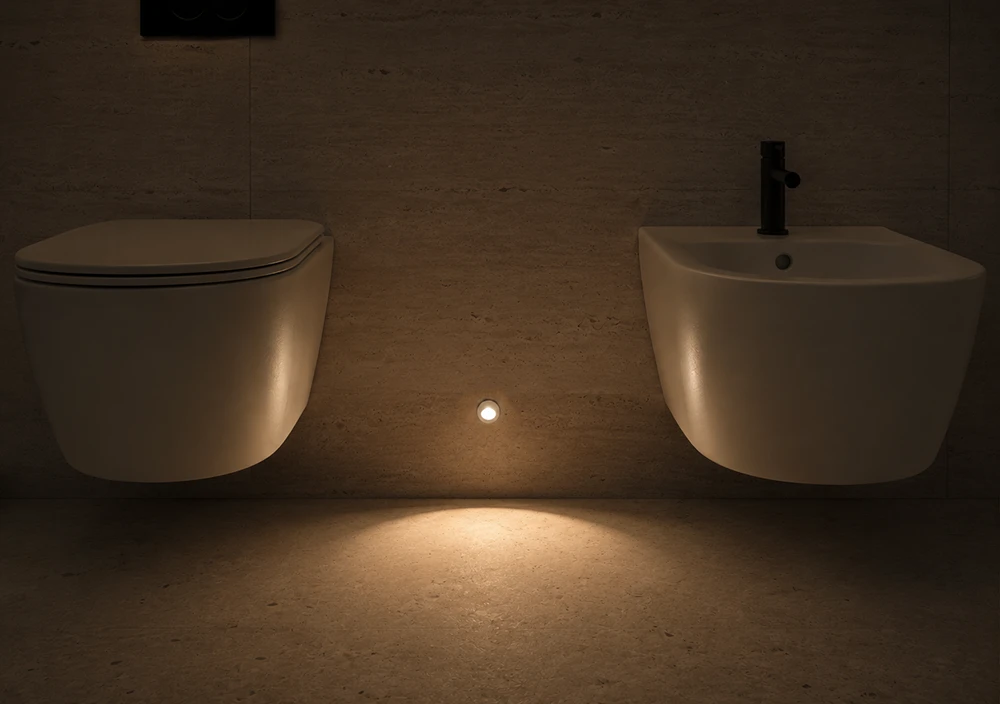
You don't need to already have clear ideas about models or brands. The bathroom's floor plan and a few details about materials and intended use are enough. The rest is handled by the LuceControCorrente technical team, which combines regulatory compliance with a keen eye for interior design. Try the configurator and receive your project within 72 hours.
Frequently asked questions about bathroom lighting
What IP rating do bathroom lights need?
It depends on the position relative to the bathtub and shower. The zones are defined by the CEI 64-8 standard and must be verified on the actual project by a qualified technician.
How many lux are needed to properly light the mirror?
As a design reference, an illuminance of around 500 lux on the face can be considered, checking uniformity, glare and colour rendering. Light should reach the face frontally, not only from above.
Is lighting necessary in the shower?
Not always. It becomes useful in large, screened showers, or those less reached by general lighting, and must comply with the requirements of the installation zone.
Is warm or neutral light better in the bathroom?
It depends on the desired atmosphere. For the mirror, a light between 3000 and 4000 Kelvin with a CRI above 90 is recommended; adjustable systems make it possible to adapt it to different times of day.
How many spotlights are needed for a medium-sized bathroom?
There is no single number that works for every bathroom. Quantity and position depend on lumens, optics, height, finishes and the presence of dedicated lights. The result should be verified with a lighting calculation.
How do you choose the right light for marble or mosaic?
Well-controlled grazing light enhances veining and relief. On glossy materials, the angle needs to be studied to limit reflections and glare.
A tailor-made bathroom lighting project
An effective project brings together safety, material enhancement and everyday quality of experience. LuceControCorrente designs every solution around the actual characteristics of the bathroom and the habits of the people who use it. Request a personalised consultation or try the configurator to receive a tailor-made proposal within 72 hours.