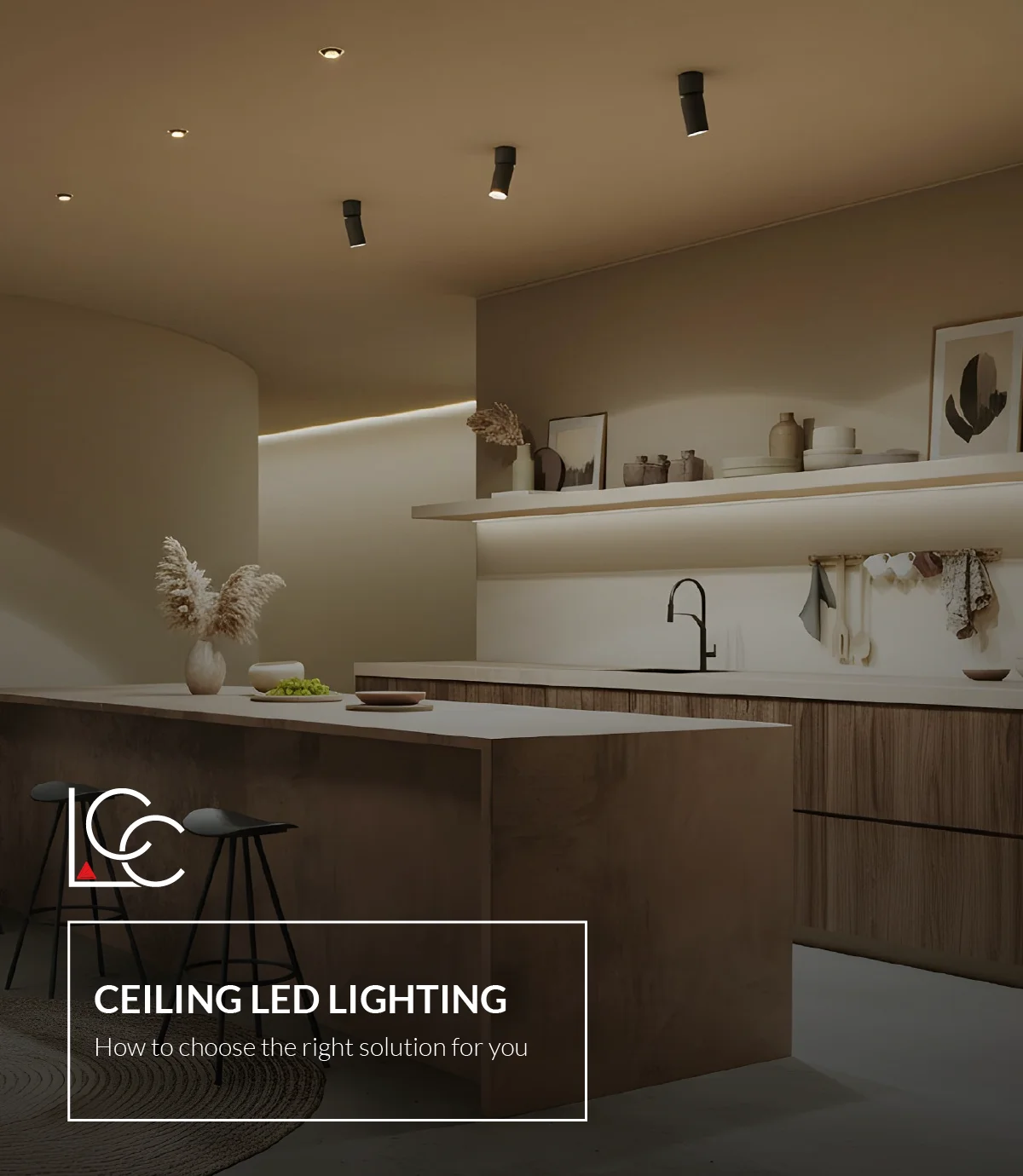
LED ceiling lighting: creating an invisible lighting base
The modern concept of ceiling lighting has evolved dramatically with the advent of LED technology. Today, the first rule is to build ambient lighting that is as natural and uniform as possible. Here's how:
Indirect lighting and light cuts
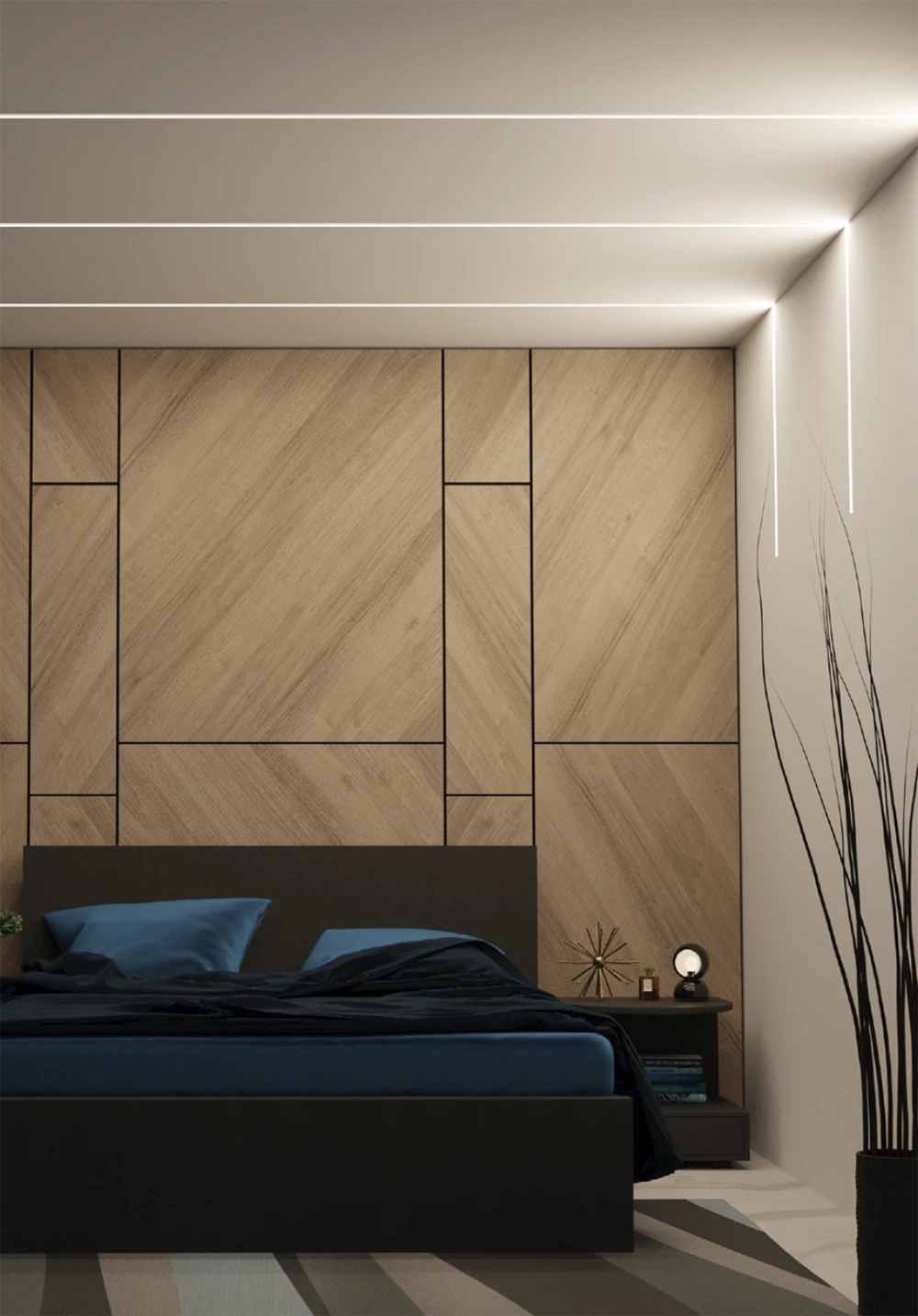
One of the most popular solutions in contemporary interior design is the use of recessed LED profiles. Installed in plasterboard coves or perimeter bulkheads, these systems project light upward or along the walls.
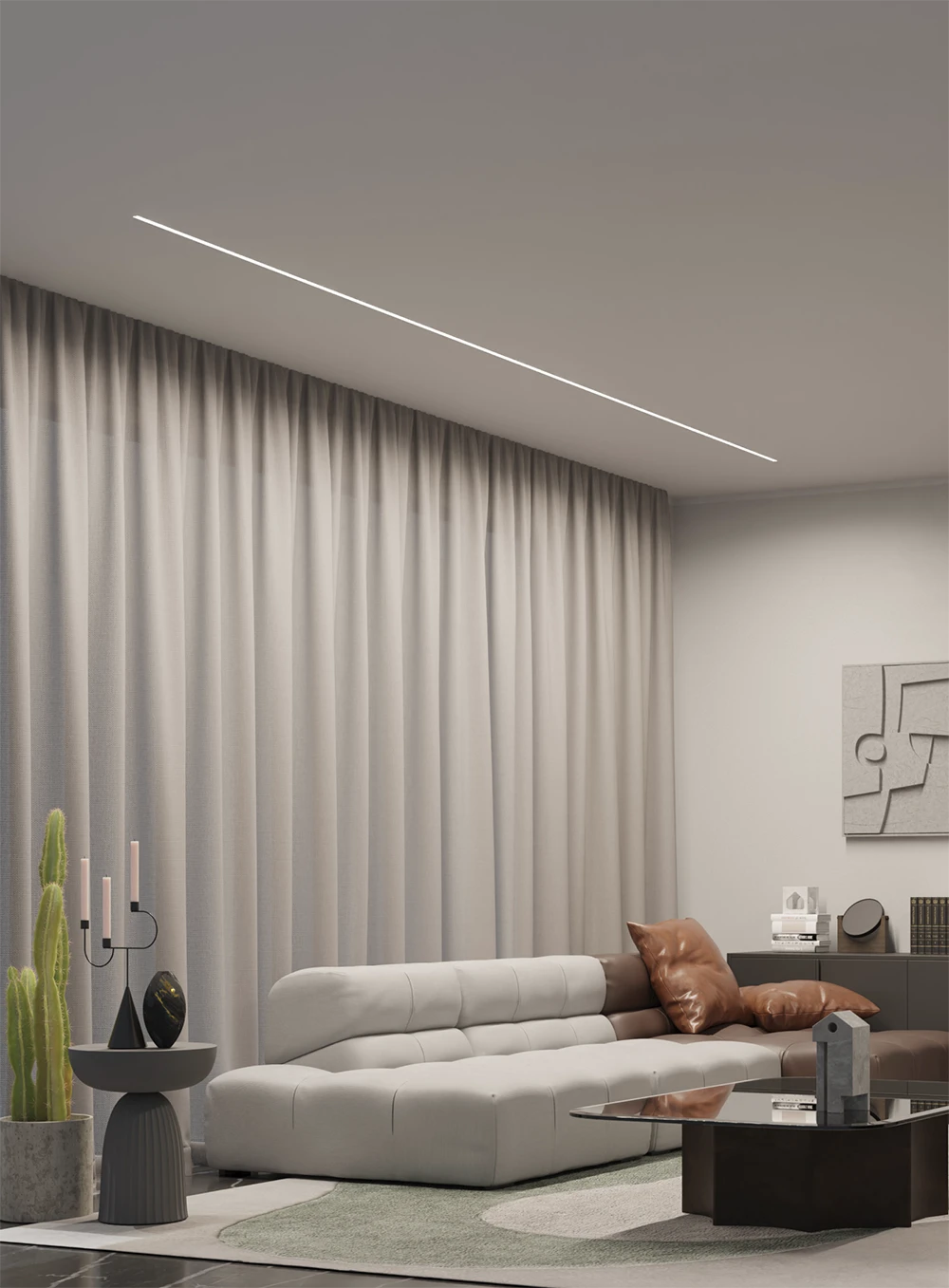
The benefit of this ceiling lighting solution is that the light source remains invisible, eliminating any risk of glare.
The final effect is that the ceiling appears to “lift,” giving a sense of greater spaciousness and lightness to the entire environment.
Recessed spotlights: order and precision
For those seeking a clean and minimal ceiling, recessed LED spotlights (fixed or adjustable) allow for precise light distribution.
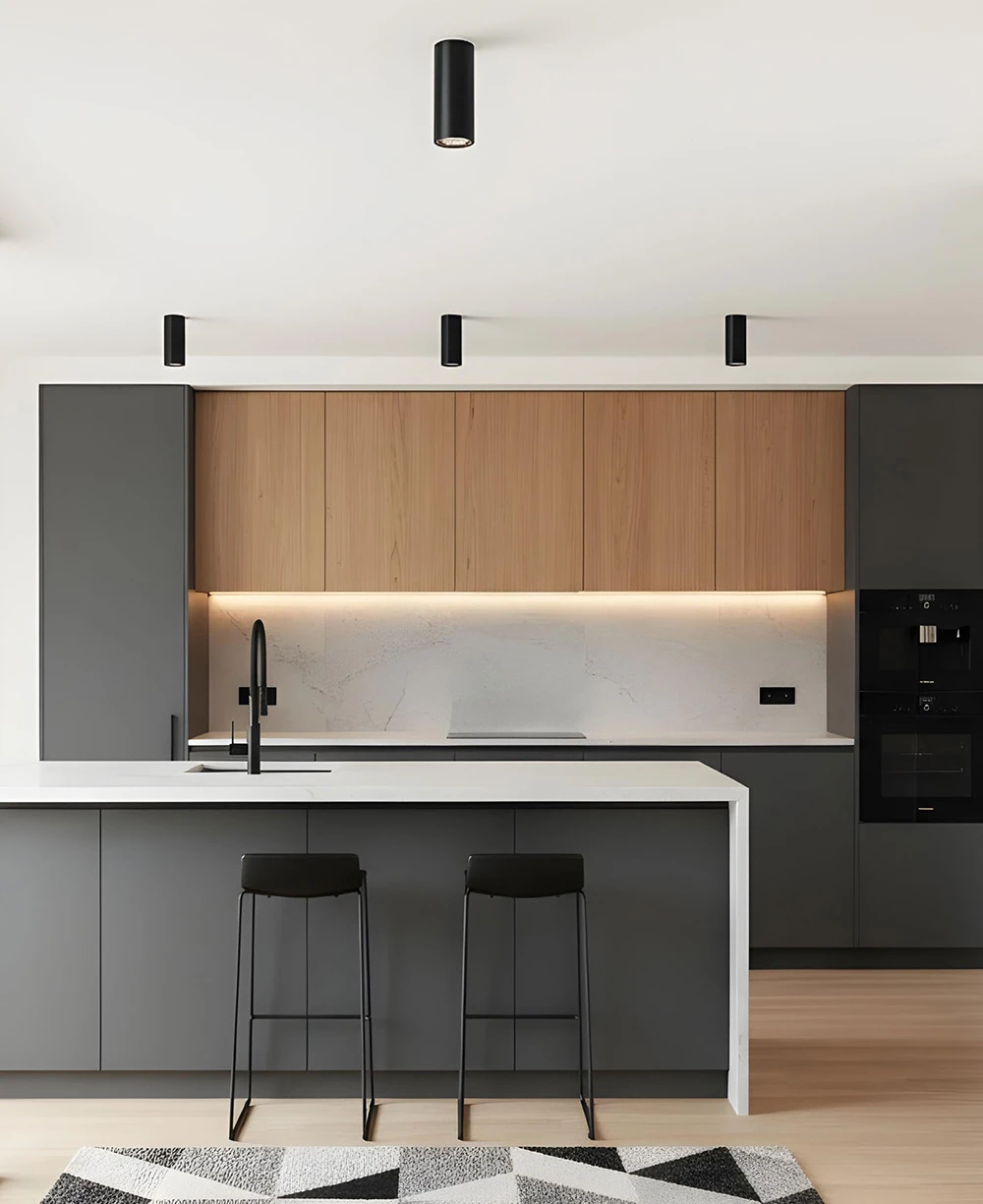
When positioned correctly, LED spotlights can create visual rhythms that guide the eye along corridors or emphasize specific areas such as a dining table or a work of art.
Choosing the main light source: ceiling lights and pendants
In addition to technical and integrated lighting, the ceiling often hosts the element that defines the style of the room: the main light fixture.
Modern ceiling lights: low-profile design
Ceiling-mounted fixtures are the ideal solution when ceilings are not particularly high or when minimal visual impact is desired.
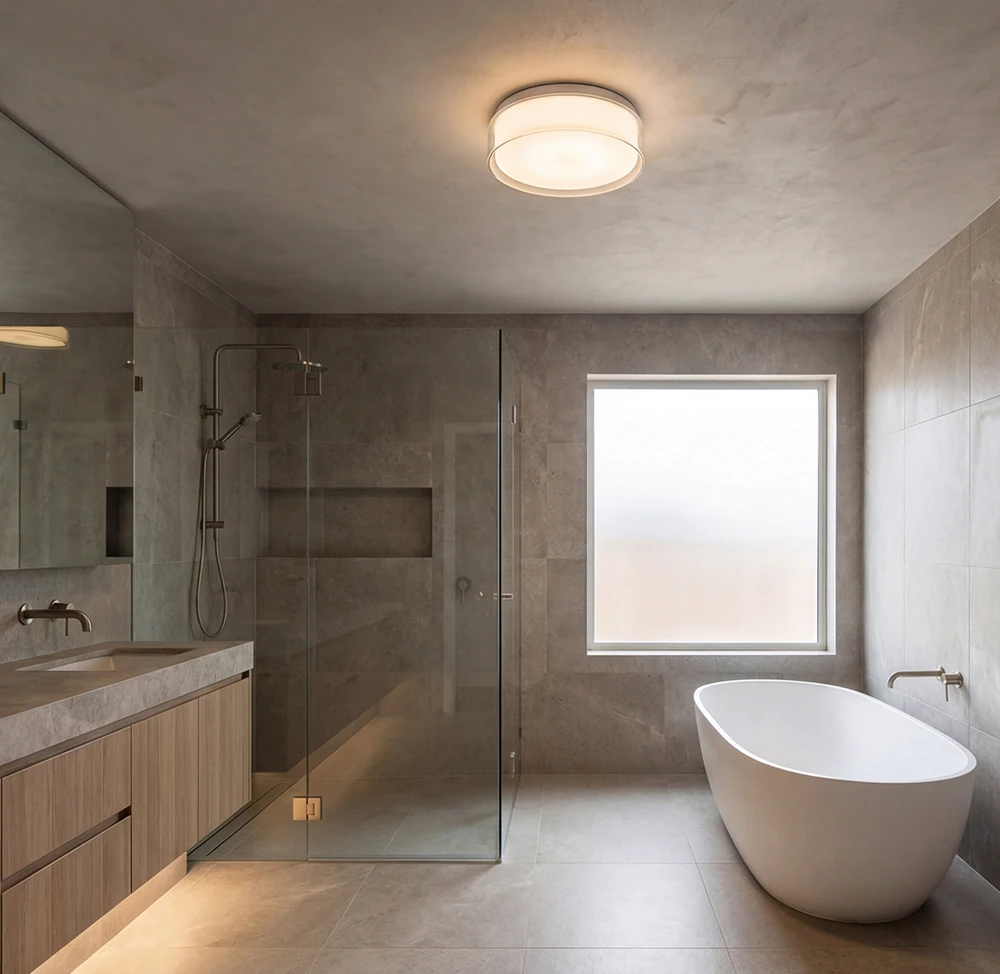
LuceControCorrente Modern LED designs offer sculptural forms - such as rings, geometric lines, or surfaces made from innovative materials - that furnish a space without weighing it down visually.
A well-chosen ceiling light diffuses illumination evenly, filling the room and creating an elegant, modern focal point.
Ceiling and pendant lights: adding volume to space
If the ceiling allows it, a LED pendant light becomes the main visual piece of the room.
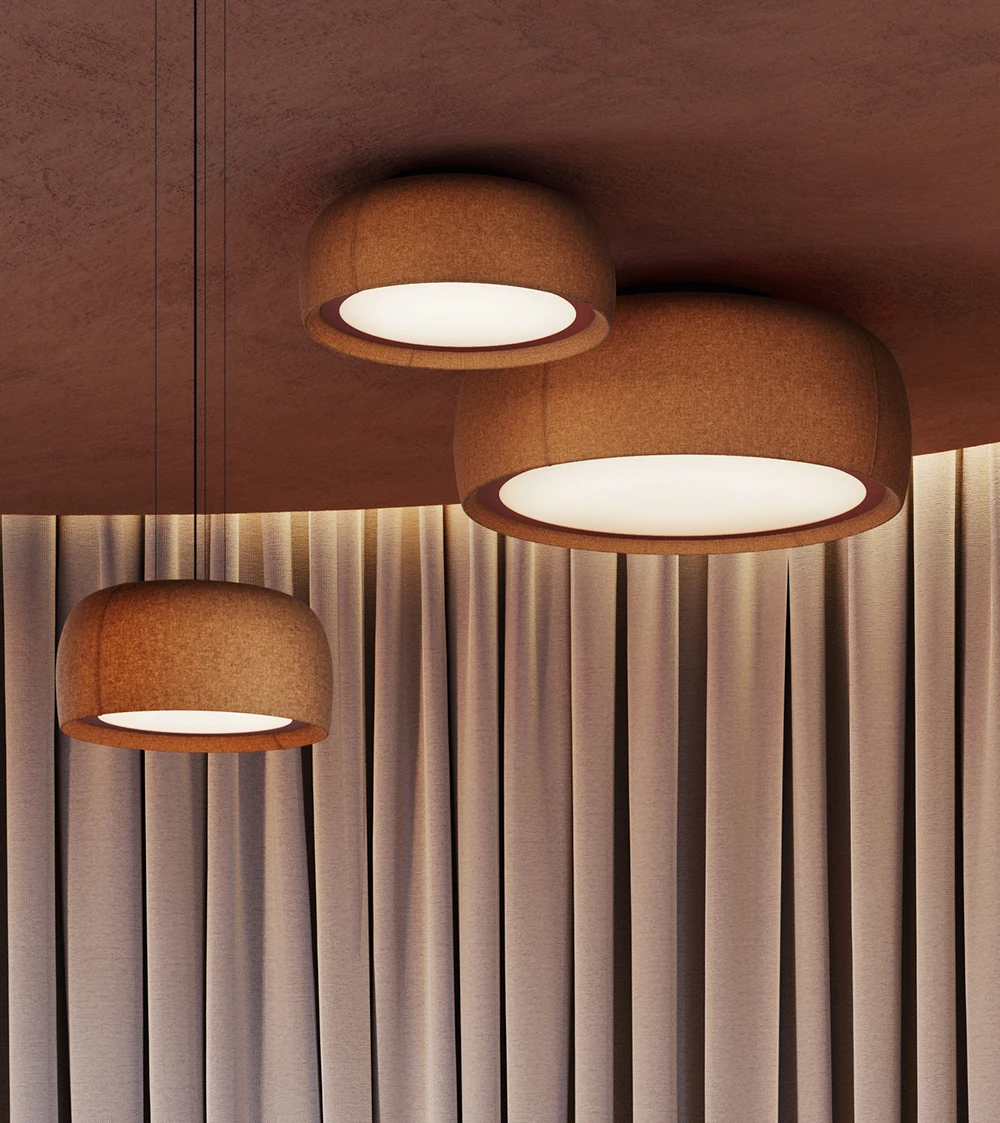
It does not necessarily have to be centered: it can be offset above a table, a kitchen island, or a reading corner. The key is proportion - too small and it disappears, too large and it overwhelms the space. Choosing the right light temperature is also essential: warm light for a cozy atmosphere, or cool light for spaces like the kitchen where functionality is key.
Functional lighting: where is more light needed?
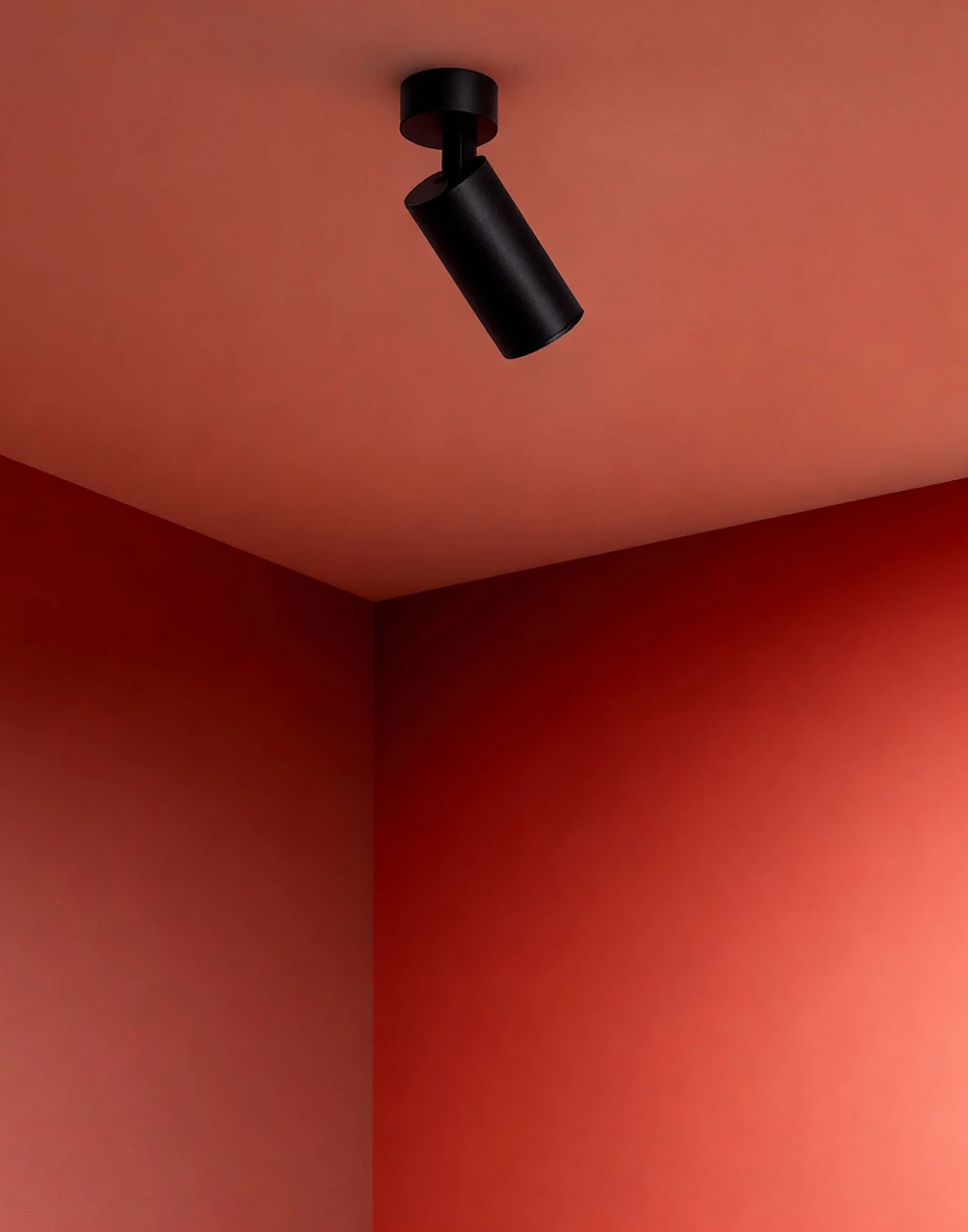
A common mistake is thinking that ceiling lighting should be the same everywhere. On the contrary, it should adapt:
- In the kitchen: above worktops, ceiling lighting must be bright and shadow-free.
- In the living room: dimmable lighting is preferred, allowing a transition from functional brightness to softer light for watching a movie.
- In transitional spaces (hallways and entrances): lighting should be clear and safe, often achieved with linear profiles that guide movement.
Three approaches for three types of ceilings: height determines the lighting choice
Every home has its own volumetric identity that cannot be ignored. The ceiling acts as a “stage backdrop” for lighting: its height, shape, and materials determine not only the type of fixture to install, but also how light will spread throughout the space.
Designing lighting without considering these factors risks overwhelming a small room or leaving the details of a historic space in shadow.
Low ceilings: maximizing space with discreet profiles
In modern homes, where ceiling height often does not exceed 270 cm, the primary goal is to avoid visual clutter. Long pendants or bulky chandeliers would visually “cut” the space, making the ceiling feel even lower.
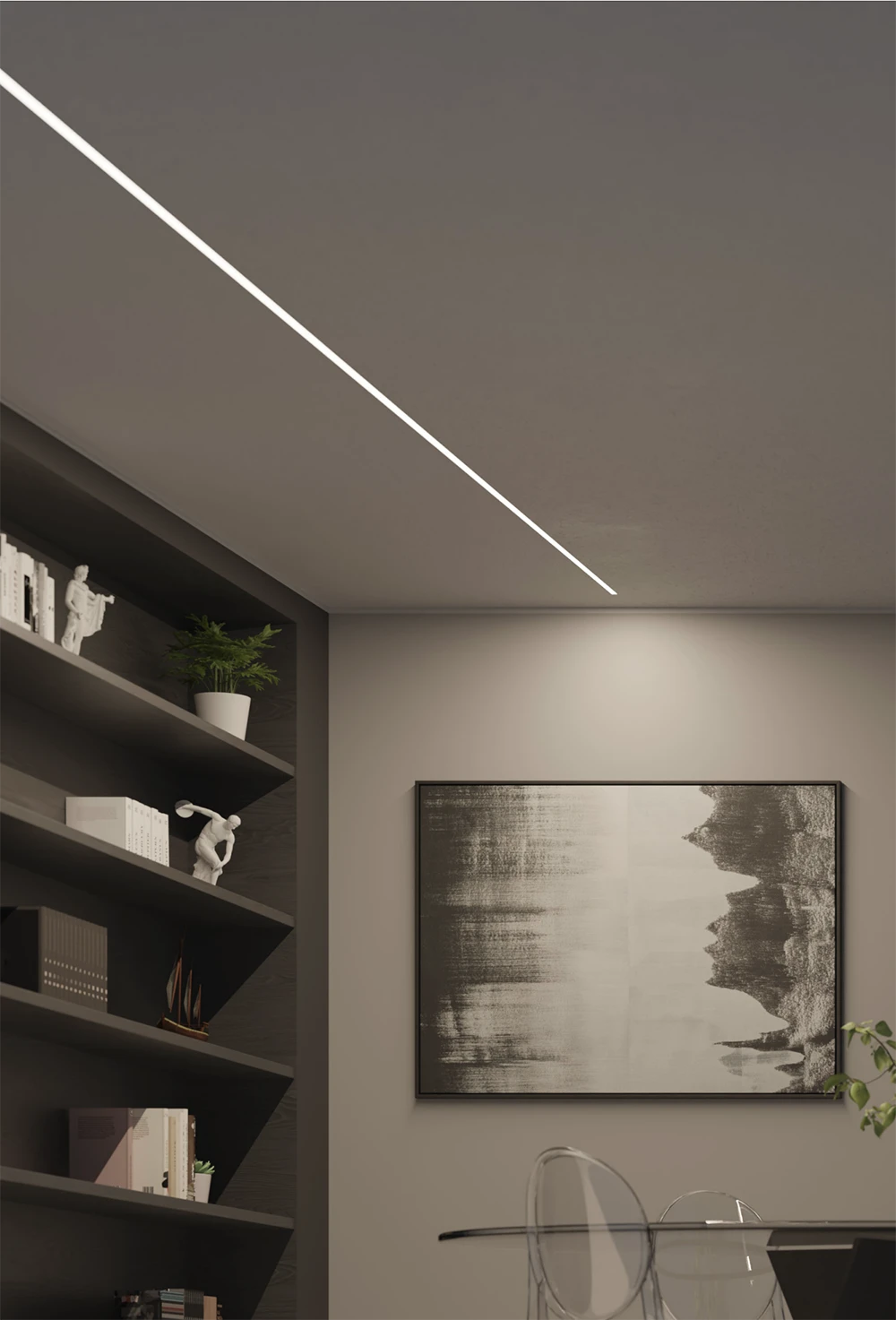
The ideal solution lies in ultra-flat ceiling lights and perimeter LED profiles. Installed along the edges of walls, these create grazing light that eliminates shadowed corners and gives the illusion of an expanding ceiling.
Using light sources that “disappear” into the architecture keeps the visual line clean, turning a structural limitation into an opportunity for minimal, elegant design.
High or vaulted ceilings: managing volume and verticality
With generous ceiling heights, lofts, or historic vaulted structures, the risk is a “cave effect”: light that is too weak or too low leaves the upper part of the room in a gloomy half-shadow. In these cases, it is necessary to embrace verticality.
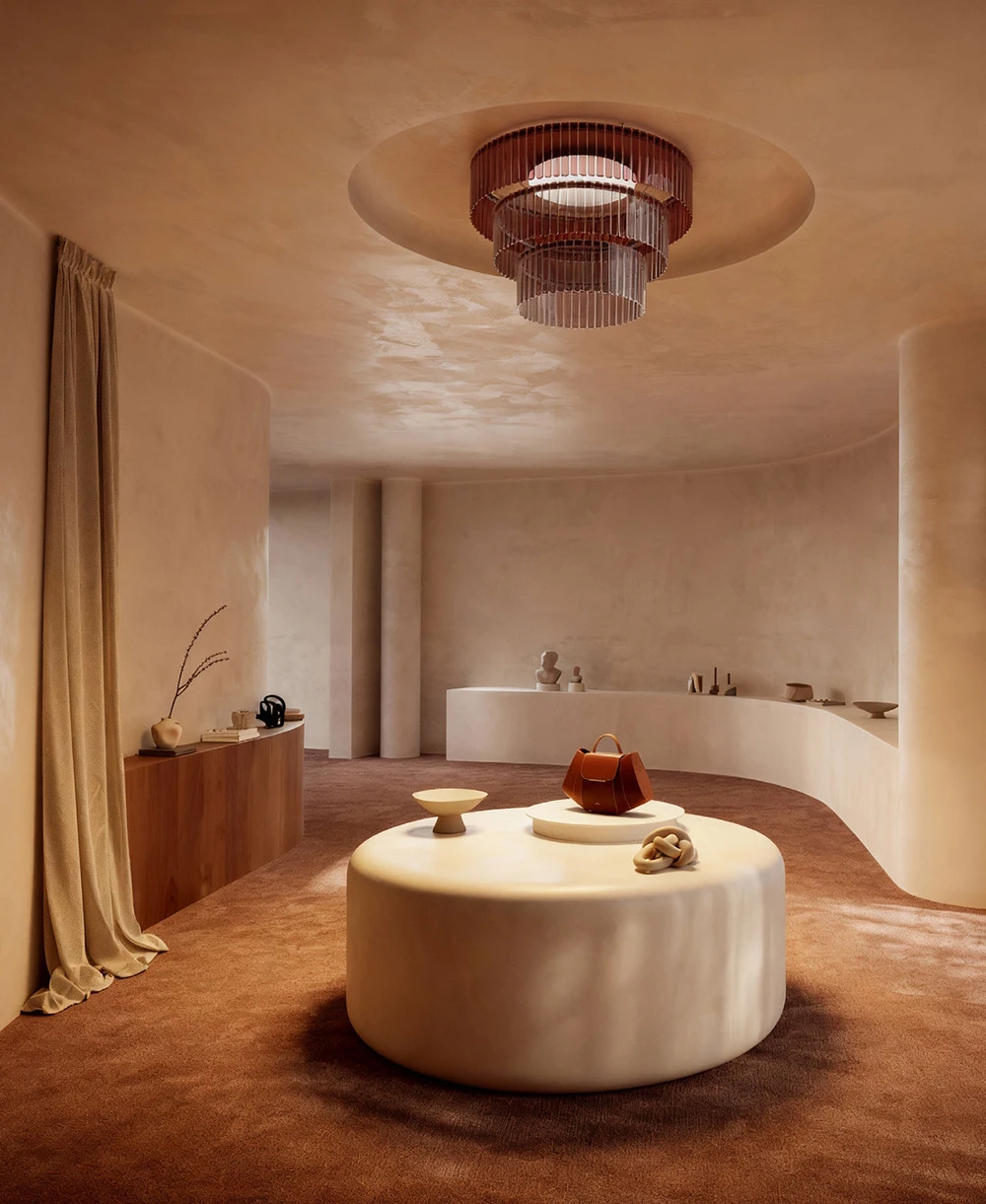
Large, statement chandeliers or tension cable systems become focal points, filling the void and acting as a visual bridge between ceiling and furnishings. To truly enhance the architecture, it is essential to choose solutions with dual emission: direct light downward for daily activities and indirect light upward.
The latter highlights vault curves or ceiling height, making the space feel airy and emphasizing its three-dimensional character.
Ceilings with wooden beams: directing light on textured surfaces
Wooden beam ceilings introduce strong visual and material character but require a thoughtful lighting approach.
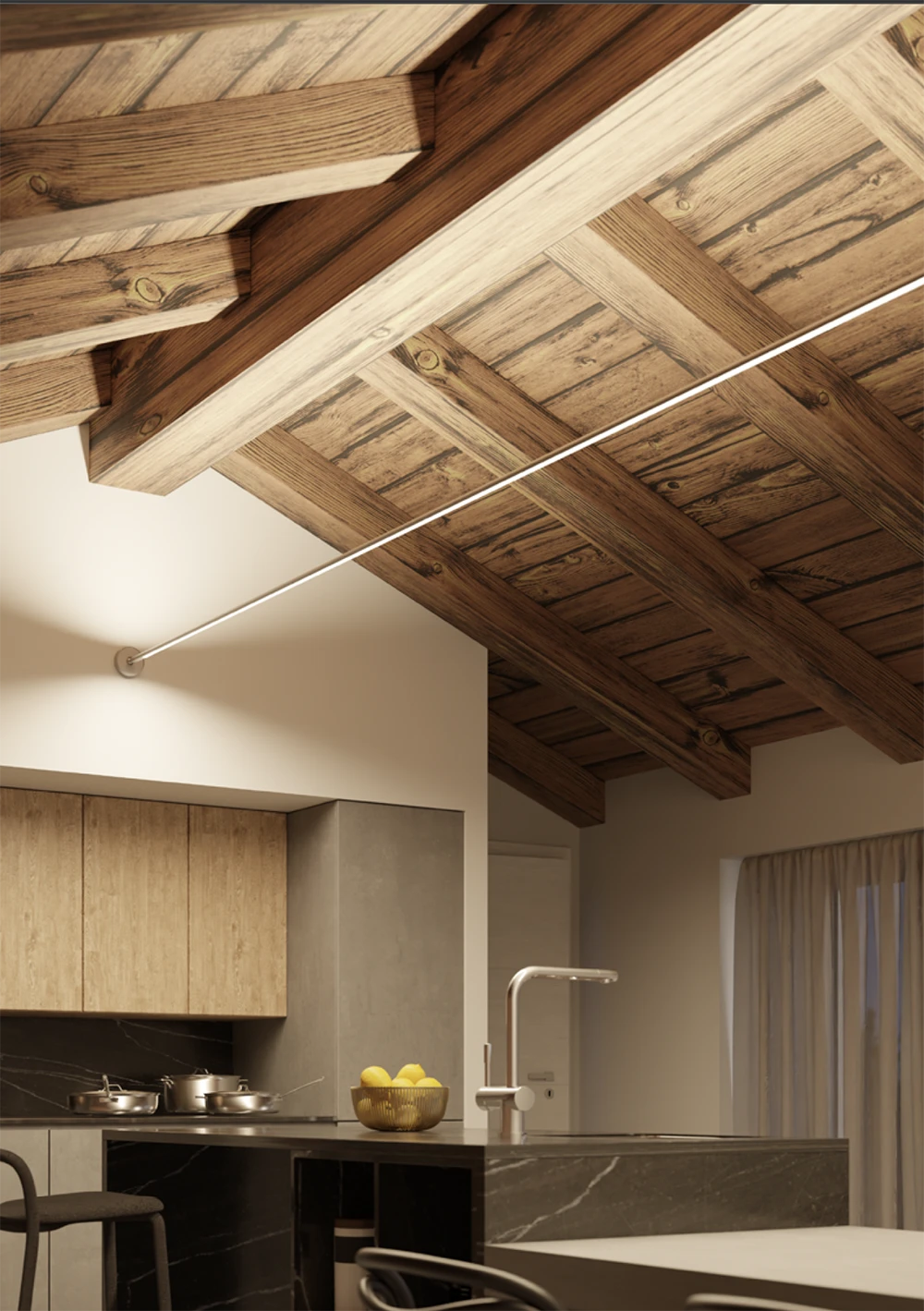
Wood naturally absorbs a significant amount of light, reflecting less than lighter surfaces and reducing the effectiveness of diffuse lighting. Therefore, lighting must be designed in relation to the structure.
One solution is cable lighting systems, which bring light into the space without interfering with the rhythm of the beams, maintaining visual lightness and flexibility.
A more integrated approach involves linear dual-emission LED profiles installed directly beneath the beams. In this way, the fixture becomes part of the structure, distributing light horizontally and adding depth to the environment. This system can be combined with adjustable spotlights for accents and greater control of the lighting scene.
To visually expand the space, angular LED profiles positioned between beam and ceiling can create a wall-washing effect. Here, light is perceived as an effect rather than a source, making the environment feel more open.
Finally, adjustable spotlights mounted directly on beams provide a more technical and explicit solution, ideal for highlighting specific elements while maintaining coherence with the structural rhythm.
LED technology: efficiency and innovation for energy savings
Unlike traditional incandescent bulbs, which produce light by heating a filament until it glows, LEDs are semiconductor devices that convert electrical energy directly into photons.
This process, called electroluminescence, is far more efficient because it drastically reduces energy loss in the form of heat.
The resulting energy savings are significant: for the same light output (lumens), LED systems can consume up to 85-90% less energy than traditional technologies.
But the advantages go beyond energy bills. With an operational lifespan exceeding 50,000 hours, LEDs are also the most sustainable choice for the planet.
Moreover, their integration into advanced electronic systems allows for smart lighting management (dimming and sensors), optimizing energy use based on occupancy or natural light availability.
All chandeliers, ceiling lights and lighting products by LuceControCorrente are exclusively LED-based, ensuring the best available technology for customers.
Final thoughts
Choosing LED ceiling lighting means finding the right balance between aesthetics and performance. It's not just about lumens, but about how those lumens are distributed to make you feel at home.
Whether you choose the subtlety of a recessed profile or a bold large pendant, remember: the best light is the one that adapts to your lifestyle, making every room enjoyable to live in.